
Emergence of Gay:
For numerous decades, the term “homosexual” was used to describe same gender loving people as both a definition and as a term synonymous with despicable and/or perverted. The late 1950s and early 1960s marked the transition of the meaning of the word “gay” from that of being “carefree and happy” to that meaning “homosexual” in British usage. The British interpretation slowly began to make its way into American language. By the time of the Stonewall Inn riots (SIR) of 1969, the British term was embraced by the same gender loving rioters and other protesters. For far too long and for too many, “homosexual” was too degrading and too prejudicial.
*************************

Lambda:
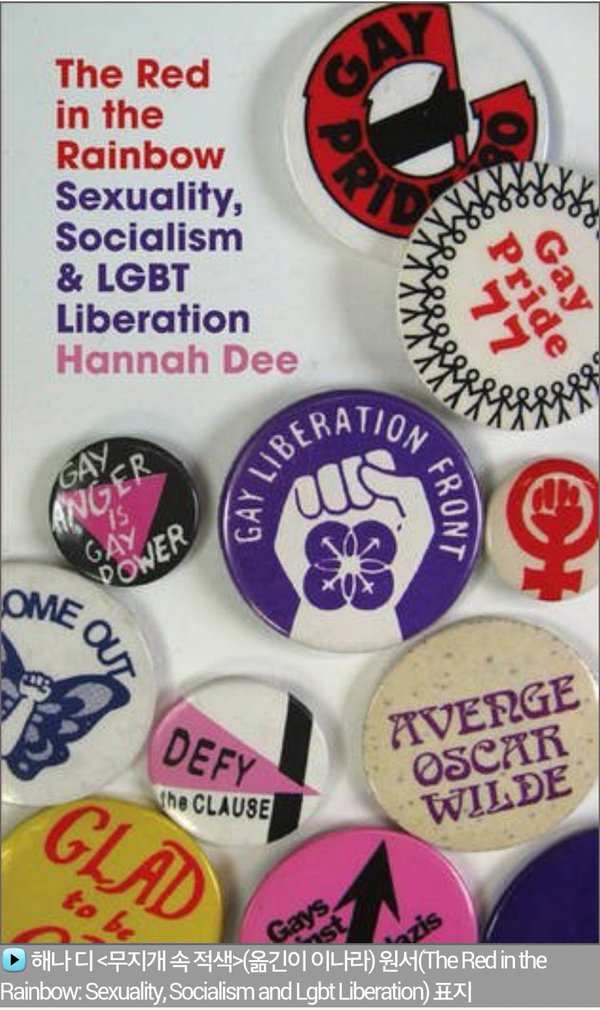
The Greek alphabet letter “lambda” was designated in December, 1969, by the graphic artist of the Gay Activist Alliance (GAA), founding member Tom Doerr. Doerr chose it because in chemistry it was the sign for “catalyst.” In this context, Doerr offered that the lambda involved the complete exchange of energy. Tom Doerr also felt that the Greek lambda was symbolic of self-identification, unity and pride. Others argue that lambda denotes synergy of the growing gay movement: the idea that the whole is greater than the sum of its parts.
In 1970, the lambda was adopted by New York City’s GAA as the emblem of their growing movement for gay liberation. In 1974, it was subsequently proclaimed by the International Gay Rights Congress at their meeting in Edinburgh, Scotland, UK, as their symbol for gay and lesbian civil rights. Following their designation, lambda became internationally popular and recognized globally with the same gender loving community.
Unfortunately, many women viewed the lambda symbol as relevant for males only.
*************************
The Pink Triangle:
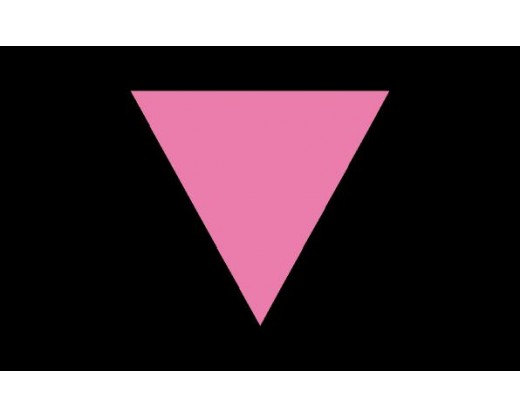
Just as the Nazi’s forced Jewish people to wear a yellow star of David, they forced men they identified as homosexual to wear an inverted pink triangle (die Rosa-Winkel) to identify their male gender preference. Those forced to do so were treated as the “lowest of the low in the concentration camp hierarchy.” It is estimated that 65% of those incarcerated as homosexuals died in captivity. Adolph Hitler perceived gay men as an impediment to purify Germany and as a serious threat to Aryan superiority.
After the concentration camps were liberated at the end of World War II, men imprisoned for homosexuality remained locked up. East Germany (communist) didn’t rescind the criminality of homosexuals until 1968. West Germany (democracy) didn’t repeal Nazi laws against homosexuality until 1969. Reunited Germany removed the illegality of homosexuality in 1994.
In 2002, the German government issued an official apology to all gay men who were imprisoned during the war. Rudolph Brazda, the last known concentration camp survivor who wore a pink triangle, died on August 3, 2011, at the age of 98.
Notation: The inverted Pink Triangle, located inside a green circle, is frequently used today to designate “safe” (protected) environments, facilities and spaces for GLBTQ+ persons.

*************************

Notation: The Rainbow Pride flag consists of six rainbow stripes. The colours are red, orange, yellow, green, blue and purple. The red stripe is always the top, the purple the bottom. When first flown, it held eight stripes but was soon revised to six stripes only. The colours represent the ideals below:

The Rainbow Pride Flag:
This flag was first publicly raised on June 25, 1978, in San Francisco, California, USA. It was unfurled over the city’s United Nations Plaza in honour of gay pride at the 1978 San Francisco Gay Freedom Day Parade. The original flag contained eight coloured stripes and was designed for the event and the occasion by Gilbert Baker. The initial banner was hand-stitched and dyed by Baker with the help of volunteers and friends Lynn Segerblum, James McNamara, Glenne McElhinney, Joe Duran and Paul Langlotz.
The original flag was reconfigured after the unveiling as the banner soared in popularity and the demand became widespread. The new design featured six stripes matching the natural rainbow. The flag discontinued the stripes pink (symbolizing “sex”) and turquoise (“art and magic”) as those two colours were unavailable in flag fabric.
Gilbert Baker conceived the flag would “empower his tribe” (the growing GLBTQ+ community) into a “rainbow of humanity.” The motif represented the movement’s diversity.
*************************
Evolution: Pride to Progress:
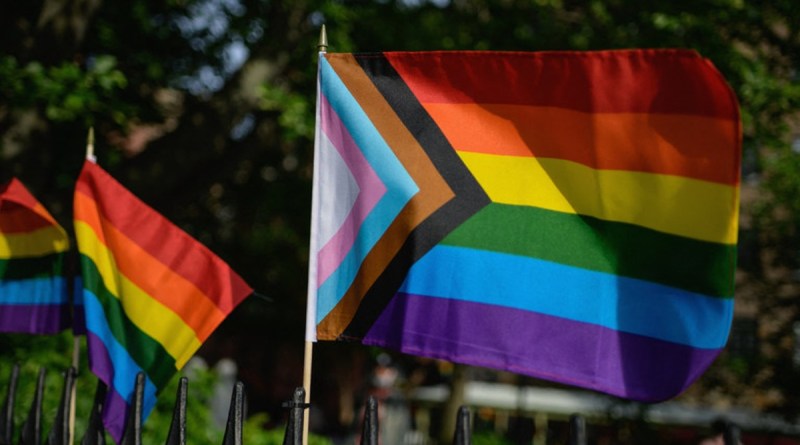
Forty years after the appearance of the Rainbow Pride flag, the Progress Flag debuted as the new banner of the worldwide GLBTQ+ community and culture. The Progress flag incorporated the six stripes of the Rainbow Pride flag along with colours and designs that depict our movement as we march together into the future.
*************************

The Progress Flag of the GLBTQ+ Community and Culture
The Progress Pride flag was developed by non-binary (not conforming gender identity) artist and designer Daniel Quasar in 2018, forty years after the initiation of the Rainbow Pride flag. Based on the six stripes of Gilbert Baker’s 1978 Rainbow Pride flag, Quasar’s redesign celebrates the expanded diversity of today’s GLBTQ+ community and culture and encourages a more inclusive general society. The banner has increased the representation of discriminated minority identities covered by the GLBTQ+ umbrella.
Quasar’s creation placing black and brown stripes (emblems representing peoples of colour) and light blue, pink and white stripes (representing transgender and non-binary persons) in the shape of an arrow on the left of the Progress Pride flag. In Daniel Quasar’s own words “…the arrow points to the right to show forward movement and illustrates that progress towards inclusivity still needs to be made.”
In the Progress Pride flag, the black stripe has a double meaning as it, in Quasar’s intent, to represent not only the African race and their descendants but also “those living with HIV/AIDS and the stigma and prejudice surrounding them as well as all those who have succumbed to the disease.”
On the evening of June 6, 2018, Quasar posted the design for the Progress Pride flag on social media. When he woke up the following day, he discovered that the posting had gone viral. It was an immediate success!

Naked hugs!
Roger Poladopoulos/ReNude Pride

Author’s Note: The next post entry here is planned for Thursday, October 17, 2024, and the proposed topic is: “Spirit: Stop Bullying Day!”

 ReNude Pride: Guys Without Boxers!
Cogent!✈️
LikeLiked by 1 person