

24 April, annually, is the Armenian Genocide Remembrance Day
This date is recognized as the first modern genocide of the 20th Century.
Genocide is the crime of intentionally destroying part or all of a national, ethnic, racial or religious group by killing people. It is understood by most people to be the gravest crime against humanity.
Prologue:
The presence of the Armenian peoples in Anatolia, the region in modern Turkey that borders Iran and the Caucus) has been documented since the sixth century BCE – about 1,500years prior to the arrival of the Turkmens (first Turkish immigrants) under the Seljuk dynasty. The independent Kingdom of Armenia adopted Christianity as its national religion early in the fourth century CE.
The Genocide:
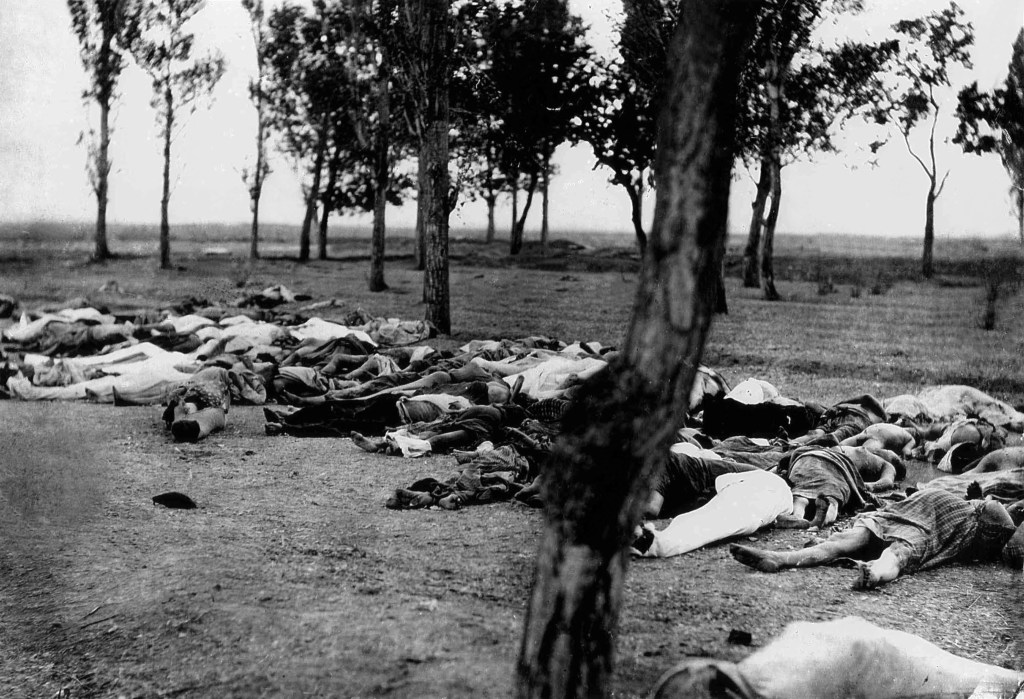
Before the Great War (World War I; 1914 – 1918), there were limited exterminations of Armenian inhabitants of Turkey during the 1890s and in 1909. During World War I, The Ottoman Empire (Turkey) allied itself with Austria-Hungary, Bulgaria and Germany. This led to the power transfer to the Committee of Union and Progress (CUP) by the civilian authorities.
On 24 April, 1915, the CUP ordered the deportation and expulsion of Armenian residents in the Ottoman capital, Constantinople. Soon, this order was extended throughout all the Ottoman Empire and massive crowds were forced to march into the Syrian Desert, without food and water. They were raped, robbed and brutally beaten.
Soon, the extermination of the Armenian residents throughout the Ottoman Empire was endorsed and enforced. The massive deportations and deaths became real and prevalent. The involvement in the Great War and the political instability which followed prevented the Western powers from monitoring the conditions within the former Ottoman state.
The overthrow of the monarchy and the division of the lands formerly occupied by the CUP allowed atrocities against the Armenians and other religious minorities until almost midway through the 1920s. By that time, an estimated 1.6 million Armenians had been exterminated. The emerging Turkish country had reduced the population of Armenians from almost 2.5 million to less than 400,000.

Tsitsernakaberd: Armenian Genocide Memorial
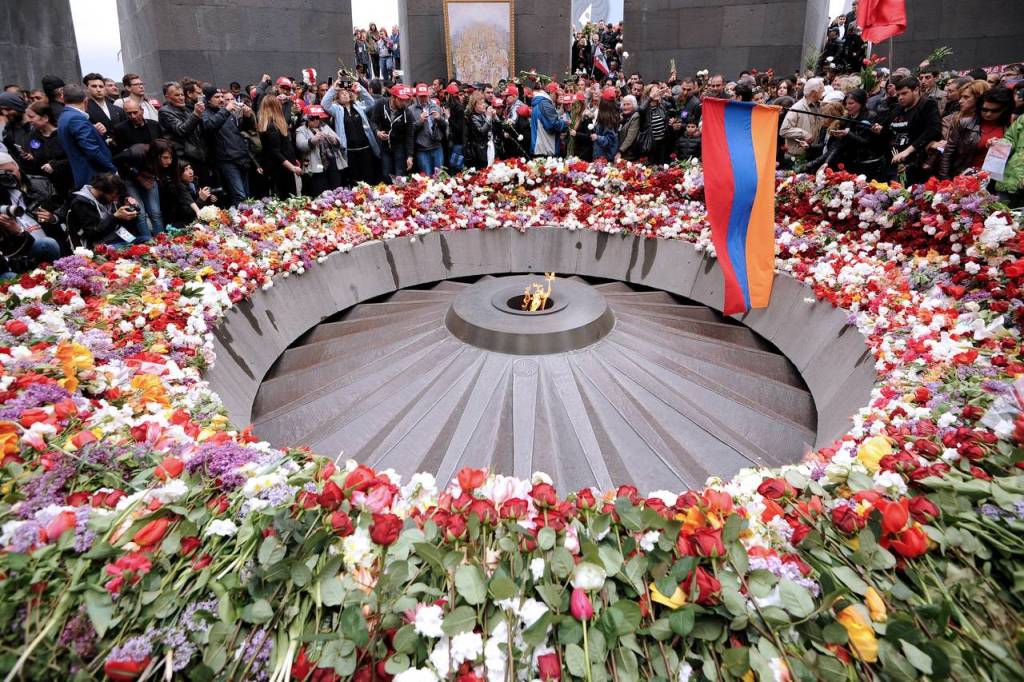
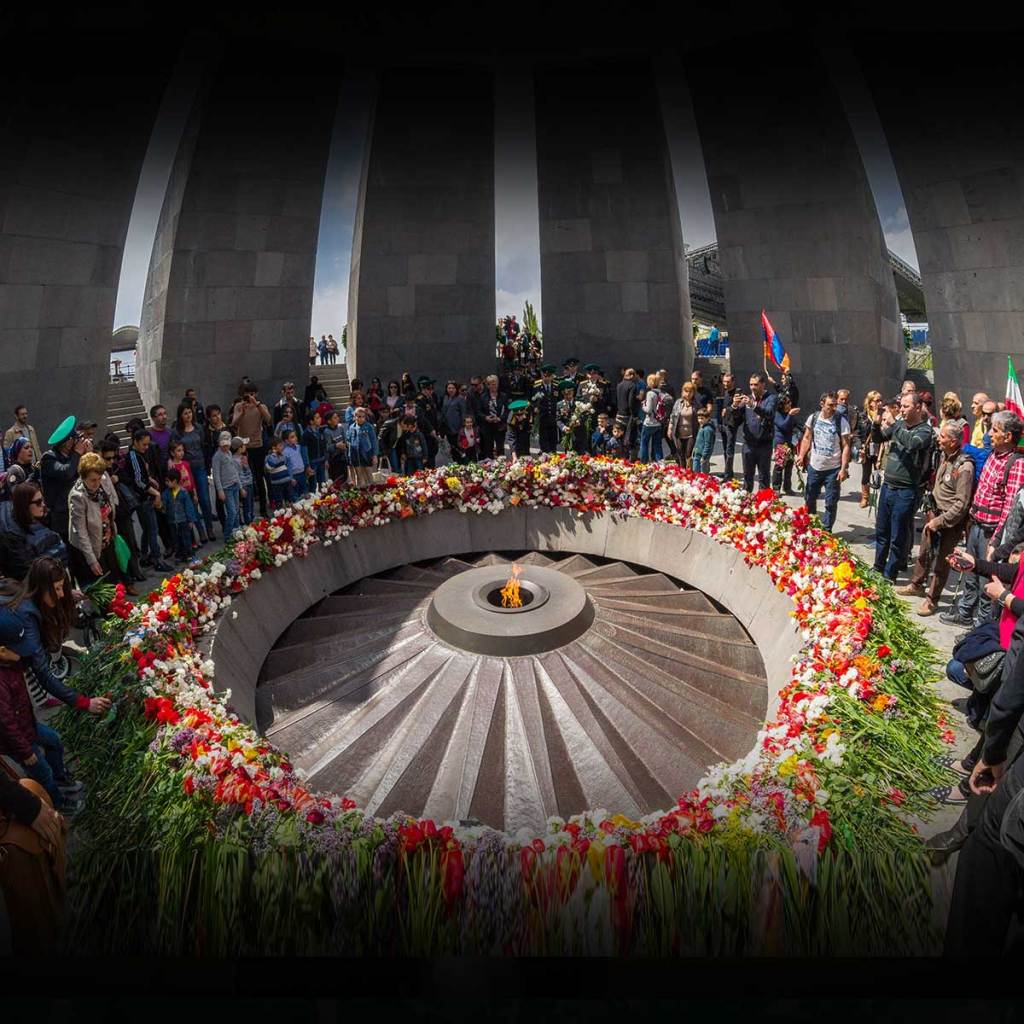
The Genocide Memorial was built in 1967 on the hill of Tsitsernakaberd, just outside the capital city of Yerevan, Armenia. The Genocide Memorial Museum-Institute was added later and officially opened in 1995.
Every year, on 24 April, the complex hosts the national Remembrance Day Ceremony, where hundreds of thousands line for hours to place floral and prayer tributes to the victims.

Personal Connection:
My maternal grandfather was half-Armenian. His mother was a resident of the Ottoman Empire. He remembered the Turkish soldiers congregating the Armenian population – including all of his family – inside their village church prior to setting the entire structure on fire. He and several friends were being absent from school that day and they climbed trees when they witnessed the soldiers assaulting the village.
A Turkish family helped them escape to safety.
My mother doesn’t remember his discussing the incident when she and her siblings were growing up. It was only when his grandchildren were born that he felt the need to share his past.
Naked hugs!
Roger Poladopoulos/ReNude Pride: Guys Without Boxers!

Author’s Note: The next post entry here is planned for Monday, April 28, 2025, and the proposed topic is: “Charge!”



 ReNude Pride: Guys Without Boxers!