
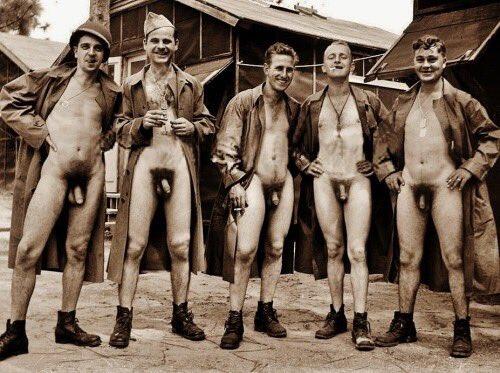
Introduction: The Great War (what is today known as World War I) began with the declaration of war between the Empire of Austria-Hungary and the Kingdom of Serbia on July 28, 1914. The conflict expanded and finally ended on Armistice Day, November 11, 1918. The peace treaty officially bringing the devastation to an end was signed in 1919. Millions died, globally, as a result of the belligerence.
The principle combatants in The Great War were the Central Powers: The Austria-Hungary Empire, Bulgaria, the German Empire and the Ottoman Empire. The Allied Powers were: Belgium, the British Empire, France, Greece, Italy, Japan, Luxembourg, Portugal, Roumania, The Russian Empire, Serbia, and the USA (1917-1918). Battles and military engagements occurred in Africa, Asia, Europe, the Middle East and the South Pacific. This led to the designation of the conflict as World War I.
A direct consequence of The Great War was the eruption of yet another global clash, World War II, that began twenty years later, in 1939. That second conflict proved even more destructive than the first.

One of the sparks that triggered the beginning of The Great War was the assassination of the heir to the Austria-Hungary throne, Archduke Franz Ferdinand, and his wife, the Countess Sophie, by Serbians opposed to the dominance of Austria-Hungary in Balkan politics. In reality, the heir was in favour of greater self-determination of the the native Serbs, Bosnian and Croatian peoples in their own governance. Unfortunately, his death also destroyed any peaceful solution to the volatile political situation.
In discussions with my students about the origins of The Great War, I have recently noticed a growing number of them referring to the actions of the Archduke Franz Ferdinand as among the causes of the First World War. This misjudgment I attribute to faulty teaching from their secondary school instructors and try my best to keep them abreast of historical truths. I’m not familiar with all of the archduke’s personal characteristics but I am unable to identify any historical source for this misinformation.

By 1921, almost all the world that survived the destruction of The Great War was observing the anniversary of the official Armistice that ended the slaughter. In the United Kingdom and throughout the Commonwealth, the peoples joined with King George V and Queen Mary in honouring the deceased on Remembrance Day. Two minutes of complete silence was publicly held in commemoration beginning the hour of the end of the fighting: 11:00 a.m. In Western Europe, Armistice Day ceremonies were conducted at cemeteries and battlefields. In the USA, the custom of Veteran’s Day was implemented.


The Red poppy flower represents consolation, remembrance and death. The poppy is a common symbol that has been used to represent everything from peace to death and even simply sleep. Since ancient times, poppies placed on tombstones represent eternal sleep.
During The Great War, much of the fighting took place in western Europe, especially in the Flanders region of the Kingdom of Belgium. The countryside was blasted, bombed and fought over repeatedly. The landscape was torn apart by trenches. The previously beautiful scenery was turned to mud: bleak and barren where little or nothing could grow. There was a notable exception to the drudgery: the bright red Flanders poppy. These resilient flowers flourished amidst so much chaos and destruction.
John McCrae was the son of Scottish immigrant parents and was born in Guelph, Ontario, Canada, in 1872. In May, 1915, he was serving in the Royal Canadian Army Medical Corps in Flanders, Belgium. On May 2, 1915, Lieutenant Alexis Helmer, a Canadian field artillary oficr and close personal friend of McCrae, was killed in the Second Battle of Ypres. Shortly afterwards, McCrae wrote the following poem, “In Flanders Fields,” in memory of his friend and honouring all the war dead.
The poem was first published on December 8, 1915, in London, United Kingdom, in the satirical magazine, Punch. It was immediately popular and widely circulated and reprinted as a fitting tribute.
In Flanders Fields
In Flanders fields, the poppies blow
between the crosses, row on row,
That mark our place; and in the sky
the larks, still barely singing, fly
Scare heard amid the guns below..
We are the Dead. Short days ago
we lived, felt dawn, saw sunset glow,
Loved and were loved, and now we lie,
In Flanders fields.
Take up our quarrel with the foe;
to you from falling hands we throw
The torch, be yours to hold it high.
If ye break faith with us who die
We shall not sleep, though poppies grow
In Flanders fields.
We remember and appreciate the efforts of John McCrae and all the fallen, wherever they lie.
Remembrance Day Poppy Campaign
Etiquette
Participation in the Remembrance Day Poppy Campaign is completely voluntary. It should never be mandatory or required.
The poppy should be worn on the left side of the body over the top of the heart or on the left lapel.
Acceptable colours for the Remembrance Day Poppy Campaign are: red (remembrance) or white (peace).
Two minutes of silence are recommended, beginning at 11:00 a.m., (local time). If prayers are to be offered, they should be voluntary and silently.
The poppy should not be worn after 11 November (exception: memorial services).
********************
Naked hugs!
Roger Poladopoulos/ReNude Pride

Author’s Note: The next post entry here is planned for Monday, November 13, 2023, and the proposed topic is: “Nakedness: Downside!”

 ReNude Pride: Guys Without Boxers!
Sting actually had a good remembrance song for this. “Children’s Crusade”, I think it was…
LikeLiked by 2 people
Cool notation! Thanks! 🙂 Naked hugs!
LikeLiked by 1 person
Respect guaranteed!🪖🌹♂️✈️
LikeLiked by 1 person
Thank you! 🙂 Naked hugs!
LikeLike
Lets remember those brave soles who fought for our freedom
Happy Remembrance day to all
LikeLiked by 2 people
The same to the both of you, my blogging and bare friend! Naked hugs from the both of us to the both of you! 🙂
LikeLiked by 1 person