

On the Feast of the Annunciation of the Theotokos (Mother of God) – March 25, 1821 – the Greeks began the revolt to end almost four centuries of Ottoman Turkish occupation!
The result was independence for the Kingdom of Greece!
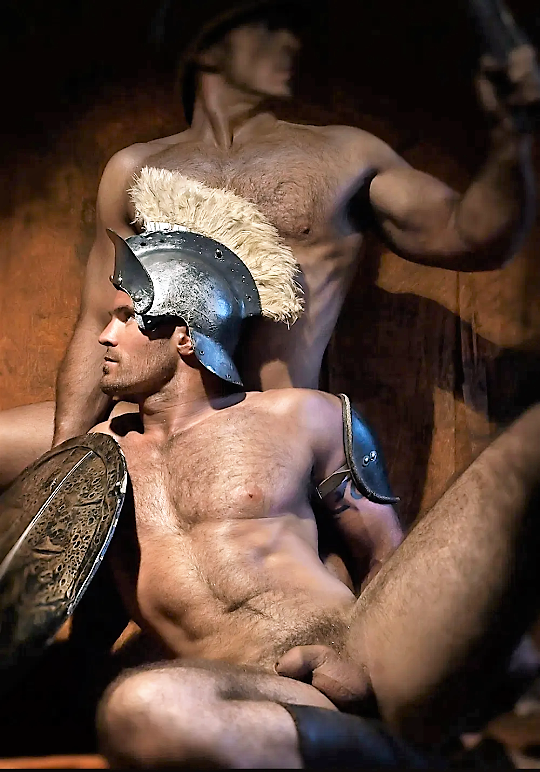
Before we progress any further, a few notes to clarify the situation. First and foremost, the rebellion against the Ottomans didn’t have the Greeks fighting in the nude. Perhaps in ancient days, yes. However, in the 1800s, no, they may not have had official military uniforms but they definitely engaged in fighting while wearing clothing. Secondly, they may have personally had swords, etc., but they used guns. The Ottoman army was a second-rate military force, but it was armed with contemporary weaponry. For the Greeks to defeat them, a semblance of similar weaponry would be necessary.
At this time, the Ottoman Empire was widely known as “the sick man of Europe.” The heyday of it’s military dominance in eastern Europe had long ended. It was now known to be weaker, vulnerable and a declining force on the world stage. The organizers of the Greek uprising selected this feast day – a holy occasion in the Greek Orthodox Church – to begin the insurrection. It was the arrival of Spring, a time of rebirth and renewal. An ideal time to return independence to their beloved homeland!
Bishop Germanos, raised the flag of revolt over the Monastery of Aghia Laura (St. Laura) in the Pelopannese with the cry, “Freedom or Death” which was subsequently adopted as the summation of the revolution and later as the motto of Greece.

The early flag of Greece, the banner that represented the spirit of independence from the Ottomans, is presented above. The traditional colours of Greece, blue and white dominated the emblem. The double-headed eagle in the upper left corner of the banner is an adaptation from the flag representing the Byzantine empire.
The outbreak of the fight for Greek independence was a complete surprise for the Ottoman occupiers. They had not the slightest indication that such a massive insurrection was even being planned. As most of the troops were part of the occupation force with years of experience, they weren’t in any position of regularly preparing for a possible revolt.
The government of the newly liberated New World country known as Haiti was the very first nation to officially recognize Greek independence. This diplomatic exchange happened in 1821, barely 6 months after the struggle was initiated and long before the war was ended. Even France, Great Britain and Russia, the countries supporting the Greeks with military material, did not recognize the new country until after the Ottomans had ceded the occupation of Greece.

The shock the uprising brought to the Turkish occupiers was felt throughout the historic Greek peninsula and islands. Many of the smaller garrisons were unprepared, understaffed and without sufficient ammunitions to maintain a prolonged defence. They were abandoned in haste as the troops realized the need for assistance if they were to survive the assaults. The proverbial “sick man of Europe” was caught unprepared and was easily overwhelmed.
In haste, the Ottomans sought relief for their occupiers in Greece from their North African dependent states of Algeria, Egypt, Tripolitania and Tunis. These were distrustful of one another and frequently hostile to the various tribes comprising their numbers. The auxiliary troops were often defeated by the Greek locals who were often armed with inferior firearms but held strategic locations as the arriving armies unloaded off their boats.
The Greeks also had the advantage of familiarity with the local terrain and also of the culture and people. They were involved with persons of sympathetic feelings and shared desires for a return to Greek independence.
The war against the Ottomans proceeded with limited success on both sides. The Greeks could not harness the financial resources necessary to engage in prolonged military actions against the Ottomans and their North African allies.
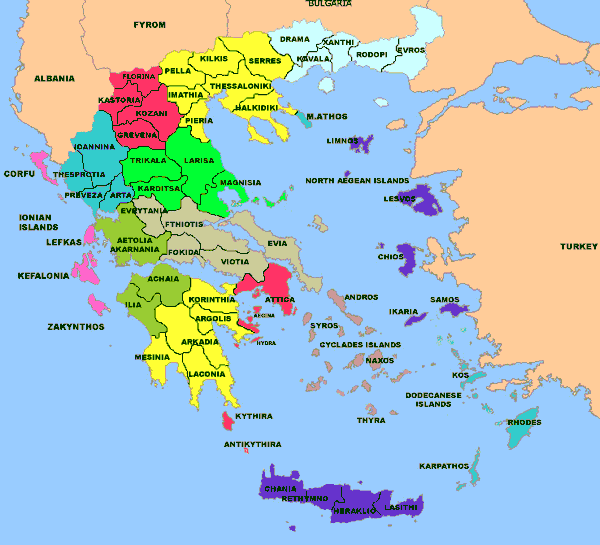
In 1827, Great Britain, France and Russia decided to intervene on the behalf of Greece and sent naval squadrons to the Aegean Sea. The Ottoman-Egyptian fleet was encircling the island of Hydra. The fleets engaged in the Battle of Navarino and the Ottoman-Egyptian fleet was destroyed. This event turned the tide of the war in favour of the Greeks. The complete annihilation of the Ottoman fleet at Navarino convinced the majority of the Ottoman military command of the futility of even hoping to prevent the insurrectionists from succeeding in their struggle. An unofficial retreat from the extreme areas of Greek control was implemented.
In 1828, following the landing of a French expeditionary force, the Egyptians completely withdrew from defending Ottoman garrisons. The Ottoman fortresses remaining in the Peloponnese surrendered to Greece and the Ottoman camps throughout the rest of the area soon followed. The result of this collapse of Ottoman occupation forced the Turks to accept Greek autonomy in the Treaty of Adrianople which ended the fighting.
After 9 years of fighting, Greece was finally recognized as completely independent under the London Protocol of February, 1830, by Great Britain, France and Russia, who subsequently guaranteed it’s independence. The London Protocol also established the Greek Orthodox Church as the state religion of Greece and the Patriarch of Constantinople was recognized as the supreme religious authority. Further negotiations led to the London Conference of 1832 which included the Ottoman Empire and introduced the Treaty of Constantinople, defined the borders of Greece and Turkey and recognized Prince Otto of Bavaria as King of Greece.
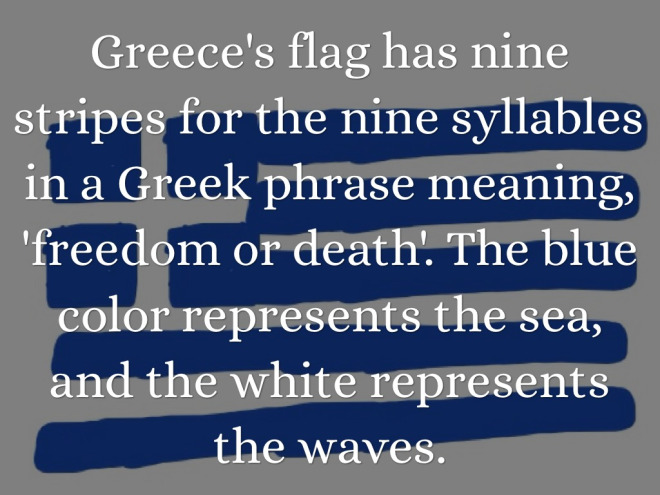

In addition to the nine stripes, the modern Greek flag bears the emblem of the Cross of St. George, who is the patron saint of the Country of Greece. The Cross of St. George also, by law, adorns the top of every pole that supports the nation’s banner. The flag has been a part of the Greek culture since the revolution began with Bishop Germanos raising it over his monastery.
As for the revolt against Ottoman occupation, there are two of my great-great-great grandfathers and one of my great-great-great-great grandfathers who participated in the upraising. None of them were fatalities and they prospered under the survival of the reign of Otto, King of Greece, who was childless. His successors, the Glucksburg Dynasty, were from the Danish Royal Family. Otto was the only sovereign known as the King of Greece. The remainder were proclaimed by their officially recognized title, King of the Hellenes.
Naked hugs!
Roger Poladopoulos/ReNude Pride

Author’s Note: The next post entry here is planned for Friday, March 29, 2024, and the proposed topic is: “Underneath!”

 ReNude Pride: Guys Without Boxers!
Thank you for the history lesson and happy week
LikeLiked by 1 person
I know you’re well aware of what transpired already. I appreciate your thoughts. A very happy and healthy week to you, too, my Kenyan brother! 😉 Naked hugs!
LikeLike