

Continuing our examination of the USA observance as October being GLBTQ+ history month. This post entry introduces the various visual banners that have and currently are symbolic of the growth of our movement for civil rights and equality not only within the USA but also throughout the world.
The Lambda:

The graphic flag represented above is the Greek letter “lambda.” This designation as representative of the rapidly emerging gay rights movement was determined by Tom Doerr, a professional graphic artist and one of the founding members of the hastily assembled Gay Activists Alliance (GAA). Doerr chose this symbol because in chemistry, it was a sign for “catalyst.”
Other GAA members argue that Doerr selected the lambda because it symbolized a complete exchange of energy – synergy – the idea that the whole is far greater than the sum of its parts. In December 1969, when the lambda was adopted, it was less than six months following the Stonewall Inn riots (SIR), the birth of the modern gay liberation movement.
In 1974, the lambda was officially adopted by the International Gay Rights Congress at their meeting in Edinburgh, Scotland, UK. It immediately became the symbol for gay and lesbian civil rights throughout the world. Unfortunately, a large number of persons interpreted the lambda as applicable to males only.
The Pink Triangle:
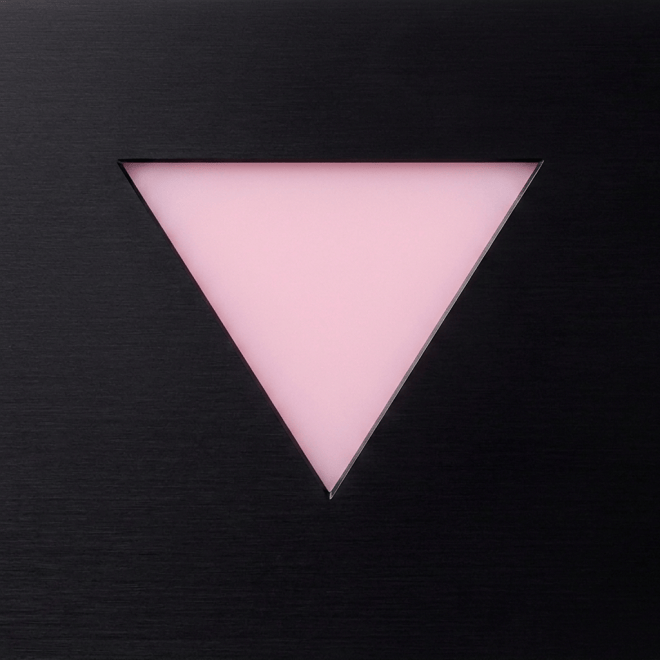
The pink triangle flag is a reclaimed (renewed, renude) GLBTQ+ symbol. It was originally used in National Socialist (Nazi) concentration camps – under the Third Reich (Adolph Hitler) – to identify inferior “homosexual” men. Over time, it evolved into the representation of contempt, oppression, and persecution. Lesbians were labelled as “asocial” and identified with a solid black triangle.
In the 1970s, GLBTQ+ activists resurrected the pink triangle on a black field (background) as a positive image of self-identity and a protest of homophobia. This resurrection was largely accepted throughout the world.
At the end of World War II, many of the men imprisoned for homosexuality by the Nazis were kept in prisons instead of concentration camps and re-incarcerated by the Western Allies. This was due to the fact that Nazi laws banning homosexuality were not repealed until 1968.
Rudolf Brazda, the last known concentration camp survivors interred because of homosexuality, died on 3 August 2011, at the age of 98.
In 2002, the government of Germany finally issued official pardons to all gay men who were convicted by the Nazis. Later that same year, an apology was reluctantly issued publicly to all gay men who were imprisoned by the Nazis. The belated reasoning was justified because the government was unable to apologize for an act that was actually illegal.
The Rainbow Flag:
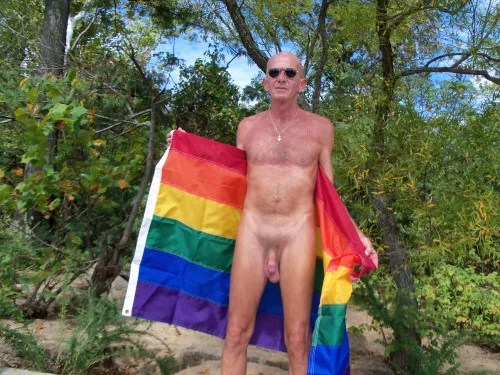
The Rainbow Flag representing the entire gay, lesbian, bisexual, transgender and queer + (GLBTQ+) communities and cultures was first publicly raised on 25 June 1978 in San Francisco, California, USA, in the United Nations Plaza in honour of gay pride at the 1978 San Francisco Freedom Day parade. The original flag consisted of eight coloured stripes was designed by Gilbert Baker and hand-stitched and dyed with the help of volunteers and friends Lynn Segerblum, James McNamara, Glenne McElhinny, Joe Duran and Paul Langlotz.
The eight stripes original was soon revised to six stripes with pink (symbolizing “sex”) and turquoise (for “art” and “magic”) eliminated as the colours weren’t available in flag fabric. Baker conceived the flag would empower his “tribe” and that a “rainbow of humanity” motif would represent the movement’s diversity.
The Rainbow Flag revised design was welcome globally and rapidly became accepted as a GLBTQ+ icon.
The Progress Rainbow Flag:
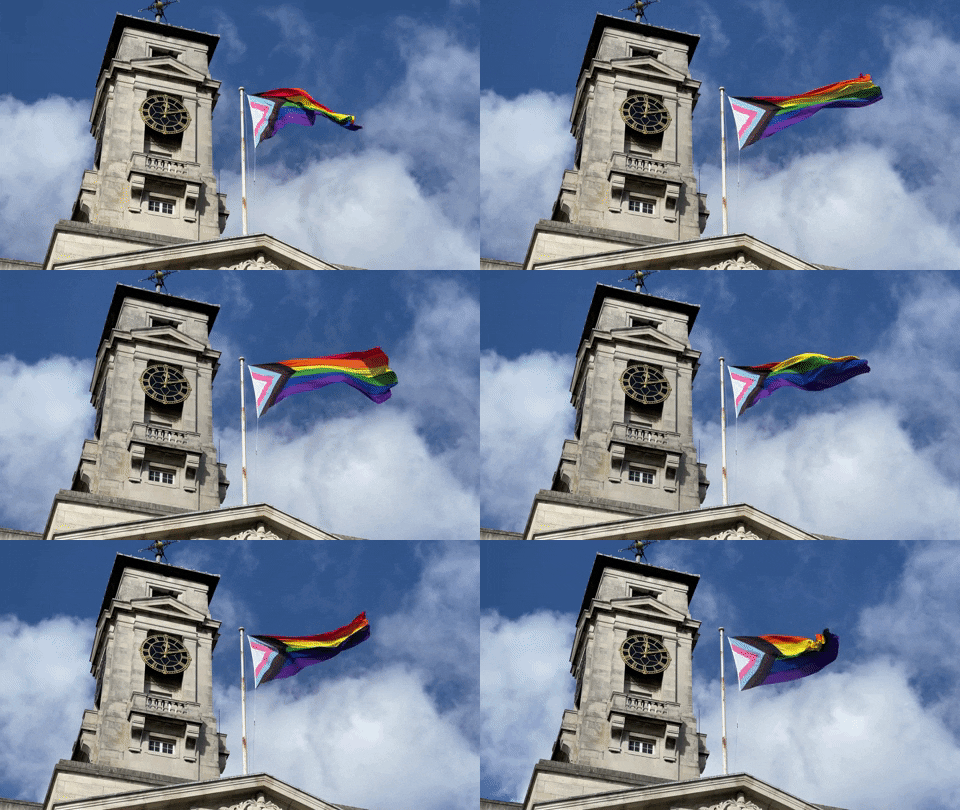
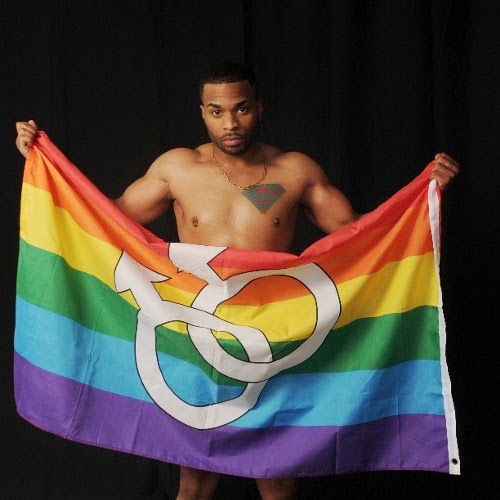
The Progress Pride Flag was developed by non-binary artist and designer Daniel Quasar in 2018. Based on Gilbert Baker’s 1978 Rainbow flag, Quasar’s redesign celebrates the diversity of the GLBTQ+ community and culture and encourages a more inclusive community and cultural acceptance and manifestation. The Progress Pride version has increased the representation of discriminated minority identities covered by the GLBTQ+ umbrella.
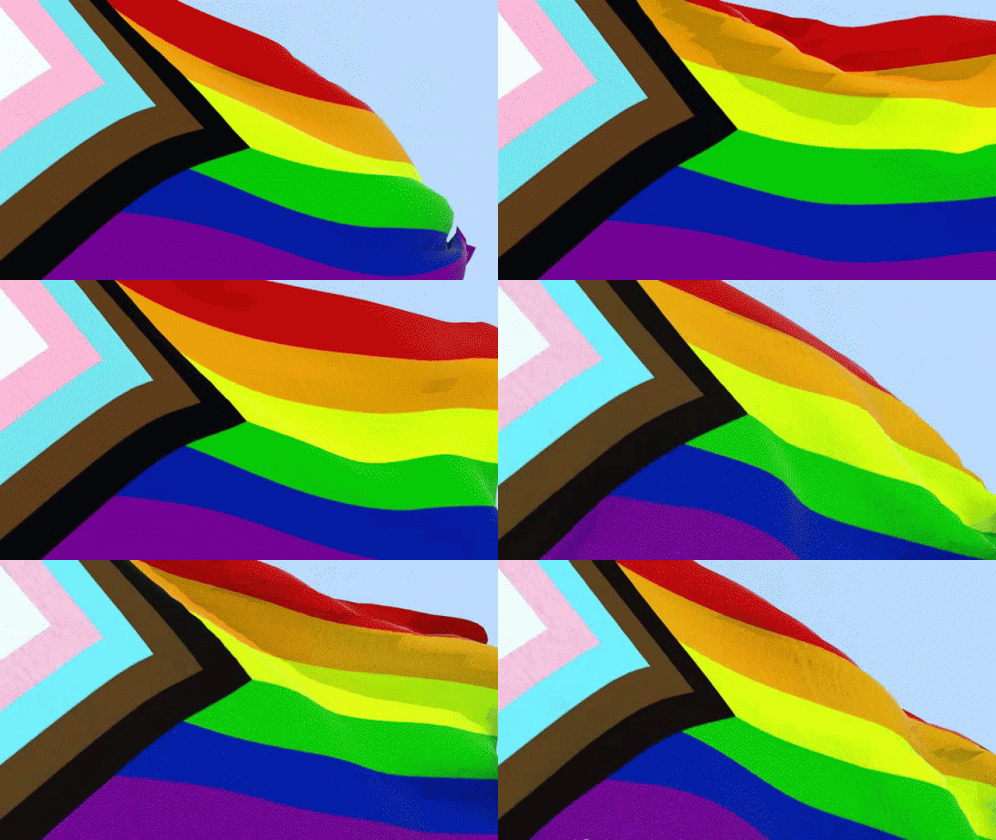
Quasar’s creation adds black and brown stripes (representing peoples of colour) and light blue, pink and white stripes (representing transgender and non-binary persons) in the shape of an arrow on the left of original Rainbow Flag field. In Daniel Quasar’s own words “…the arrow points to the right to show forward movement and illustrates that progress towards inclusivity still needs to be made.”
The black stripe has a double meaning. In addition to persons who are Black, it is also intended for “those who are living with HIV/AIDS and the prejudice and stigma surrounding them and those who have been lost to the disease.”
The Progress Pride flag was an immediate success. On the evening of 6 June 2018, Quasar posted the design on social media and woke up the next day to find that it had gone viral.
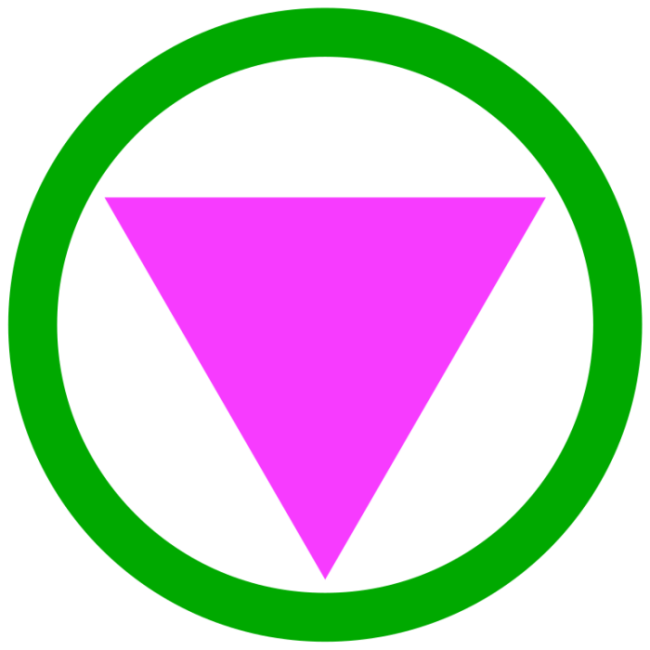
The above logo, a pink triangle surrounded by a green circle or displayed within a green field represents a “safe space” or comfort zone for GLBTQ+ persons. This visual image delivers an inclusive message and representation for a variety of individuals. This designation offers a nonjudgmental environment and welcoming atmosphere to all.
Naked hugs!
Roger Poladopoulos/ReNude Pride: Guys Without Boxers!

Author’s Note: The next post entry here is planned for Friday, October 23, 2026, and the proposed topic is: “Prevention Proposals!”

Jogging by myself lacks companionship but reduces chances of disease transmission!


