Purple: Spirit Dayis officially observed on the third Thursday of October, annually. This posting entry is offered in anticipation of the official observance!
On the Progress Rainbow Pride flag, the colour of purple at the bottom of the original rainbow field of six stripes represents the ideal of spirit. The colour also denotes pride and is considered a calming colour. It also connects us to the spiritual realm. For a great many of us, this is symbolic of our reflective nature and signifies the soul of the GLBTQ+ quest for our equality and freedom. In the United Kingdom and throughout the Commonwealth, purple is a royal colour and often is representative of the Crown.
Purple: Spirit Day is an annual anti-bullying, anti-coercion date that is held during National Bullying Prevention Month. It is particularly focused combatting damaging or threatening behaviour based on a person’s perceived or real same gender loving status. The Stonewall Inn Riots (SIR) of 1969 and the National Coming Out Day observance that commenced on October 11, 1988, reduced the suicide rate among the GLBTQ+ community and culture but it was never completely eradicated as a cause, even with the millennial transition.
A significant increase in GLBTQ+-related suicides committed not only raised the awareness of this problem within our community and culture but also in the minds of the general public. Clearly, more attention and efforts were necessary.
The commemoration of Purple: Spirit Day began on October 20, 2010, at the advocacy and inspiration of one Canadian teenager on her FaceBook social media. It is an awareness day of recent development in response to a USA suicide that gained international attention. On September 22, 2010, eighteen year old student Tyler Clementi, of Rutgers University in New Brunswick, New Jersey, USA, jumped to his death from the George Washington Bridge over the Hudson River. On September 19, Tyler’s roommate, Dharen Ravi, had posted to his Twitter social media account a clip showing Tyler kissing another man and announced to all his followers that he is gay. All of this was done without the permission of Tyler or his encounter partner.
Purple: Spirit Day!
The resulting media explosion that followed the suicide led Brittany McMillan, a secondary school student in Canada to respond to her conscience and launch the Purple: Spirit Day campaign on her own. The concept was undertaken by the Gay and Lesbian Alliance Against Defamation (GLAAD) who immediately assumed sponsorship after consulting with Brittany.
Promoted by GLAAD, participants wear the colour purple as a visible sign of awareness and support for GLBTQ+ young people and opposition to bullying (for whatever reason) in general. It is also a gesture in tribute to all GLBTQ+ victims of suicide.
Cartoon in support of GLBTQ+ Purple: Spirit Day!
The very first Purple: Spirit Day was held on Wednesday, October 20, 2010. Later observances were on Thursday, October 20, 2011, and on Friday, October 20, 2012. After that time, GLAAD enacted the official date of the thirdThursday in October as the annual occasion.
For those persons restricted by requirements of uniform, a purple awareness ribbon may be worn to show agreement with the cause. If a pre-printed purple ribbon isn’t immediately available, a plain one suffices. Use a regular safety pin to attach the ribbon to your collar or shirt.
I remember the very first Purple: Spirit Day. Aaron, my spouse and I were simply living together at the time, and there wasn’t much notice given in advance of the first occasion. We decided to make purple ribbons to distribute on our jobsites promoting the cause and spent the night before staying up late to create the awareness tokens. We assorted 150 ribbons for each of our jobs. By mid-morning the next day, we exchanged emails and we had both given out of ribbons!
Supporting Purple: Spirit Day!
For bare practitioners the event may be signified by painting a purple ribbon on the left side of the chest. It is important to promote attention to this worthy cause!
For additional information on Purple: Spirit Day! please click onto the link below:
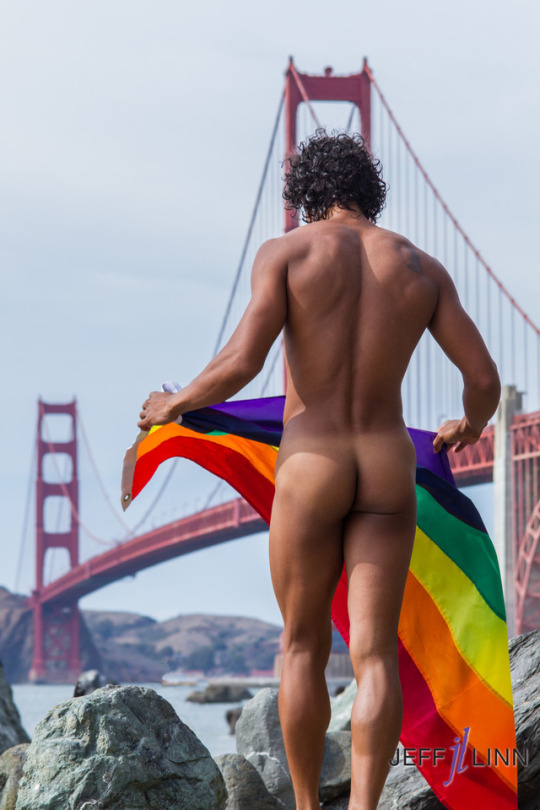
The title of this posting here on ReNude Pride and the accompanying “rainbow flag” images are at the insistence of my beloved spouse, Aaron Michael Peterson-Poladopoulos. His choice is based on his determination of the song “Over the Rainbow” by Judy Garland in the 1939 movie The Wizard of Oz” as being a unifying factor for the entire GLBTQ+ Bare History Month culture. To be honest, he all but ordered me to follow his selection! Out of my devotion to him, my need for a nutritious breakfast and my appreciation of all of his contributions to this site, I have complied with his instruction.
As a Deaf man, I do wonder about the song portion of his choice and in the interest of family harmony, I’ll surrender to his decision. After all, “mine is not to reason why, mine is but to do or he’ll make me die!” LOL! Naked hugs! 🙂
As for the pictures featuring the rainbow flag, I totally agree with my “better half.” As they all depict a bare practitioner man with the flag, they ensure compliance with the purpose of ReNude Pride: celebrating our same gender loving naturist/nudist heritage and community and our shared confidence and pride in being what and who we really are!
********************
Background:
It is generally recognized by all concerned that the modern civil rights struggle for the majority of the gay, lesbian, bisexual, transgender and queer+ people began with the Stonewall Inn riots following a police raid on the Stonewall Inn gay bar in New York City on June 28, 1969. This action, in the militancy of the political times, led to the growth and protests that encouraged our forebears to begin advocating for our freedoms and our long-denied human rights.
Given the number of groups and causes proliferating in the 1960s, our previously closeted (secretive) community emerged from anonymous and silent to militant and radical, even vocal. Various groups and individuals came together with the intent of organizing a body to become instrumental in determining the guidance and leadership of our growing struggle for equality.
********************
Our Story:
As a population with almost no formal structure aside from local municipal concerns, the initial building of a communal harmony and unity was disorganized and haphazard. Communication was infrequent and often by chance. The commitment and dedication of the early and emerging prominent individuals in the equality movement varied from city to city and fortunately enough of the “first few” proved resourceful in building a dynamic leadership that allowed our cause to develop and grow.
Despite the chaotic and confusing inception, it soon became apparent to many of the early GLBTQ+ advocates to the benefits of and the vital need for a visual emblem or a logo for identification and/or recognition purposes. It was agreed that a colourful graphic banner or flag would better serve this function as opposed to just writing the name on a placard.
A variety of concepts, designs and suggestions were made and presented to the ever-changing leadership individuals and/or organizing committees. The most popular and long-lasting ideas are featured below along with a description and/or justification for each submission.
Our time is here!
The Rainbow flag!
The year, 1969, was at the end of a decade that had witnessed massive social unrest. The African-American protests for civil rights, the birth of the feminist and women’s rights movements, the demonstrations for ending the Vietnam war, the equal pay for primarily Latino immigrant farm workers were underway during this time. The elimination of the military “draft” (enforced military service) and unequal financial compensation were also targets. The “homosexuals” (at the time, a derogatory and offensive identification of the now GLBTQ+ persons) was the most recent social group to clamour for equality and recognition.
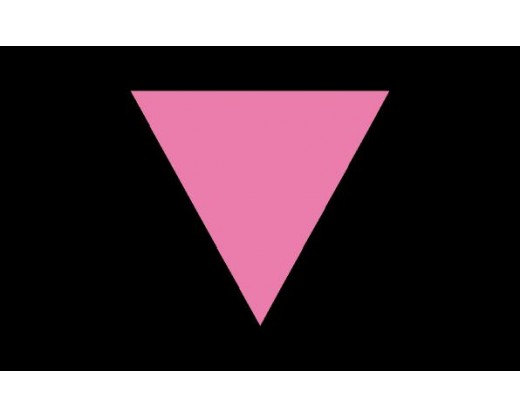
The Pink Triangle:
The downward-pointing pink triangle was prominently used by National Socialists (Nazis) in Hitler’s regime as a badge of shame and labeling of “homosexuals.” It was sewn onto the shirts of homosexual men in concentration camps to identify and dehumanize them in the eyes of the authorities and other prisoners. Other concentration camp inmates routinely lashed out against all prisoners wearing a pink triangle.
Homosexuality was made illegal in Germany under Paragraph 175 of the unification constitution in 1871, but the law was rarely enforced. It remained so until it was repealed in 1969. When the Nazi Party assumed control of Germany in 1933, they made it enforcement a priority in their goal of promoting the Aryan people as superior to all others in order to racially and culturally “purify” Germany. The Nazis arrested thousands of GLBTQ+ individuals and sent them to concentration camps. the overwhelming majority of them homosexual men. They were all seen as degenerate.
The rise of the gay, lesbian and bisexual pride movement led to the reclaiming of the pink triangle as a positive symbol of self-identity and of triumph over tragedy. In 1994, the German government formally apologized to all persons for the abuse committed against same gender loving persons throughout the country’s history, especially by the Nazis.
The pink triangle remains a strong symbol of GLBTQ+ progress towards equality and represents the journey forward worldwide. It is a tribute to all of those persecuted under bigotry and hatred. The flag is recognized globally.
The Lambda Flag:
As a symbol of same gender loving freedom from centuries of discrimination, oppression and torture, the Greek letter lambda was first designated in December, 1969, as a symbol of distinction by the graphic artist and Gay Activists Alliance founding member, Tom Doerr. He chose it because in chemistry it is a sign for “catalyst” as for the complete exchange of energy.
Others argue that the lambda denotes the synergy of the growing same gender loving movement. The idea that the whole is greater than the sum of all of its parts. Still others claim the lambda is representative of lesbian.
In December, 1974, the lambda was officially adopted by the International Gay Rights Congress at their meeting in Edinburgh, Scotland, UK, by a unanimous vote. As a representation of gay and lesbian civil rights, lambda became internationally accepted, popular and recognized.
By far, both the pink triangle and the lambda remain dominant and prominent within the GLBTQ+ community and culture today. Historically, they are the two “firsts” in our community and culture.
The criticism of the lambda emerged later as some felt it was symbolic for males only.
The Rainbow Flag:
The original Rainbow flag!
What many of us herald as the first official flag of our community and culture was first publicly raised on June 25, 1978, in San Francisco, California, USA, at the city’s United Nations Plaza in honour of the 1978 San Francisco Gay Freedom Day parade. The original flag consisted of eight coloured stripes and was designed by Gilbert Baker and handstitched and dyed with the help of friends and volunteers Lynn Sugarblum, James McNamara, Glenne McElhinney, Joe Duran and Paul Langbutz. The eight stripes were later reduced to six with the pink (denoting “sex”) and turquoise (for “art and magic”) eliminated as the colours were not available in flag fabrics.
The colour scheme!
The graphic above shows the revised eight-stripe flag reduced to six stripes and what the coloured stripes each represented.
Baker conceived the flag would “empower his tribe” and at the same time reflect a “rainbow of humanity” motif to represent the movement’s diversity.
Current: The Progress Rainbow Flag!
Moving forward in progress!
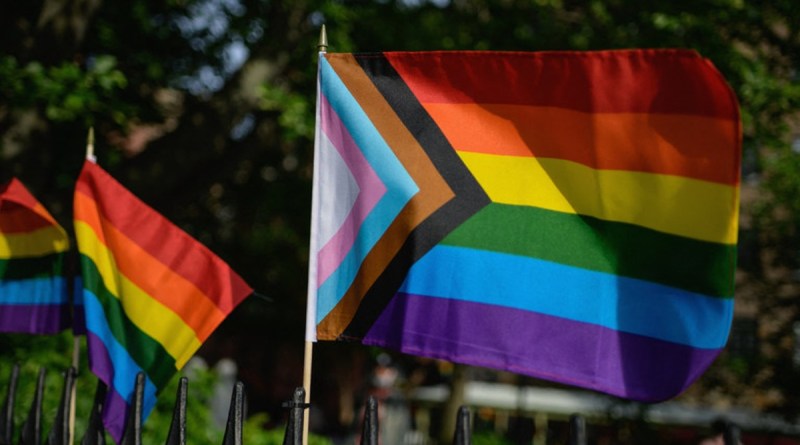
The Progress Pride Rainbow flag was developed by non-binary artist and designer Daniel Quasar in 2018. Based on and incorporating Gilbert Baker’s 1978 Rainbow flag, Quasar’s redesign celebrates the diversity of the global GLBTQ+ community and culture and encourages a more accepting and inclusive general society. The redesign has invested the representation of discriminated minority identities covered by the GLBTQ+ umbrella.
Quasar’s creation placing black and brown stripes (symbolizing peoples of colour) and light blue, pink and white stripes (representing transgender and non-binary persons) in the shape of an arrow-head all pointing to the left of the Progress Pride Rainbow flag’s in the image of “forward progress.” In Daniel Quasar’s own words: “…the pointed arrow to show forward movement and illustrates that the progress towards inclusivity still needs to be made.”
The black stripe has a double meaning attached to it as it is also intended for “those living with HIV/AIDS and the stigma and prejudice surrounding them as well as all those who have been lost to the disease.”
The Progress Pride Rainbow flag was an immediate success. On the evening of June 6, 2018, Quasar posted the design on social media. He woke up the next day to find that it had gone viral.
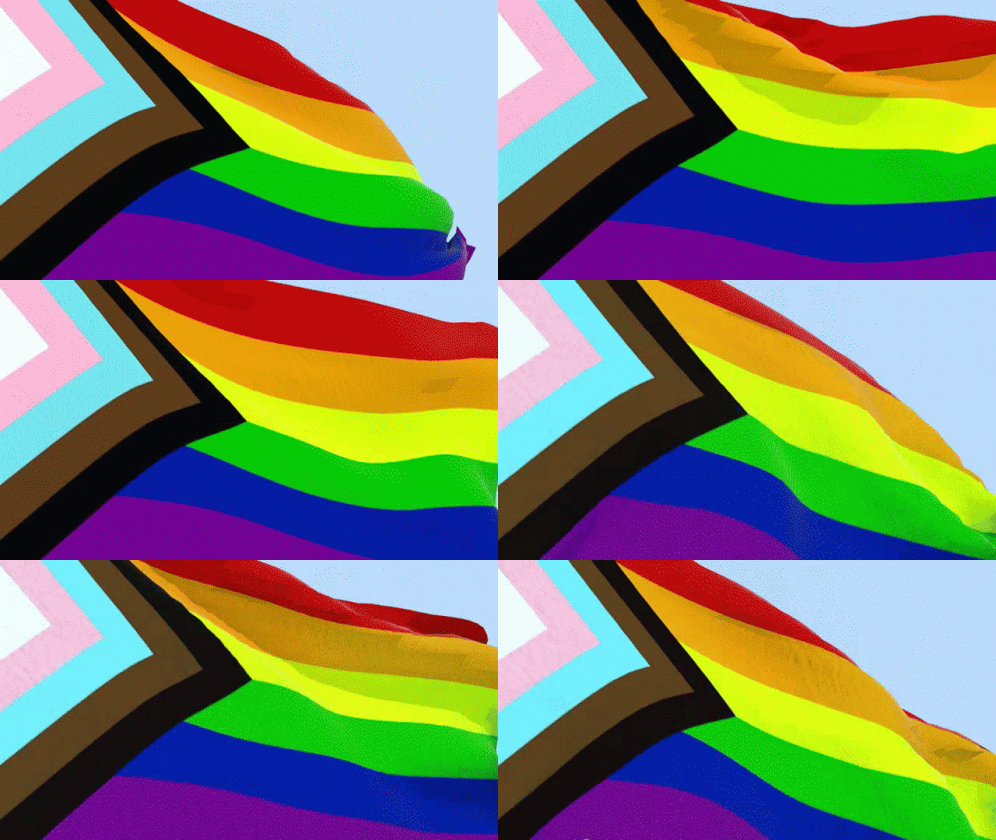
Progress Pride Rainbow blowing in the wind!
We continue our way into the future by remembering our past. We are all together as we move forward!
Naked hugs!
Roger Peterson-Poladopoulos and Aaron Michael Peterson-Poladopoulos/ReNude Pride
Author’s Note: The next post entry here is planned for Monday, October 16, 2023, and the proposed topic is: “Purple: Spirit Day!”
National Coming Out of Closet, October 11, annually!
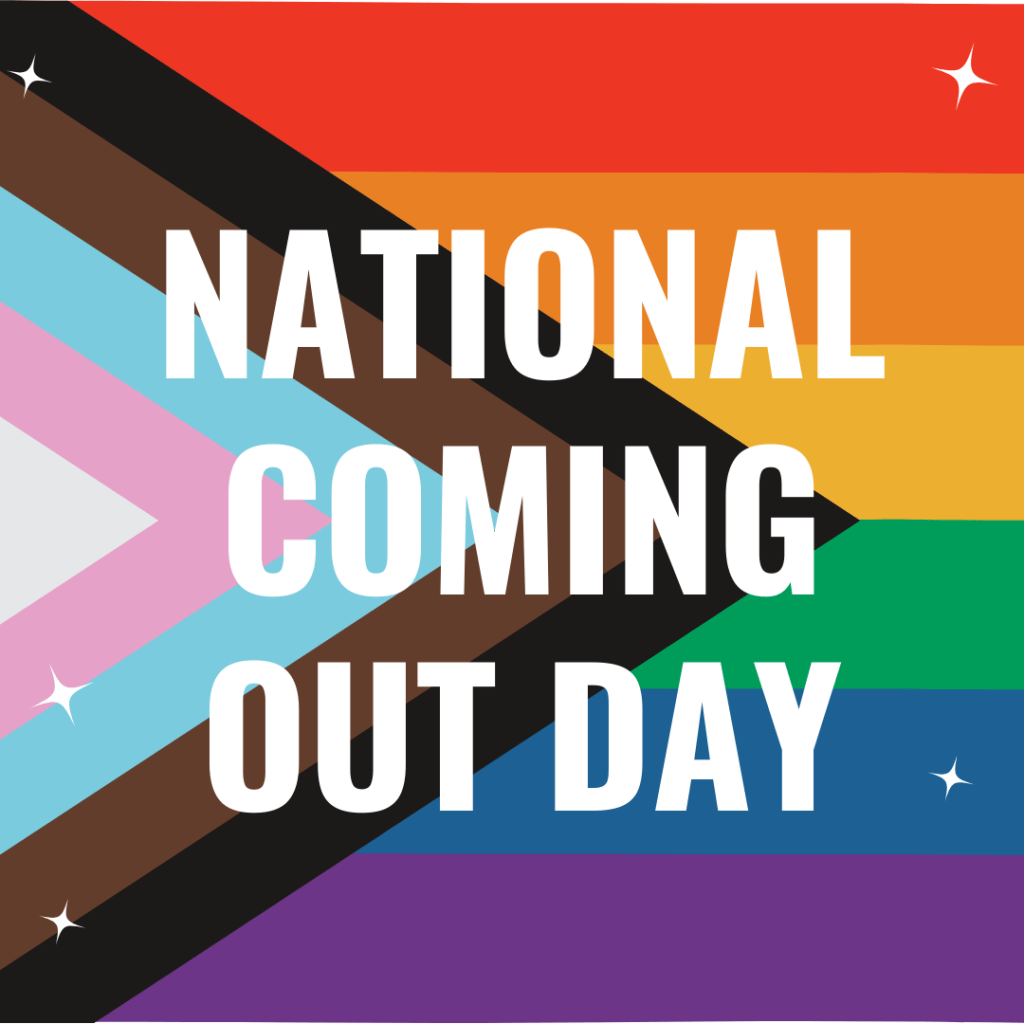
NATIONAL COMING OUT DAY: OCTOBER 11
Preliminary notation:
National Coming Out Day is actually on Wednesday of this week. It is my Monday offering here on ReNudePride so that everyone can be prepared to “hail” to the big day when it arrives! Come out based on your sexuality! Come out because you’re proud to be bare! Come out everywhere!Enjoy a day of just “being you!”
During the expanding global HIV/AIDS pandemic, openly gay artist Keith Haring created the below graphic to salute the initial National Coming Out Day commemoration on October 11, 1988. The event was created in order to encourage all GLBTQ+ people to “come out of the closet of their secrecy and shame” and to take pride in who they are! The date selected for the first National Coming Out Day was the first anniversary of the 1987 March on Washington for Lesbian and Gay Civil Rights.
The HIV/AIDS crisis was unfortunately “outing” an alarming number of gay men only after they had succumbed (died) from the ravages of the disease. The initial public display of the NAMES Project AIDS Memorial Quilt happened in conjunction with the 1987 March. The purpose of the National Coming Out Day was to enable the SGL community to boldly self-identify itself notoriously and numerically! It also was in the tradition of several celebrities publicly “coming out” in honour of the 1987 March on Washington.
Basic truth!
A very simple truth that regrettably centuries of oppression and torture could not be easily acknowledged by many. National Coming Out Day sought to end the marginalization and ostracism felt by many due to their sexuality. The encouragement of persons to willingly identify themselves without embarrassment and shame forced many to see that bisexuals, gays and lesbians included family and friends. One of the goals of National Coming Out Day is to prove to the mainstream population that the GLBTQ+ population is as diverse as ever and also includes persons they never thought as “being that way” (gay, lesbian, bisexual, transgender and queer+)!
A man-2-man embrace!
This forced many persons who had remained passive and silent while the same gender loving community and culture were being harassed, marginalized and ridiculed to finally face the reality that some members of their family and some of their friends were honestly members of the very community that was being condemned. This sudden “truth” forced multitudes to examine their consciences and confront their prejudices. The result initiated a gradual transition in society’s thinking and views on the GLBTQ+ people.
Proud proclamation!
The original concept of the National Coming Out Day was for the same gender loving communities to openly acknowledge their sexuality. The personal evolved into being the political. The emphasis is on the basic form of activism as openly being same gender loving to colleagues, family and friends. Here on this site, ReNude Pride, we go an additional step and include our bare practitioner affiliation!
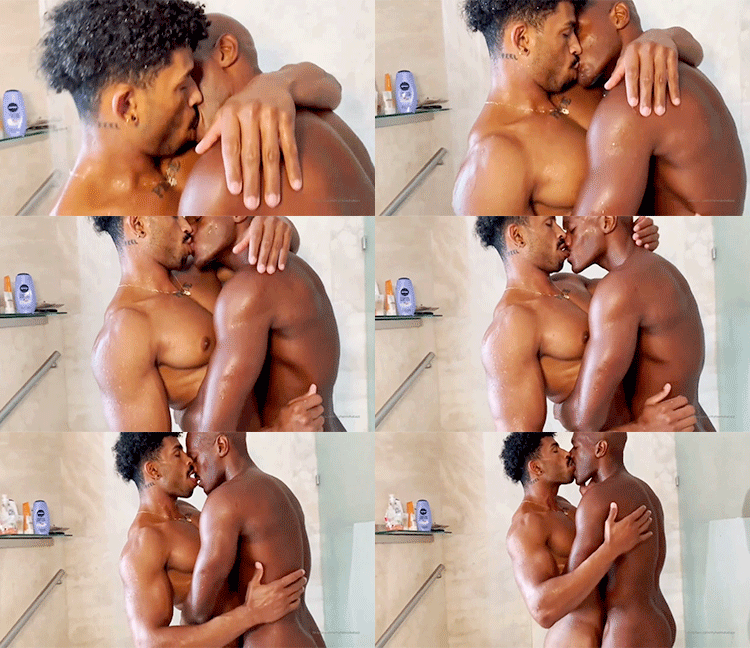
Felipe Ferreira and Rhyheim Shabazz kiss!
There is absolutely no reason for any of us to feel any guilt, humiliation or shame in being what and who we are. No matter who we love and no matter whether we are dressed in clothing or proudly bare, we are entitled to be ourselves! As long as we aren’t hurting anyone else, what difference does it make? All of us have the very human right to be ourselves every day of our lives without any fear or penalty for different!
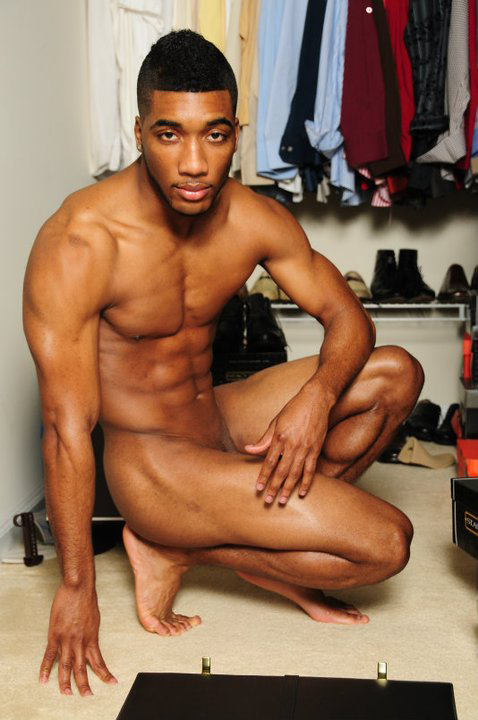
Bare practitioners come out, too!
Sibling pride in being bare!
A bare practitioner is calm, content and relaxed when either publicly (socially) or privately appearing in their native “natural” state. There is no anxious or nervous concern over appearance or the opinions of others. We accept all of our physical differences and limitations as making each one of us as unique and then we move forward in our lives. The priority is our quest to be the very best what and who we are not only for ourselves but also for all others around us!
Have a great and openly proud National Coming Out Day!
Naked hugs!
Roger Poladopoulos/ReNude Pride
Author’s Note: The next post entry here is planned for Friday, October 13, 2023, and the proposed topic is: “The Rainbow Emerges!”
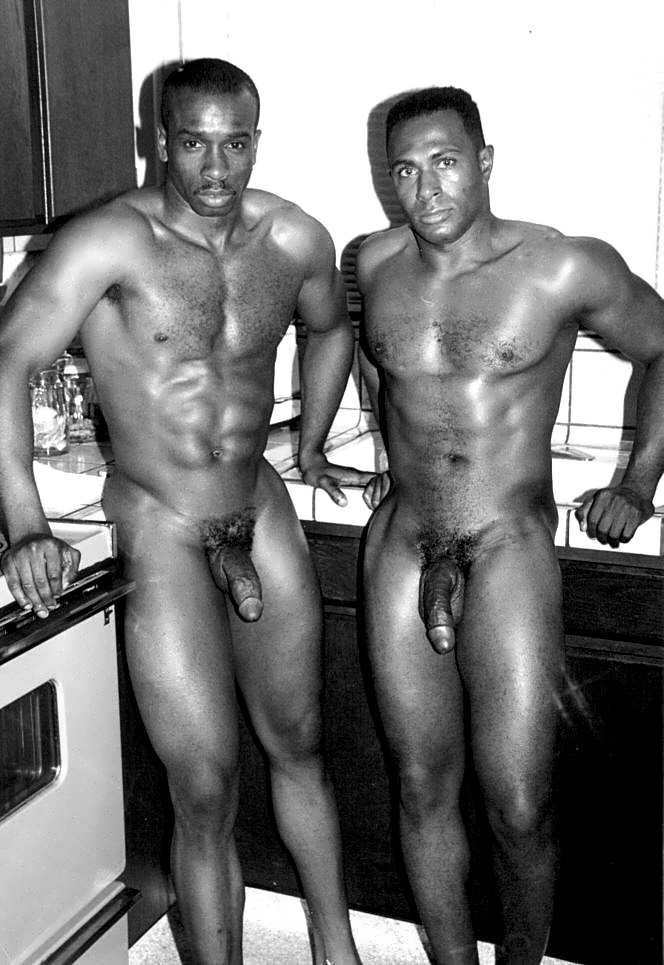
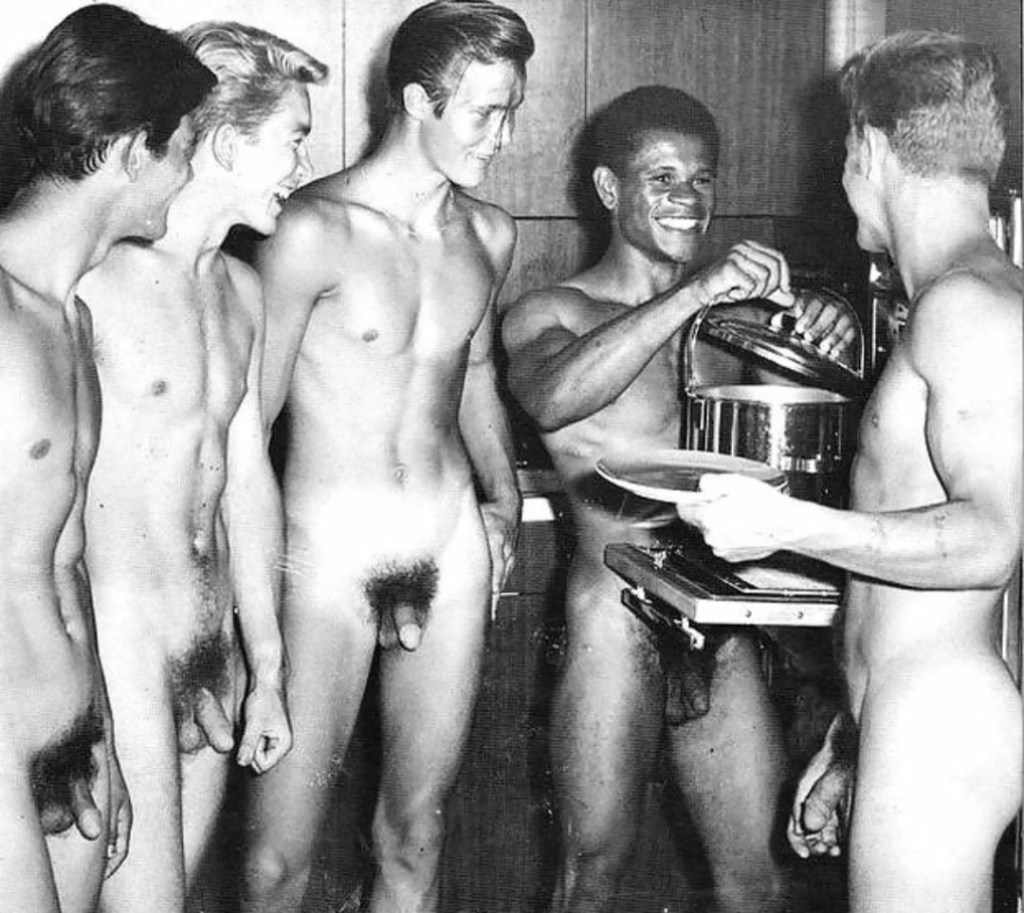
The majority of the photographs featured in this particular gallery were made during the era of segregation (a legal separation of the races) here in the USA. Not only are the subjects to be admired because of their violation of the segregation statutes, but the photographers and producers as well. Especially in the southern states, disregard for segregation laws contained severe fines and penalties. Worse consequences existed for African-American offenders.
Strength!
Judging from the hairstyles on the subjects in the above two pictures, the timing of the photography is from the early to mid-1960’s. Although the courts were by then overturning segregation laws, the practice remained prevalent.
Celebrate ourselves, our community and our culture!
Let’s all enjoy ourselves while observing our windows of opportunity viewing our past!
An interracial kiss!
Especially bold and courageous were the photographs that represented any type of physical attraction between persons of two distinctly different races. Judging from the hairstyles of the two men in the above image, the probable timeline was the late 1960s. As this was more or less around the time of the Stonewall Inn Riots (SIR), it was well before the ideals of same gender love entered into the agenda for public acceptance and tolerance. Therefore, the two men featured here are equally commended for their audacity and courage as Illinois was the only state in the USA that had decriminalized “homosexuality” while it was still ostracized by the general society!
J.C. Carter (right) and his lover!
The African-American community was often hostile to images depicting two of their own comfortable with sharing not only their nakedness but also any suggestive sexual attraction. Openly gay actor J.C. Carter (above, right) posed above with his lover. The year was 1971, shortly after the SIR. This was prior to “J.C.” starting to completely shaving all of his body and head hair.
Socially nude!
Judging from the hairstyles in the above picture, these men posed for this shot in the mid-to-late 1950s. This capture was made in Chicago, Illinois, USA, and the segregation (separation) of the races was still prevalent.
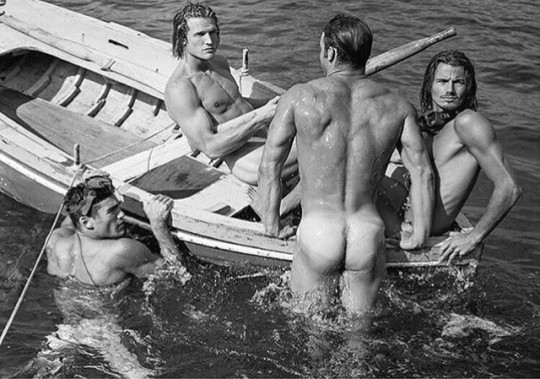
Boating “skinny-dippers!”
The above photo was dated from 1976 and aside from the buttocks of the man second from the right wasn’t anatomically suggestive.
Naked hugs!
Roger Poladopoulos/ReNude Pride
Author’s Note: The next post entry here is planned for Monday, October 9, 2023, and the proposed topic is: “National Coming Out Day!”
In the USA, October, annually, is featured as GLBTQ+ History Month. During this time, outstanding gay, lesbian, bisexual, transgender and queer+ persons, both current and past, are honoured for their achievements and contributions to their communities and culture’s history as well as to services rendered to history and to society in general. The image above offers the facial representation of some of this year’s winners.
Artistic interpretation!
The USA observance was founded in 1994 a Missouri secondary (high school) history teacher named Rodney Wilson. His original intent was to provide role models, build community, instill pride and to provide a civil rights statement of the achievements and efforts of the entire GLBTQ+ community and culture. Prior to the Stonewall Inn Riots of June 28, 1969, there was little, if any, information about the accomplishments and struggles suffered by the previously-known “homosexual” community in the USA and elsewhere in the world. Before the Stonewall uprising, it was the custom for the members of this community to remain closeted (anonymous, secretive).
“There was no gay pride before Stonewall. Only gay fear and gay isolation and gay distrust and gay self-hatred.” ~ Edmund White ~ USA gay novelist, historian
Gay rioting outside the Stonewall Inn, New York City, June, 1969!
For many, the Stonewall Inn riots marked the beginning of the movement for same gender loving (GLBTQ+) civil rights in the USA. However, in retrospect, it is now recognized as the catalyst (inspiration) that encouraged the community and culture – long abused, discriminated against and ostracized – to adapt a more activist approach in the journey towards equality and freedom.
Because of the existence of GLBTQ+ History Month, there are now forums, historical foundations and societies and institutions themselves dedicated to examining and exploring the topic and others within the community and outside. This is one of the many benefits not only of the Stonewall Riots but also of the observance of our community and cultural history.
The Stonewall Inn Historic Site!
The very first commemoration of GLBTQ+ History Month was endorsed by the Gay Lesbian Alliance Against Defamation (GLAAD), Gay Lesbian Students Educators Network (GLSEN), the Human Rights Campaign, the National Gay and Lesbian Task Force, the National Education Association (NEA), and other national organizations.
Equality Forum is a national GLBTQ+ civil rights organization with an educational focus. It coordinates GLBTQ+ History Month, produces documentary films, sponsors high impact social initiatives and sponsors an annual GLBTQ+ civil rights conference. It also maintains the GLBTQ+ history month website which is linked below.
Below are listed the 2023 honourees. The number of the individual is the date they are honoured. Click the link above for additional information.
Marin Alsop – trailblazing conductor
Chasen Buttigieg – GLBTQ+ activist
Madeline Davis – GLBTQ+ activist and historian
Elana Dykewomon – author and activist
Tessa Ganserer – transgender German politician
Roxane Gay – author
Lesley Gore – composer and singer
Miss Major Griffin-Gracy – transgender activist
Brittney Griner – WNBA superstar
Maura Healey – Governor of Massachusetts
Jazmine Hughes – editor and writer
Eddie Izzard – British actor and comedian
Michael R. Jackson – Pulitzer award playwright
Leslie Jordan – actor and comedian
Tina Kotek – Governor of Oregon
Marijane Meeker – pulp fiction pioneer
Scott Minerd – Wall Street innovator
Ryan Murphy – writer, director, producer
Carl Nassib – first out active NFL player
Stu Rasmussen – first out transgender mayor
Allen Schindler, Jr. – slain naval officer
Charles Silverstein – psychologist, activist
Andrew Solomon – writer
Michael Stipe – rock performer
Kara Swisher – tech journalist
Andre Leon Talley – fashion journalist
Doris Taylor – medical scientist
Evelyn Thomas – military activist
Mpho Tutu Van Furth – South African Anglican priest
Samira Wiley – actor
Penny Wong – Australian foreign minister
As is our standard here on ReNude Pride, we combine the best of both of our bare practitioner exceptional qualities and celebrate all of October as GLBTQ+ Bare History Month. This observance will feature both our same gender loving heritage as well as our bare pride and heritage. Ours is a culture and life that needs to be honoured and saluted in many ways throughout not only the month but all year long!
Please take time and explore interesting facets of our historical community and culture! Happy GLBTQ+ Bare History Month to all!
Naked hugs!
Roger Poladopoulos/ReNude Pride
Author’s Note: The next post entry here is planned for Monday, October 2, 2023, and the proposed topic is: “Return to Regularity!”
September is one of the most confusing months of the calendar for me. It has pleasurable weather but it also marks the end of the summer season here in the Northern Hemisphere. The seasonal change itself isn’t all that bad – autumn can be enjoyable – it is what follows afterwards that causes me grief! I always have a difficult time with winter!
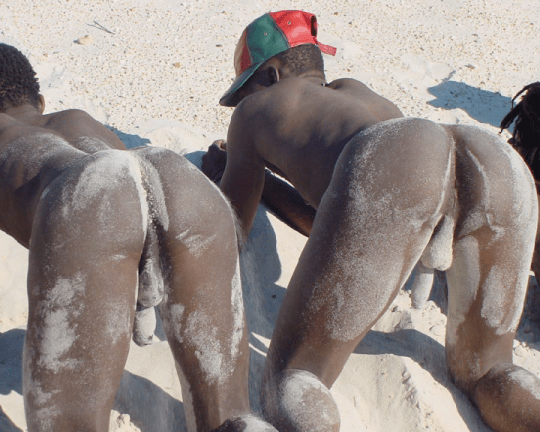
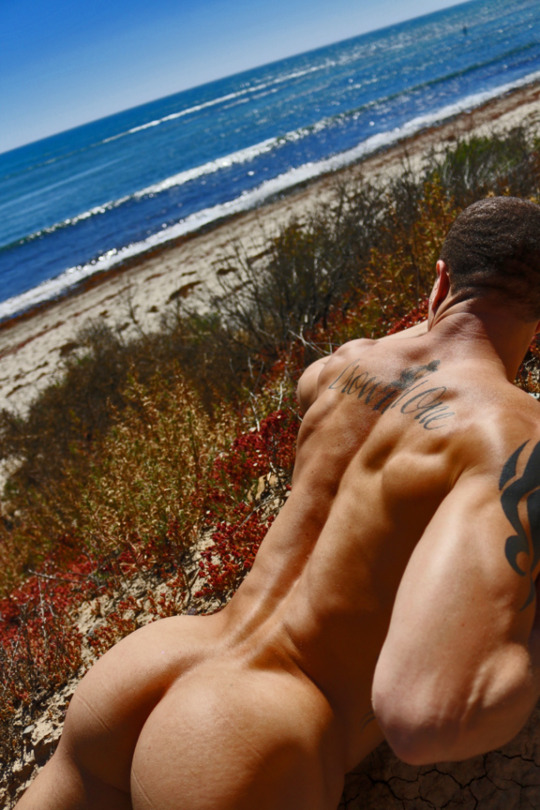
Sandy bottoms-up!
So as we bid a fond farewell to the Summer of 2023 (Northern Hemisphere), we salute our bare practitioners in the Southern Hemisphere who begin the welcome their season of naked freedom and prosperity!
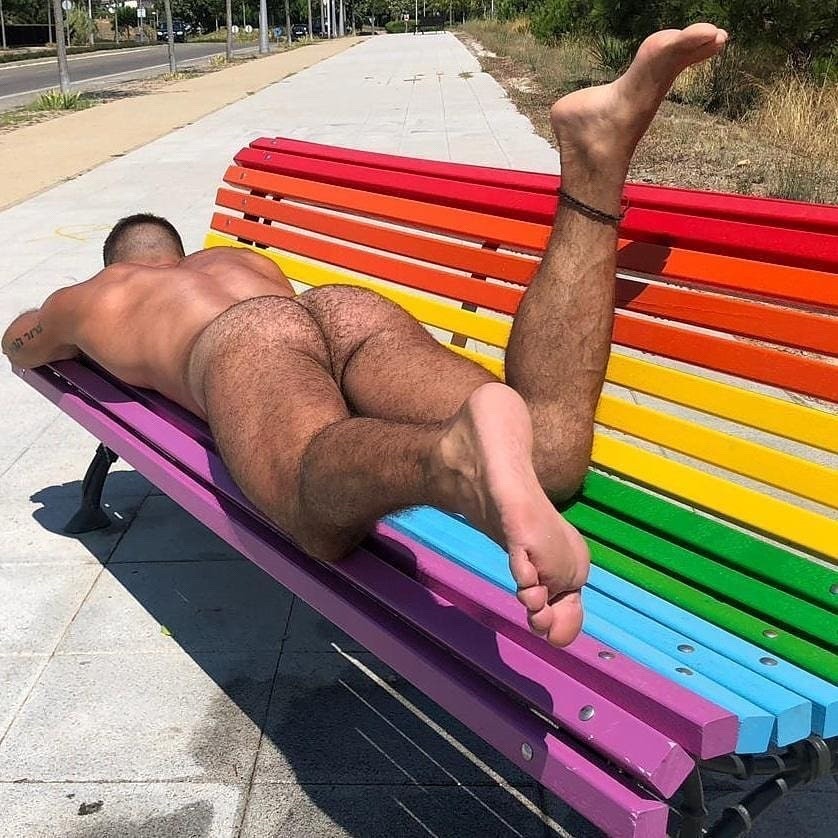
Landscaping bottoms-up!
No matter where we live, almost all of us have the distinct advantage of being able to naturally enjoy the pleasures of an outdoor bottoms-up! showcase as our seasons transition from one to another, at least during the beginnings of this time of the year!
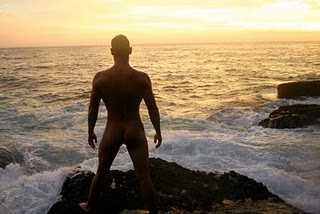
Bottoms-Up! lookout!
Plus, there’s always the opportunity to view the outside world from the comfort and luxury of our own familiar surroundings before we parade our buttocks out in full public view!
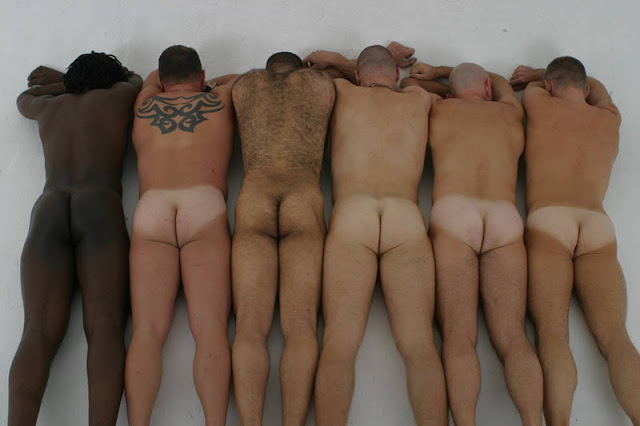
Bottoms-up! with pride!
Of course, throughout the entire year, our cause and purpose is always clear: Bottoms-up! with confidence and pride!
Naked hugs!
Roger Poladopoulos/ ReNude Pride
Author’s Note: The next post here is planned for tomorrow, Sunday, October 1, 2023, and the proposed topic is: “October: GLBTQ+ Bare Pride Month!”
The increasing popularity of “selfies” (pictures of oneself) presents us with a relatively new form of photographic art that is gaining adherents daily. The cameras accompanying portable telephones have made this feature a common and widespread reality of a majority of our lives!
It is now an option for all of us to use whatever style or type of photography we prefer to capture an image of ourselves and our buttocks to engage in history!
GIVE YOUR BUTTOCKS THE HISTORIC SIGNIFICANCE THEY DESERVE!
During USA GLBTQ+ History Month
October, 2023
Bottoms-Up! on October 31, 2023, will feature submitted post-entries from fellow bloggers and ReNude Pride followers!
Submissions accepted only in .jpeg, .png or .gif formats only!
Totally anonymous submissions with only country of origin revealed. Submit your entry, one photograph only to: renudepride@gmail.com
Submit by October 15, 2023! Currently accepting entries!
Naked hugs!
Roger Poladopoulos/ReNude Pride
Author’s Note: The next post entry here is planned for tomorrow, July 15, 2023, and the proposed topic is: “Nude Recreation Week: Week-End!”
The date of July 4, is regarded as the time that the USA declared freedom from being a collection of British colonies into an independent country. However, freedom wasn’t attained by a majority of persons living here as certain restrictions applied. To vote, males only. The enslavement of African-Americans was practiced. The indigenous peoples, Native-Americans, were deprived of respect and rights.
Independence wasn’t obtained on this date. It was a dream yet to materialize.
Naked hugs!
Roger Poladopoulos/ReNude Pride
Author’s Note: The next post entry here is planned for Saturday, July 8, 2023, and the proposed topic is: “International Skinny-Dip Day!”
Today’s post entry is ReNude Pride’s summary of the historic Stonewall Inn Riots (SIR) that took place in New York City, New York, USA, in the early hours of June 28, 1969. This incident is credited by many as the “spark that lit the flame” of the modern, monumental movement of equality, freedom and justice for the civil rights of gay, lesbian, bisexual, transgender and queer+ (GLBTQ+) persons everywhere. The results of their actions continue to happen even today, more than a half-century later,
Reference sources used to compile this posting include:
Bausman, Ann, “Stonewall: Breaking Out for Gay Rights”
Doberman, Martin P., “Stonewall: A History”
Images courtesy of GoogleImages.
Stonewall Inn, entrance
“The door of the Stonewall had wrought-iron bars across this little “peephole” – a little wooden thing that slid open. And the man inside would look out at you and, if you looked like you belonged there, he would open the door and let you in.” ~ Chris Babick ~ describing the front entrance to the Stonewall Inn, New York City, New York, USA
The Stonewall Inn (it was never a hotel) opened as a bar catering to the “homosexual” (American derogatory term used to describe same gender loving people prior to SIR) community in 1967. Prior to that, it had been a stable (for horses), a French bakery, a tearoom and lastly, a restaurant that had burned out of business. It opened as a bar (pub, public house, tavern) under Mafia-affiliated management and very closely connected to organized crime. The establishment consisted of two main rooms, each one with its own dance floor. The first room was popular with the older clientele and the back room attracted the younger ones.
At the time of the Stonewall Inn Riots (SIR), it was unlawful for “homosexuals” to socialize together in public and same gender intimacy was illegal, in both private and public places, in every state in the USA except Illinois. Same gender loving persons could and were fired from their jobs without any legal recourse. They were ridiculed and attacked publicly often without any consequence. Simply being a “homosexual” was considered an antisocial and criminal act. Churches and clergy were often the instigator and very few advocated tolerance. Everyone was required, by law, to wear clothing appropriate to their birth (natural) gender. The only exception ever permitted was for Halloween.
Friday evening, June 27, 1969, was a hot and humid start to a weekend. Most of the patrons gathered inside the Stonewall Inn were looking forward to a night of dancing with their friends, relaxing with cocktails and enjoying a summer’s night in New York City. They had no idea that they were about to witness an historical event that would change their lives – and the “homosexual” world – forever.
Just before the police raid and rioting began!
As the clock approached the midnight hour, both dance floors at the Stonewall Inn were full to capacity with energetic “homosexual” couples. June 28, 1969, was now into its infancy. Suddenly the music stopped! The lights that had been dimmed to enhance the atmosphere came back on in a bright glare that caught everyone by surprise. Almost at once the realization dawned on the festive crowds that the police were raiding the bar!
The New York City Police Department was long familiar with conducting raids on gay and lesbian bars. Their process was fairly routine and they all associated “homosexuals” as a relatively compliant and passive crowd. For this reason, only one police transport vehicle (paddy wagon) and one marked squad car were involved in the raid. Less than a dozen officers were assigned the task of managing and segregating the patrons, confiscating all the alcohol and arresting the Stonewall Inn employees.
“The police weren’t letting us dance. If there’s one place in the world where you can dance and feel yourself fully as a person and that’s threatened with being taken away, those words were fighting words.” ~ Tommy Lanigan-Schmidt, ~ Stonewall Inn patron and riot participant
The arrival of the police raiding force caused pandemonium to erupt inside the Stonewall Inn. Customers searched in vain for an escape route or for a place to hide. The law enforcement officials immediately began seizing both liquor and beer as evidence against the establishment and segregating the crowd: bar employees in one area, cross-dressers (transgender persons) in another and then the regular “homosexuals” elsewhere. The bar workers and the cross-dressers were to be arrested for their violating the laws. The regular “homosexuals,” once they produced their proper identification, were to be given court citations and then permitted to leave.
That was the normal New York City Police routine for raids against illegal “perverted” nightclubs. However, this one at the Stonewall Inn on June 28, 1969, was going to change all that “routine” forever. History was about to unfold!
Evicted clientele from the Stonewall Inn, June 28, 1969!
The year, 1969, was at the end of a decade that had witnessed massive social unrest throughout the United States. The African-American protests for civil rights, the birth of the feminist and women’s rights movement, the anti-Vietnam war demonstrations and the equal pay marches and strikes for primarily Latina/Latino immigrant farm workers were underway during this time. The “homosexuals” who had taken part in these public uprisings against these unjust policies were now energized and many wondered when their time for equality would happen. Little did they know that the police action against the Stonewall Inn that early morning was the spark that would light that fire!
As the police began checking the identities of all persons inside the Stonewall Inn, those with proper credentials were issued summonses for court appearances, released from custody and forced outside the bar. Only this time, instead of simply leaving the premises, they congregated outside on the sidewalks and at a nearby park. When law enforcement attempted to disperse them, the grew belligerent and confrontational.
The police, completely unaccustomed to “homosexual” defiance, continued to press the order to vacate the area. The crowd, emboldened by their frustration with being treated as “deviants” and second-class citizens, started to chant and to empty trash cans and hurl the garbage contents at the officers.
By this time, passers-by, curious as to what was happening, joined the upset “homosexuals” to express their dissatisfaction with the raid. The throng outside the Stonewall Inn grew in number, anger and curiosity. Once the word of what had transpired inside began to spread, even more “homosexuals” descended into the inn’s neighborhood and gather in the bar’s vicinity.
“You could hear screaming outside, a lot of noise from the protesters, and it was a good sound. It was a real good sound that, you know, you had a lot of people out there pulling for you.” ~ Raymond Castro ~ a customer of the Stonewall Inn detained by police inside the facility during the siege
The protesters outside Stonewall Inn
By now, the police raiders, trapped inside the building, understood that the situation had gotten beyond their control. They tried to call for reinforcements but were unable to reach any source for assistance. They had secured the bar but were were trapped inside and the crowd surrounding it on the outside was swelling in both size and fury. A few hundred patrons had now grown to an angry mob of several thousand and more were joining them by the minute.
No one with the New York City Police Department had anticipated the “homosexuals” – always believed to be meek and mild – to fight back. The years of abuse, oppression and ridicule had taken its toll and the frustration now became revolution and the time for retribution was at hand. Unfortunately for law enforcement, the pent up anger with police indifference and mistreatment was now being released and returned in kind. The officers were now prisoners inside the Stonewall Inn.
Two hours after the raid commenced, the police and their detainees were held inside the building with no relief in sight. The two-way communication devices between the raiding party and their office weren’t operable and the only pay-phone inside the lounge wasn’t able to connect to any local police precincts. The expected passive “homosexuals” had finally achieved a “first” in their spontaneous riot: the aggressive police were contained, surrounded and they were all very nervous.
By this time, the expanding crowd outside the Greenwich Village pub now filled the sidewalks, streets and the entire neighborhood and a full-fledged riot was underway. The raiders (police) were desperate for relief!
Stonewall Inn rioter!
In an effort to relieve the inflammatory predicament, the stranded law enforcement decided to send the detainees and half the officers inside the Stonewall to the closest local precinct in the two vehicles assigned to the raid. There, the detainees would be formally charged with arrest and the officers could make arrangements for a law enforcement riot force to assemble and rescue the remaining police personnel from the Stonewall Inn. This relief effort finally returned to the bar and eventually dispersed the angry mob of “homosexuals” and curious onlookers several hours later.
Despite damage to the Stonewall Inn and the loss of the license to sell alcoholic beverages, the bar opened for business (dancing) the following night. It was Saturday night and word of the disturbance had spread throughout the city’s closeted “homosexual” community (primarily by word of mouth). A larger than usual crowd gathered both inside and outside the Greenwich Village establishment. Most didn’t expect repeat of the raid the night before and a significant number of those who showed up mainly wanted to inspect the damage.
The police, however, had different ideas. They were strictly outside the Stonewall Inn in full force with a large number dressed in riot gear. They had learned their lesson and were determined to remain in complete control should the patrons become unruly again.
Detainees!
The “homosexuals” had been empowered by the riot the previous evening and weren’t about to be bullied into submission again. As the large law enforcement presence attempted to disperse those gathered outside the Stonewall Inn, they were confronted by verbal insults and an array of street-savvy tactics that saw the legal officers chase off onlookers, only to have them run around the block and return again. Silent compliance and obedience to uniformed police was no longer a fact of life for New York’s “homosexuals.” They were tired with suffering abuse, disrespect, ridicule and treatment as second-class citizens or worse.
“There was no gay pride before Stonewall. Only gay fear and gay isolation and gay distrust and gay self-hatred.” ~ Edmund White ~ gay author and novelist; he was present at Stonewall
The second night of the Stonewall congregation wasn’t as disruptive as the one before. No further damage was done to the bar facility, However, an awakening consciousness was raised within the municipal “homosexual” community that would change the way society viewed them and – most importantly – the way they perceived themselves.
For the first time, the often assumed passive “homosexuals” stood up for their rights and demonstrated that they, as a community, had “had enough!”
Aftermath
The birth of Gay Power!
We are still coping and living with the aftermath of SIR. Our communities and cultures continue to adapt, adjust and adopt to fit the desires, the needs and the sensitivities of us all. There is no way to determine when, if ever, this period of acclimation will complete.
Aaron, my spouse, and I would like to encourage everyone reading here to remember the discrimination, hatred, prejudice and violence that is inflicted against many in our community and culture – even today – throughout the world. Any donation, great or small, made to ease the pain and suffering of even one person is an effort in creating a better world for us all!
Our sincere appreciation to all of those who had the audacity and courage to stand up for themselves and all of us on June 28, 1969!
Naked hugs!
Roger Poladopoulos/ReNude Pride
Author’s Note: The next post entry here is planned for Friday, June 30, 2023, and the proposed topic is: “Bottoms-Up! End of June, 2023!”
One of the aspects of our gay, lesbian, bisexual, transgender and queer+ (GLBTQ+) achievements is the inclusive (total) nature of our acceptance and embracing of all the multitudes of persons identifying with our movement. Despite the recent political trends towards separation and exclusion – such as the protective wall needed by our former so-called leader between the borders of Mexico and the USA – we, the communities and cultures observing this traditional GLBTQ+ Bare Pride Month strive to meet our goal of diversity and union for all.
Background:
Since the very first modern pride month celebration following one year after the 1969 Stonewall Inn Riots (SIR) in 1970, the fledgling gay, lesbian and bisexual community sought a representative device for identification. A logo or symbol to denote itself and the communities affiliated. It wasn’t until 1978 that the “Rainbow Flag” – six colourful stripes – was introduced and became the first unofficial then soon the official for this growing culture.
The original Rainbow Flag colours and symbolism!
Tragically and unfortunately, the HIV/AIDS crisis and pandemic spearheaded this effort towards recognition and identification with the Rainbow Flag. This colourful banner rapidly gained international acceptance to distinguish the and culture of GLBTQ+ people globally. The United Nations (UN) adopted the Rainbow Flag as symbolic of the worldwide movement towards equality and freedom. This action bestowed a legitimacy upon the populations struggling for fairness and justice.
The Progress Rainbow Flag!
The Progress Rainbow Pride Flag was developed by non-binary artist and designer Daniel Quasar in 2018, forty years after the first appearance of the original Rainbow Flag. It was unfurled publicly on June 6, 2018, and incorporated the original Gilbert Baker’s 1978 flag. Quasar’s redesign celebrates the historical message and ideals/values of the GLBTQ+ culture and encourages a more inclusive general society for all people.
The redesigned banner has increased the visual representation of discriminated minorities identities covered by GLBTQ+ umbrella. Quasar’s creation added both black and brown stripes – symbolizing persons of colour – and light blue, pink and white stripes for transgender and non-binary persons, in the shape of an arrow on the left of the original rainbow on the Progress Pride Rainbow Flag. In the words of Daniel Quasar:
“…the arrow points to the right to show forward movement and illustrates that progress towards inclusivity still needs to continue.”
The black stripe has a double meaning as it is also intended for “those living with HIV/AIDS and the stigma and the prejudice surrounding them and those who have been lost to the disease.”
On June 6, 2018, Progress Rainbow Pride Flag was first unfurled for the world in honour of GLBTQ+ are Pride Month.
Body painted Progress Rainbow Pride Flag!
Progress Rainbow Pride Flag is now being used throughout the world as the official emblem and symbol for the GLBTQ+ community and culture. It is the latest design as our movement seeks to solidify and unite our peoples together for equality and justice for everyone!
Happy 2023 GLBTQ+ Bare Pride Month!
Naked hugs!
Roger Poladopoulos/ReNude Pride
Author’s Note: The next post entry here is planned for Friday, June 16, 2023, and the proposed topic is: “Beach Pride!”























 ReNude Pride: Guys Without Boxers!