On Clothes
by Kahlil Gibran
And the weaver said, “Speak to us of clothes.”
And he answered: “Your clothes conceal much of your beauty, yet they hide not the unbeautiful.
And though you seek in garments the freedom of privacy, you find in them a harness and a chain.
Would that you could meet the sun and the wind with more of your skin and less of your rainment?
For the breath of life is in the sunlight and the hand of life is the wind.
Some of you say,
“It is the north wind who has woven the clothes to wear.”
But shame was his loom,
and the softening of the sinews was his thread.
And when his work was done he laughed in the forest.
Forget not that modesty is for a shield
against the eye of the unclean.
And when the unclean shall be no more
what were modesty but a fetter and a fouling of the mind?
And forget not that the earth delights
to feel your bare feet and the winds long to play with your hair.
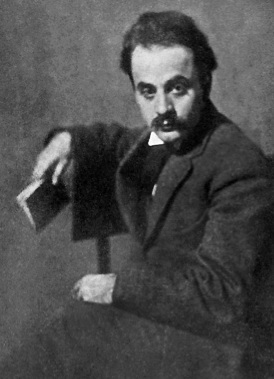
In this poetic offering, Kahlil Gibran, shares with us his express appreciation of being bare (clothes free, naked, nude) and his distaste for the concealment of the human body with clothing. The “father” of bare practitioners!
He was born on 6 January 1883 in Bsharri, Lebanon, within what was then part of the Turkish Ottoman Empire. He emigrated to the United States with his mother and two sisters. He died in New York City on 10 April 1931, at the age of 48 years old.
In On Clothes he unashamedly extols his admiration and devotion to both the concept and practice of being completely bare, nakedness and natural at a time when the very idea of clothes freedom (nudity) was rarely discussed, shared or written about in “polite” – proper – society. We all, as today’s bare practitioners, owe to Kahlil Gibran an enormous debt of gratitude for enlightening our world to the magic and the majesty of being nude alone or socially with others. Without the beauty of his praise, this world would indeed be a very bland and drab world to reside upon!
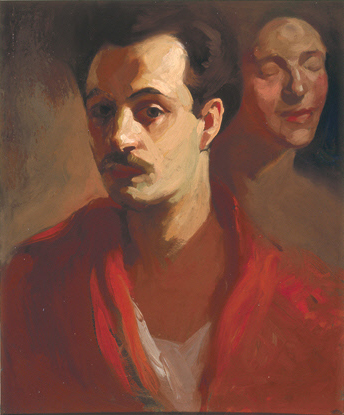
Gibran’s early death, due to severe liver infection brought on by his heavy consumption of alcohol, denied him the chance to witness the emergence of the same gender loving (SGL: bisexual or gay) culture that surfaced following World War II (1939 – 1945). Since his demise, there has been significant speculation about his own sexual preference. He had a very close woman supporter while living in New York City. However, their relationship was strictly platonic.
Aaron, my spouse and I both feel that the appeal and the fascination of nakedness is universally represented through the efforts and the works of Kahlil Gibran. His Middle East heritage instilled him with the desire and respect for clothes freedom that he brought with him when he emigrated to the United States. On Clothes has become an inspiring verse for clothes off!
We believe that the arrival of springtime brings the anticipation of being totally natural (bare) while enjoying nature. Gibran’s On Clothes reinforces those sentiments while reminding all of us of the awesome beauty of nakedness together!
Naked hugs!
Roger Poladopoulos/ReNude Pride: Guys Without Boxers!

Old Faithful!
Author’s Note: The next post entry here is planned for Monday, April 6, 2026, and the proposed topic is: “Bare Celebrity Series #8: XL the Chef!”
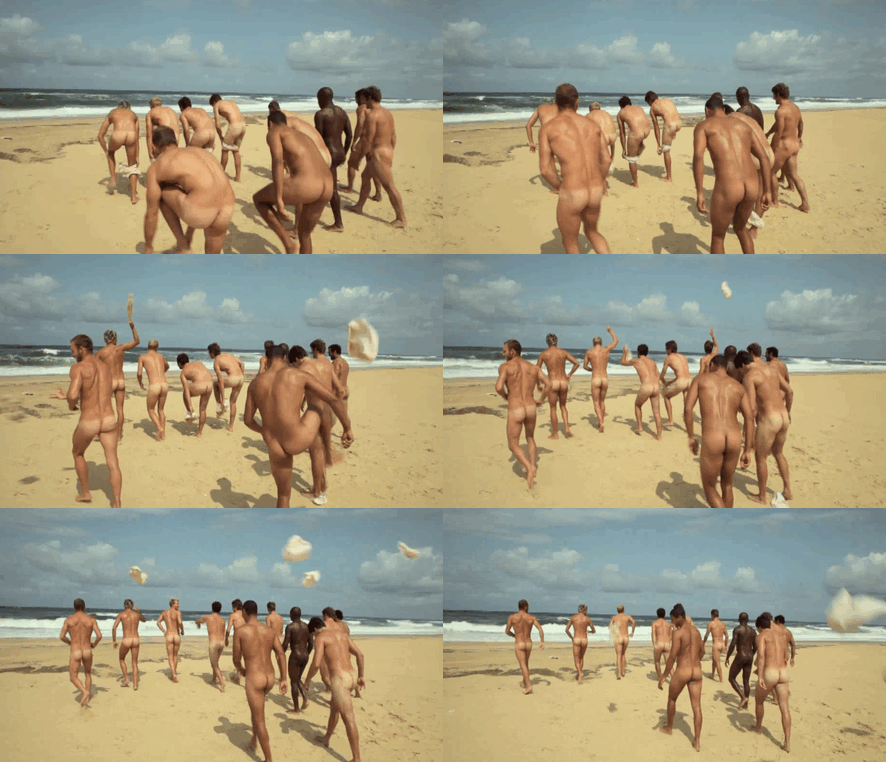
Strippers!
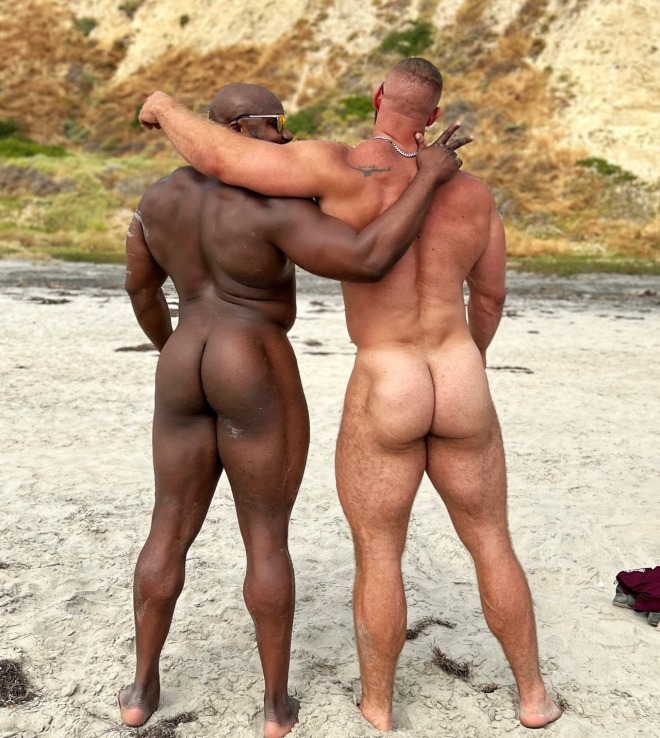
In honour of Kahlil Gibran’s “On Clothes” we’re taking off our clothes!
 ReNude Pride: Guys Without Boxers!