
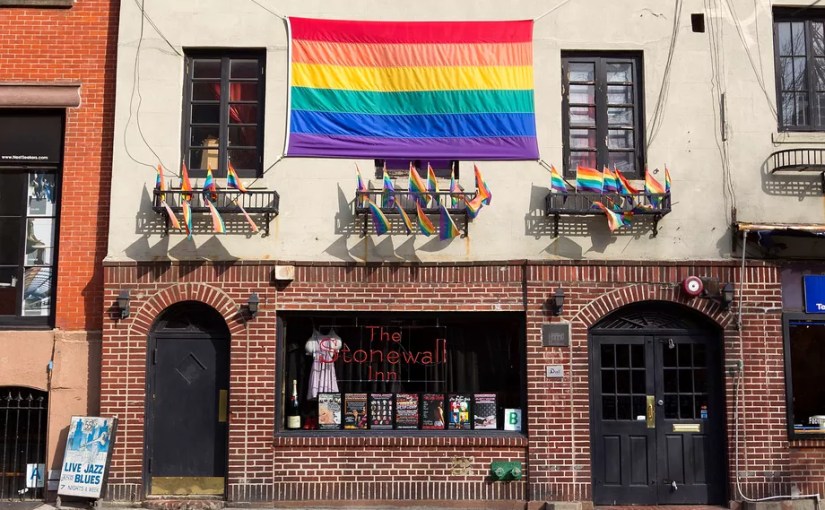
The exterior view of The Stonewall Inn, Christopher Street, New York City, New York, USA, where history happened the evening of 27/28 June, 1969!
Background:
Friday, 27 June, 1969, was a very hot and humid day in New York City. Everyone was anxiously awaiting the approaching weekend and the freedom from having to struggle for relief from the oppressive weather.
At that time, the same gender loving people were known, at least in “polite” society, as “homosexuals” (a name now considered derogatory). The popular nickname was “homos.” This segment of the New York City population was not only oppressed by the weather but also by the bias, discrimination, hatred, marginalization and violence of the general population against all persons seen as homos.
There were laws prohibiting homosexuality socially on record in 49 of the fifty states of the USA. Illinois had repealed its anti-homosexuality legal restrictions in 1961. All segments of society: general, government, legal and religious were united against the “deviant” (homosexual) peoples.
It was unlawful for homosexuals to gather together in public. They were fired from their jobs for being thought of as being homosexual without any legal recourse. They were ridiculed and attacked publicly often without any consequence for those assaulting them. Simply being a homosexual was considered a criminal act.
Everyone was required, by law, to wear clothing appropriate to their birth gender. The only legal exception was for Halloween.
The Stonewall Inn:
The Stonewall Inn (it was never a hotel) opened as a bar catering to the homosexual community in 1967. Prior to that, it had been a stable (for horses), a French bakery, a tearoom and lastly a restaurant that had burned out of business. Upon renovation, it opened as a tavern (bar) on 18 March, 1967, under Mafia-affiliated management and owned by the Genovese crime family.
The establishment consisted of two main rooms, each with its own dance floor. The front room was popular with older clientele and the back room attracted the younger ones.
“The door of the Stonewall had wrought-iron bars across this little “peephole,” a little wooden thing that slid open. The man inside would look at you and, it you looked like you belonged there, he would let you in.” ~ Chris Babick ~ describing the entrance to the Stonewall Inn
*************************
Friday evening, 27 June 1969:
Most of the patrons gathered inside the Stonewall Inn were looking forward to a night of dancing with their friends, relaxing with watered-down cocktails and enjoying a summer’s Friday night in New York City in a place relatively comfortable and safe for homosexual acquaintances. They had no idea that they were about to witness an historical event that would change their lives – and the homosexual world – forever.
Both the dance floors at Stonewall Inn were full of dancing homosexual couples. It was now just after midnight and 28 June, 1969, was now in its infancy. Suddenly, the music stopped. The lights that were dimmed to enhance the atmosphere came back on in a bright glare that caught everyone by surprise. Almost simultaneously, the realization dawned on the festive crowds: New York City police were raiding the bar!
The New York City Police Department was long familiar with conducting raids on homosexual bars (both female and male). Their process for the procedure was fairly routine and standard. They recognized homosexuals as a relatively compliant and passive crowd. For this reason, only one police transport vehicle (“paddy-wagon”) and one marked police squad car were involved in the raid.
Less than a dozen officers were assigned the task of managing and segregating the clientele, confiscating all the alcohol and arresting the Stonewall Inn employees.

Early Saturday morning, 28 June, 1969:
“The police weren’t letting us dance! If there’s one place in the world where you can dance and feel yourself fully as a person and that’s threatened with being taken away, those words are fighting words!” ~ Tommy Lanigan-Schmidt ~ Stonewall Inn patron and participant
The arrival of the police raiding force caused pandemonium to erupt inside the Stonewall Inn. Customers searched in vain for an escape route or for a place to hide. The police immediately began confiscating both liquor and beer as evidence against the establishment and segregating the bar crowd: bar employees, cross-dressers (transgender persons) and the “regular” homosexuals.
The bar employees and cross-dressers were to be arrested for their individual violating the law. The “regular” homosexuals, once they showed officers their proper identification, were to be given citations and then permitted to leave.
The year, 1969, was at the end of a decade that had witnessed massive social unrest. The African-American protests for civil rights, the birth of the feminist and women’s rights movements, the anti-Vietnam war and peace demonstrations and the equal pay marches for primarily Latino/Latina immigrant farm workers were underway during this time. The homosexuals who had participated in some of these public unrests were energized and many wondered when their time for equality would happen. Little did they, and the police raiding the Stonewall Inn, realize that moment had arrived!
As the police began checking the identities of those inside the Stonewall Inn, those with proper credentials were released and herded outside the bar. Only this time, instead of simply leaving the premises, they congregated on the sidewalks and across the street at the Christopher Street Park. Once law enforcement attempted to disperse them, they grew confrontational and belligerent.
Unaccustomed to homosexual defiance, the police continued to press the order to vacate the area. The growing crowd, emboldened by their frustration with being treated as “deviants” and second-class citizens, began to chant and to empty nearby trash cans and hurl the garbage at the officers.
By this time, passers-by, curious as to what was happening, joined the upset homosexuals to express their dissatisfaction with the raid. The crowd outside the Stonewall Inn began to grow in both number, anger and curiosity. When word of what had transpired inside the tavern began to spread, even more homosexuals started to descend into the inn’s neighborhood and amass in the bar’s vicinity.
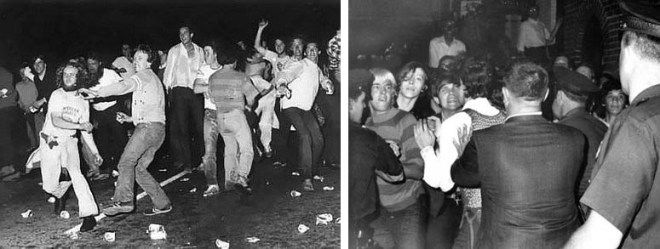
SIR: Stonewall Inn Riot commences:
By now, the police, trapped inside the facility by the large crowd outside, understood that the situation had gotten beyond their control. They tried to call for reinforcements but were unable to reach any source for assistance. They had secured the bar but were confined inside and the crowd outside was swelling in both size and fury. A few hundred bar patrons had now increased into an angry mob of several thousand and more were joining by the minute.
“You could hear screaming outside, a lot of noise from the protesters, and it was a good sound. It was a real good sound that, you know, you had a lot of people out there pulling for you.” ~ Raymond Castro ~ Stonewall Inn customer detained inside the bar under siege
No one in the New York City Police Department had anticipated the homosexuals, always believed to be “meek and mild,” would fight back. The years of abuse, neglect, oppression, and ridicule had taken their toll, and the frustration had now become revolution; the time for retribution was at hand. Unfortunately for law enforcement, the pent-up anger toward the police was now being released and returned in kind. They were now prisoners inside the Stonewall Inn.
Two hours after the raid was initiated, the raiders and their detainees were trapped and no immediate relief was available. The two-way communication devices between the raiding party and their office weren’t working and the only public telephone inside the tavern wasn’t able to connect with any local police precincts. The “passive” homosexuals had finally achieved a “first” in their spontaneous riot: the police were contained, surrounded and they were all very nervous. By now, the mob outside the Greenwich Village bar numbered several thousand with a full-fledged riot underway.
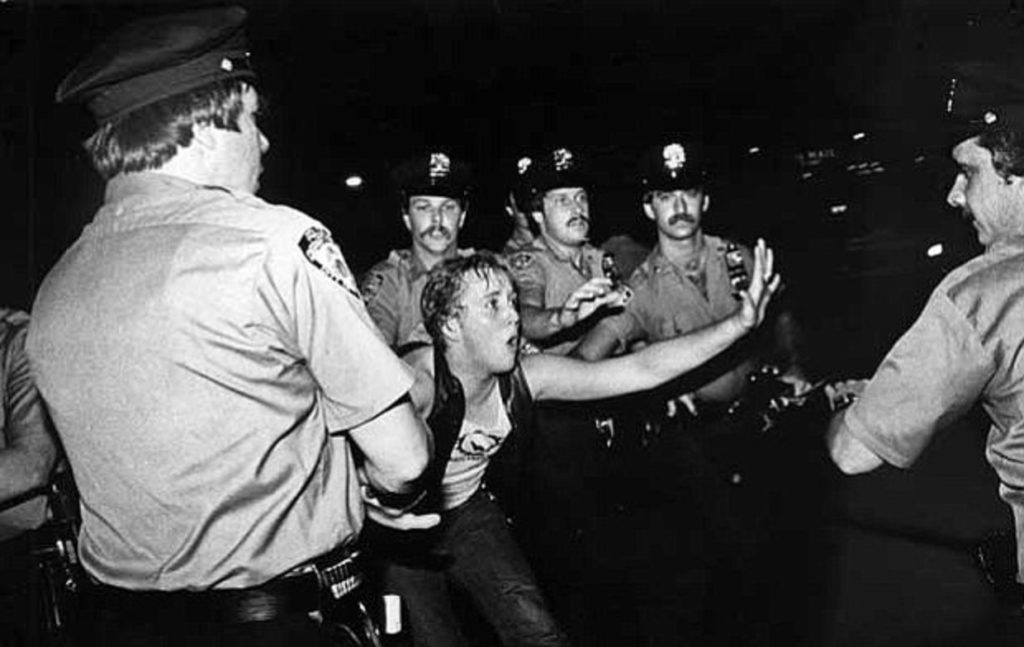
In an effort to relieve the inflammatory predicament, the isolated police decided to send the detainees and half the officers trapped inside the tavern, using the two police vehicles on site, to the closest local precinct. There, the detainees would be formally charged with arrest, and the officers could make arrangements for a police riot force to assemble and rescue the remaining law enforcement personnel. This relief effort finally returned to the bar and eventually dispersed the angry mob of homosexuals and curious onlookers several hours later.
Saturday evening, 28 June, 1969:
Despite damage to the Stonewall Inn, the bar opened for business (dancing and socializing) the following night, Saturday, 28 June. by then, word of the disturbance the previous evening had spread throughout the city’s largely closeted (anonymous) homosexual community (primarily by word of mouth). The city officials and law enforcement superior officers were hesitant to release information that would encourage more aggressive reaction.
A larger than usual crowd gathered both inside and outside the Greenwich Village establishment. Most didn’t expect a repeat raid of the night before and a significant number of those in attendance mainly wanted to inspect the damage. The police, however, had different ideas. They were strictly outside the facility in full force with a large number in riot gear. They had learned their lesson and were determined to remain in complete control should the patrons become unruly again.
The homosexuals and the neighbourhood residents had been empowered by the riot the night before and of the mindset not to bullied into submission again. As the large police presence attempted to disperse those gathered outside the Stonewall Inn, they were confronted by verbal insults and an array of street-savvy tactics that set law enforcement chase off onlookers, only to have them run around the city block and return again.
Silent obedience to uniformed policemen was no longer a fact of life for New York City’s homosexuals. They were tired of suffering abuse, disrespect, ridicule and treatment as second-class citizens.
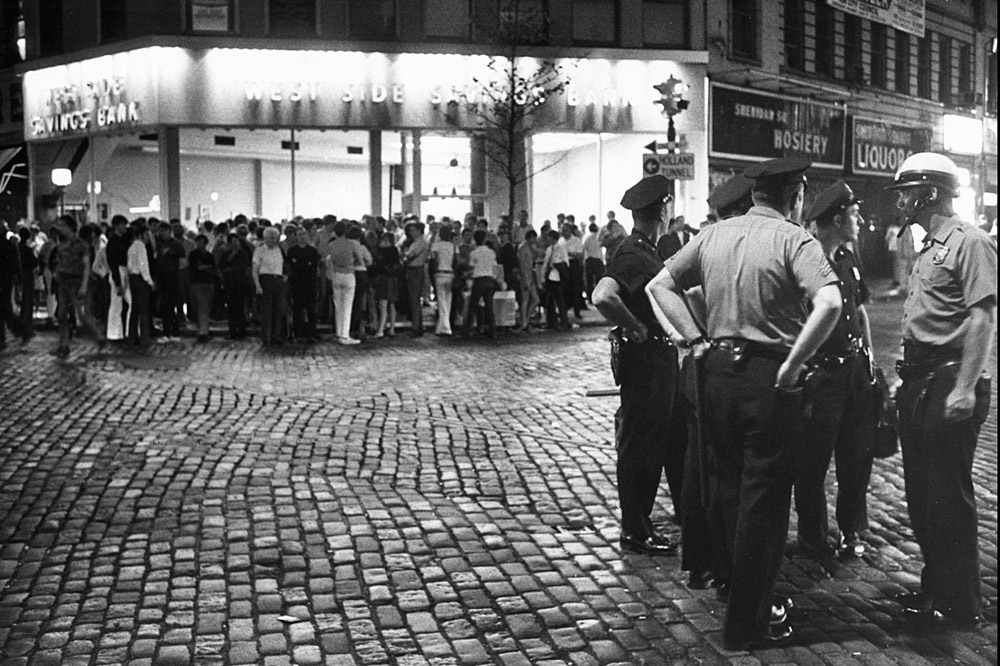
The second night of the Stonewall Inn congregation wasn’t as aggressively disruptive as the previous night. No further damage was done to the tavern facility. However, an awakening consciousness was raised within the municipal homosexual community that would change the way society viewed them and – most importantly – the way they perceived themselves.
For the first time, the often assumed obedient and passive homosexuals joined together and defended their rights and demonstrated that they, as a community, had finally and long last, “had enough!”
“There was no gay pride before Stonewall. Only gay fear and gay isolation and gay distrust and gay self-hatred.” ~ Edmond White ~ American gay novelist and Stonewall witness

Footnote: This posting entry was from a research paper that I composed for class distribution that I taught at my university, 2015 – 2018.
Sources:
Bausman, Ann “Stonewall: Breaking Out for Gay Rights”
Doberman, Martin F. “Stonewall: A History”
Naked hugs!
Roger Peterson-Poladopoulos/ReNude Pride: Guys Without Boxers!
Author’s Note: The next post entry here is planned for Monday, June 30, 2025, and the proposed topic is: “Bottoms-Up! June, 2025!







 ReNude Pride: Guys Without Boxers!