Greece Reborn!

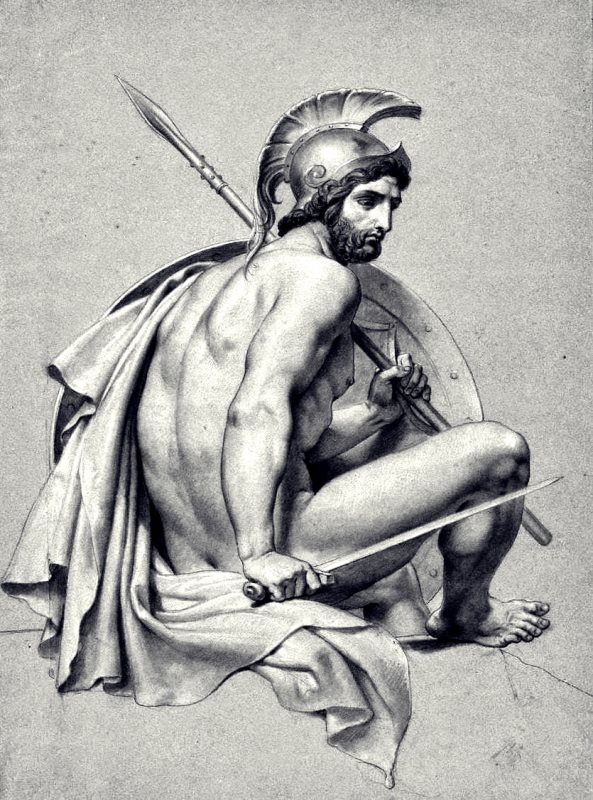
Greek warrior!

On March 25, 1821, the date of the Feast of the Annunciation of the Theotokos (Mother of God) in the Greek Orthodox Church, the Greek people, as one, rose in revolt against their Ottoman Turk oppressors. This uprising marked the beginning of eight years of armed struggle that culminated with the Treaty of Adrianople in 1829 that ended almost 400 years of Turkish occupation with internationally recognized independence for the Kingdom of Greece. Great Britain, France and Imperial Russia signed the Treaty of Adrianople as guarantors in order to discourage any attempt by the Ottoman Turks to reclaim any part of Greece.

Upon proclamation of the Kingdom of Greece, the Greek Orthodox Church was officially sanctioned as the national church. That status remains current today. Greek was established as the language of communication, replacing Turkish. The drachma was adopted as the legal currency until it was withdrawn with the introduction of the euro.

Notation: as a student for my baccalaureate, my European History professor instructed us that the Greek alphabet and Roman numerals were extensively utilized throughout Greece, both then and now. The alphabet was no issue but the numerical claim was totally incorrect. I proved him wrong and years later, when I joined the university faculty, he publicly recalled this incident from my undergraduate days.

Defending Greece!

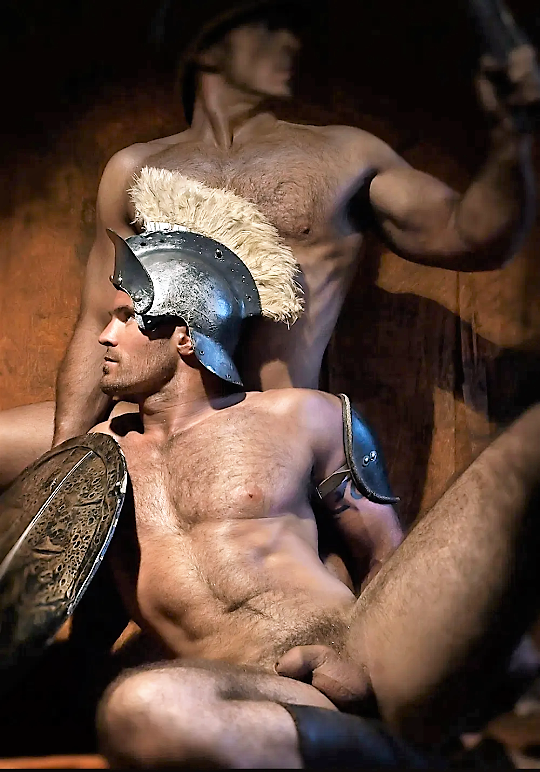
The conflict that began in 1821 did not involve the Greeks attired as soldiers from the ancient days wearing helmets and little, if anything, else. The pictures here are shown for illustrative purposes only. The historical Greeks did not fight bare. There were organs of the male anatomy, even then as now, that were considered too precious to put at risk for the stroke of a sword. Some of the troops may have fought while clothes free; however, that was based on the situation and not by direction, order or standard procedure.

History legends have certain cadres or regiments of the Greek military consisting solely of same gender loving men. This may have been common practice during that particular time period but it isn’t true in 1821 nor today. In ancient Greece, historians recorded these designated army compositions to reflect the reality of the situation. Men-who-love men identification was not considered a cause of degradation or disgrace. Instead, it was labeled as such as an honour, a distinction and a source of pride.

For the liberation uprising, army units were organized by family and/or village affiliation (local). Same gender loving men may have fought together, as a couple, against the Turks, but this wasn’t the basis for a troop determination.

Greeks used firearms and cannon, where available, for their struggle against the Ottoman Empire. The Turkish army was armed and organized with the latest in military equipment. For the revolt, because the Greeks had no standing army, they whatever weapons were convenient (mostly personal) plus arms supplied by the British, French and Russians. The majority of the Greek guns were decades old and used by their owners to herd and protect goats and sheep. Javelins, knives and swords were primary to ancient Greece and not in 1821.

Warrior at rest!

In ancient Greece, there existed general acceptance and tolerance from the majority of the population towards both public nudity and towards same gender love. Up until recent times, Greek society had officially regressed into one of impatience and judgments in dealing with open public nakedness and same gender love. Greece, being a member of the European Union is now on the path of respect for all persons regardless of their beliefs and practices. The major advocate for resistance to modern day inclusion of GLBTQ+ persons and naturist/nudist participants is the Greek Orthodox Church.

Notation: my paternal great-great-great grandfather fought in the 1821 uprising against the occupation by the Turks. He served as a leader of a local guard of troops on the island of Skyros in the Aegean Sea. My grandfather (father’s father) would repeat some of his exploits as passed along by his grandfather. My father’s father enjoyed embellishing and enriching his tales so we are uncertain as to what is actual truth and to what is “enlightened enrichment!”

*************************

The Greek flag!

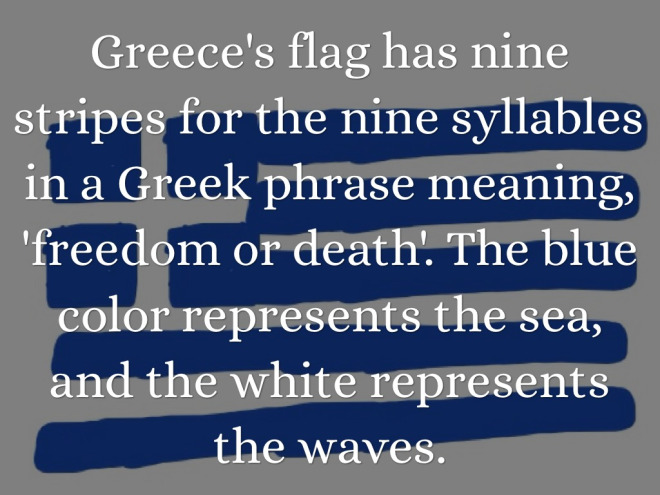
The flag of Greece contains the colours of blue and white, symbols of the waters that surround the islands and the peninsula; the Aegean Sea to the east, the Mediterranean Sea to the south and the Ionian Sea to the west. In the upper left-hand corner of the flag contains the white Cross of St. George on a blue field. St. George is the patron saint of Greece. The remainder of the flag consists of alternating equal stripes of blue and white.
The flag’s symbolism!

********************

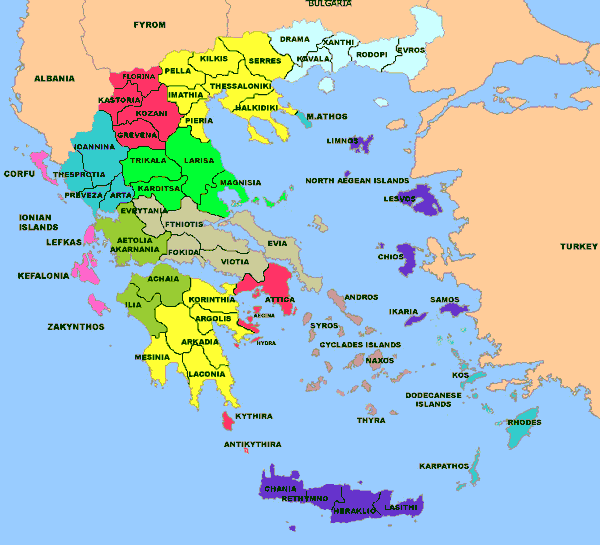
Map of Greece!

Modern Greece is located in the southeastern portion of Europe bordered by Albania, Macedonia, Bulgaria and Turkey. It is the southernmost area of the Balkan peninsula. The capital city is Athens.

*************************

The objective of this post entry today on ReNude Pride is to offer and share a brief glimpse into the significance of this date in the history of Greece. Both of my parents were born there and I possess dual citizenships. In publishing this post, my purpose is to enlighten with a perspective of my cultural heritage and contemporary Greek experience. Enrichment and knowledge sometimes arrives through the strangest portals!”

Naked hugs!

Roger Poladopoulos/ReNude Pride

Author’s Note: The next post entry here is planned for Monday, March 28, 2022, and the proposed topic is: “Your Thoughts?”
Patriot Day

An ancient Greek warrior!

Thursday, March 25, 2021, is the anniversary of the beginning of the fight for the freedom of Greece from the oppression of the Ottoman Empire (modern-day Turkey). The clergy of the Greek Orthodox Church encouraged the faithful to engage in the struggle to attain their freedom and restore self-determination of their homeland from the subservience of the Ottoman Turks. 

The Ottoman Empire, for over two centuries, had periodically focused on the eventual absorption and subjugation of the Byzantine (Greek) Empire. The fall of Constantinople (the imperial Greek capital) through a siege that lasted from April 6, 1453 until May 29, 1453, rewarded the Ottomans as the Middle and Near Eastern superior power, economically, militarily and naval.

The political dominance of the Turkish government provided a grave and serious threat to the Greek Orthodox Church. The religious and spiritual head of all Orthodox believers , the patriarch (pope) of Orthodoxy resided in Constantinople and his official title is: Patriarch of the Eastern Orthodox Church and Archbishop of Constantinople. This situation fostered the unsubstantiated belief and rumors in the Western churches (Roman Catholic, Anglican and protestant) that the Eastern churches (Bulgarian, Greek, Roumanian, Russian, Serbian and Syrian) were under the manipulation of the Turkish occupiers.

Multiple Greek warriors!

On this date, March 25, in 1821, the Greeks rose up against the oppression of Ottoman Turkey in a protracted civil war that ultimately involved France, the Russian Empire and the United Kingdom joining with the Greeks in their quest for independence. March 25 is also the date of the feast of the Annunciation of the Theotokos (Virgin Many, Mother of God) in the Eastern Orthodox Church. The organizers of the uprising selected this feast day to initiate the insurrection. Bishop Germanus hoisted the flag of revolt over the Monastery of Agia Lavra in the Pelopannese with the cry, “Freedom or Death” which was adopted as the motto of the for Greek liberation.

The government of the newly liberated Haiti was the very first country in the world to recognize the revolution – and therefore, Greek independence. This diplomatic recognition happened is 1821, barely 6 months after the struggle began and long before the war was actually over.

The Ottoman Turks were supported during the Greek rebellion by the North African Turkish dependent states of Algeria, Egypt, Tripolitania and Tunis. These auxiliary troops were frequently defeated by the Greek locals who were often armed with only their inferior personal weapons, primarily rifles.

Greek warrior artistic image.

After seven years of fighting, the Ottoman Turks grew weary of the Greek uprising. At an international conference held in London, a document called the London Protocol was signed by representatives from Greece, France, Russia, the United Kingdom, and the Ottoman Empire that recognized the independent sovereign Kingdom of Greece in 1830. The rebellion was over. In 1832, the Treaty of Constantinople was enforced between the Greeks and the Turks which defined the borders of Greece and established Prince Otto of Bavaria as the first King of Greece.

Above is the image of the original Greek flag that was recognized when independence was achieved. The double-headed eagle in the upper left corner was the emblem of the Byzantine Empire.

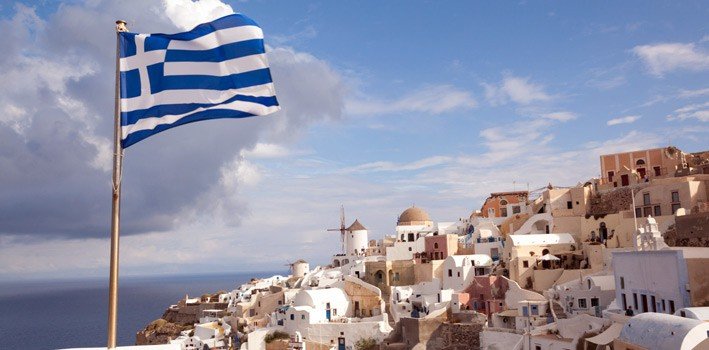
The .gif below is the current flag of Greece shown billowing in the breeze. The cross of St. George is in the upper left corner. The Greek Orthodox Church is the state religion of Greece.

The above explains the symbolism of the modern Greek flag.

The modern Greek flag was adopted during the 20th Century as the current state matured. Based on the current design, it is now universally accepted and recognized everywhere. During the last decade of the 20th Century, there were some grumblings that the two colors of the flag represented the “haves” and the “have nots” although there was never any agreement over what those two categories entailed.

Outline map of Greece (flag design).

Above is the image of a map of modern Greece, in the same design of the current Greek flag. Greece is located in south-eastern Europe at the bottom of the Balkan peninsula. The capital city is Athens.

Both of my parents and my oldest brother were born in Greece. They emigrated to this country just before the birth of my second oldest brother. Neither of my parents nor my oldest brother were ever naturalized here (became citizens). After our births, my father had all of our births enrolled at the Greek consulate, which made the remainder of my brothers and myself Greek subjects (we have dual citizenship).

Avoiding any implications of inaccuracy, before closing todays post, I want to remind everyone that the ancient Greeks most definitely did not engage in war while bare. Men were aware that any type of action involving swords and other forms of weapons could inflict major, if not debilitating, damage to themselves. Even the simplest girding of protection was valued above nudity in this case.

Wishing everyone the happiest of Patriot Day!

Bare hugs!

Roger Poladopoulos/Renude Pride

Author’s Note: The next posting entry planned for here is for Wednesday, March 31, 2021, and the proposed topic is : “Bottoms-Up! March, 2021”

The unusually long delay is due to an educational conference.

A Flight Home!

Many people of Greek birth or descent return to visit the homeland during the month of August. This tradition has been in existence since before my parents immigrated here in the late 1940’s. I’m not certain of the origins of this custom, I’m simply aware of it from the practice as well as my own personal experience. Also, what right do I have to question anyone’s desire for a good time and a decent party?

Continue reading A Flight Home!

Holy Easter

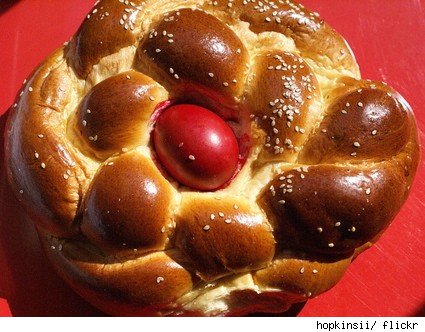
The above image is the picture of a loaf of Easter Bread, one of the traditional foods of the Easter celebration within the Greek Orthodox Church. This weekend marks the end of the Great Lenten Fast that is observed prior to the Feast Day. All of the faiths of the Orthodox churches have Easter this weekend; the Russian, the Greek, the Ethiopian, the Bulgarian, the Serbian, the Albanian, the Egyptian Coptic and as well as some of the Eastern Rites of the Church of Rome.

Continue reading Holy Easter

Greek Independence Day!

March 25, annually, is Greek Independence Day. This celebration marks the date, in 1821, when the people who live in what is now Greece, rose up in revolt against Ottoman Turkey who occupied their homeland for hundreds of years. A protracted war ensued that culminated in the eventual establishment of the modern state of Greece. This post signifies both the religious feast day and the national holiday.

Continue reading Greek Independence Day!

My Father

On the day of the recent USA congressional elections, I received a text message from my oldest brother that summoned me home (Greece) immediately. My father was diagnosed with Stage 4 cancer in his lower abdomen (one kidney, his liver and his colon) three weeks prior. Instead of the couple of months remaining (as the oncologists had advised us), the prediction was changed to “a matter of days.” I caught the earliest flight to Athens available and Aaron, my spouse, was followed me a day after.

Continue reading My Father

Tampons?

If the dude above looks even vaguely familiar, it’s because he’s Daveed Diggs, Broadway Tony-award-winning star of Hamilton, guests appearances on TV’s Law & Order SVU and a couple of season’s on black-ish and also of this year’s film, Blindspotting. So if he does indeed seem familiar to you, it’s because he is. By the way, I did neglect to mention that he won a Grammy award for the soundtrack (if theatrical plays have one) for Hamilton. I need to mention here that this post isn’t about Daveed Daniele Diggs.

Continue reading Tampons?

Friday Footnote: Bare and GLBTQ Potpourri

There are many blogs that I regularly follow. Some are strictly bare-related and others are are gay, lesbian, bisexual, transgender and queer (GLBTQ) oriented. Believe it or not, there are even a few that are very similar to ReNude Pride and regularly focus on the same gender loving (gay) and bare communities simultaneously. Often, these excellent publications offer posts that are directly related to articles that have recently posted here. The purpose of this Friday Footnote feature here is to offer everyone reading here the opportunity to read the perspectives of others.

Continue reading Friday Footnote: Bare and GLBTQ Potpourri

An Abundant Harvest

August is now here and in the Orthodox tradition, this is the month for the customary (at least in the home country) blessing of the grapes. In other words, invoking the divine to shed his benevolence upon each and every grape that we consume, be it the fruit itself or the juice or the wine that we drink. Trust me, as Greeks, we do consume quite a bit of wine and have a remarkable ability to eat an impressive number of grapes.

Continue reading An Abundant Harvest

July 4, 2018

As I sit here in front of my laptop I am trying, yes, sincerely trying, to find something uplifting and flag-waving to post about today’s USA holiday. Unfortunately, I’m just not able to find any type of inspirational reason to wave a flag. Since the last national election, I’ve found it easier to be be embarrassed and humiliated over living in this country than I’ve found ever in my entire life. Yes, I was born here, but to Greek parents. And my parents legally migrated here after World War II but upon my father’s retirement, returned to their homeland, Greece.

Continue reading July 4, 2018