Alternate Title:
Identity/Perception!
Background/Introduction:
We, as humans, (and I use that term very generally in these chaotic times) self-identify ourselves in a variety of manners/ways. One of the many reasons for this practice is to remind both others and ourselves as to what we are about – the essence as to what and who we truly are)! What is important to us? Why? Basically, is this me?
As bare practitioners (same gender loving – SGL – nakedness enthusiasts) there are numerous options available for the expression and revelation of ourselves. Among these are the ones we prefer that incorporate our clothes freedom opportunities (nakedness) such as body painting and/or tattooing. Body painting is washable, tattooing is more permanent or eternal.
Tattoo!
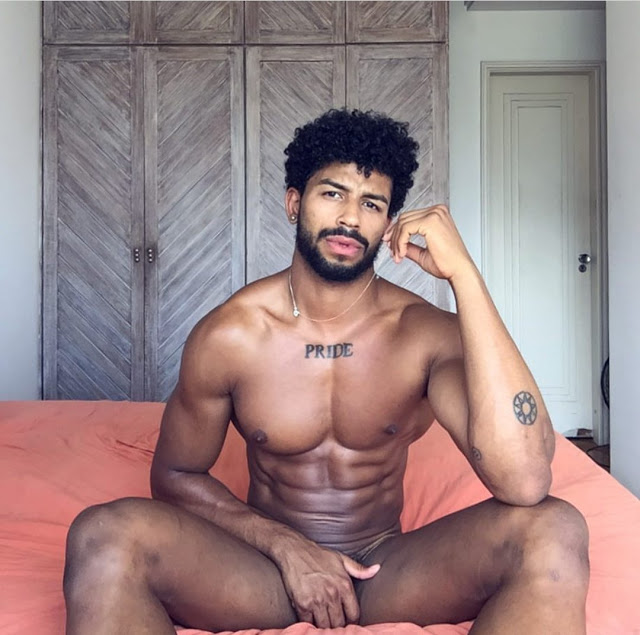
Tattoo #1: Pride

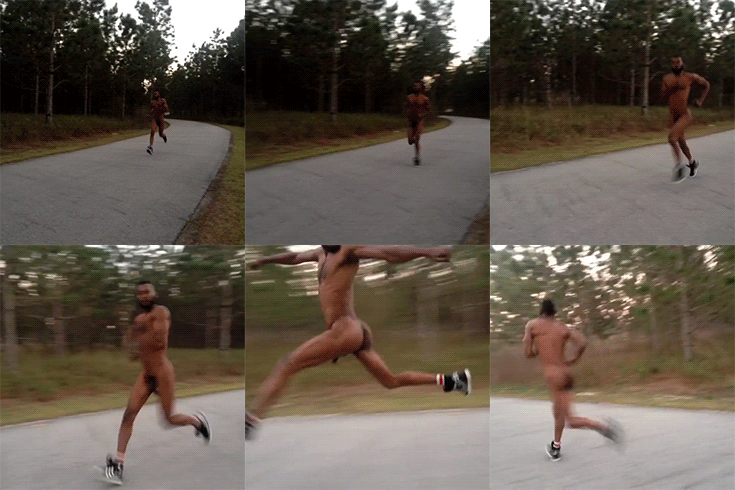
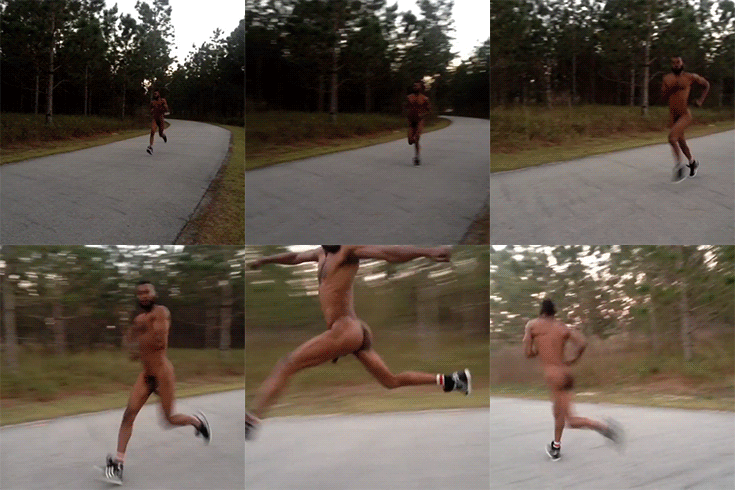
Our post entry header (above top) is Brazilian model/gay adult film industry actor/ and DJ Felipe Ferreira discretely posing with his throat tattoo: pride announcing his confidence in being both SGL (gay) and nude! The .gif image (directly above) is Felipe (now matured somewhat) specifically showing muscular development and the upper boundary of his pubic hairline.
Below, he models his commando (underwear freedom) preference in a selfie that publicly proves he indeed has a penis!
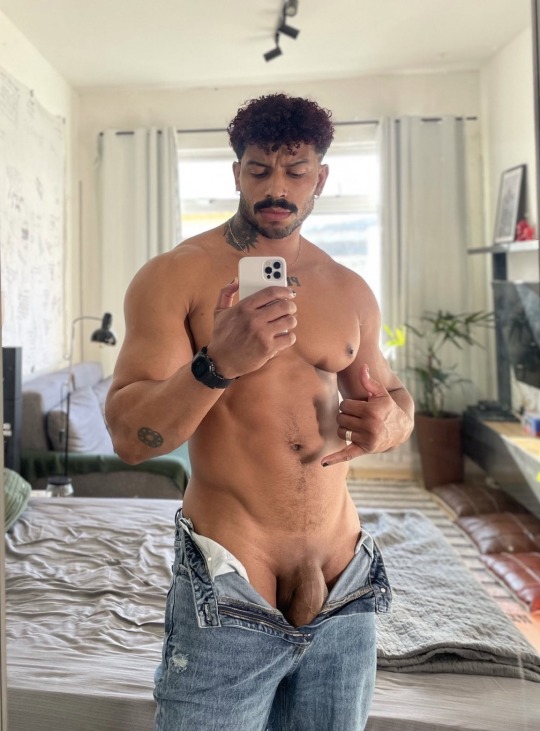
Footnote # 1: As Felipe has grown in his professional exposure, so has his comfort on revealing his genitalia!
Below, with fellow gay adult film industry actor, Rhyheim Shabazz, he is openly sharing both his nakedness and his sexuality!

Footnote #2: Partnered with Felipe, our man Rhyheim never had his preference for nakedness nor his sexuality ever doubted or questioned. However, he was almost always never discrete over either trait!

Tattoo #2: Unashamed

A former U.S. Navy volunteer and a recent newcomer to the SGL adult film industry, Reign proudly proclaims his bromantic (exclusive male sexual preference) and his nakedness by having the label unashamed tattooed just above his pubic hairline! His confidence in himself is readily available for all to understand whether he is posing nude or shirtless wearing a swim suit (below)!
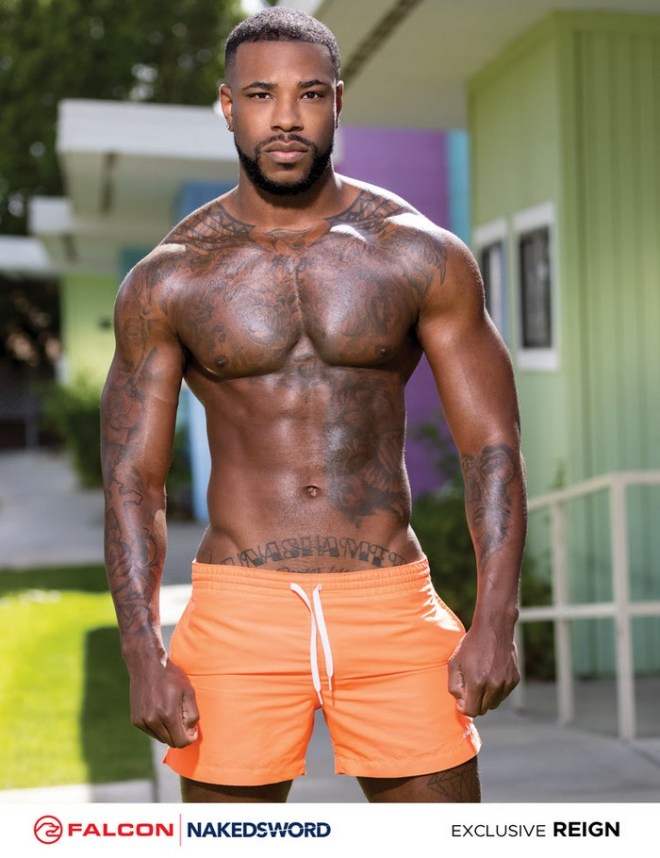
Often criticized for his ornately tattooed chest and torso, Reign has no regrets nor suffers shame revealing his true self and his availability and his masculinity! He also proudly maintains his natural body hair (armpit and pubic).
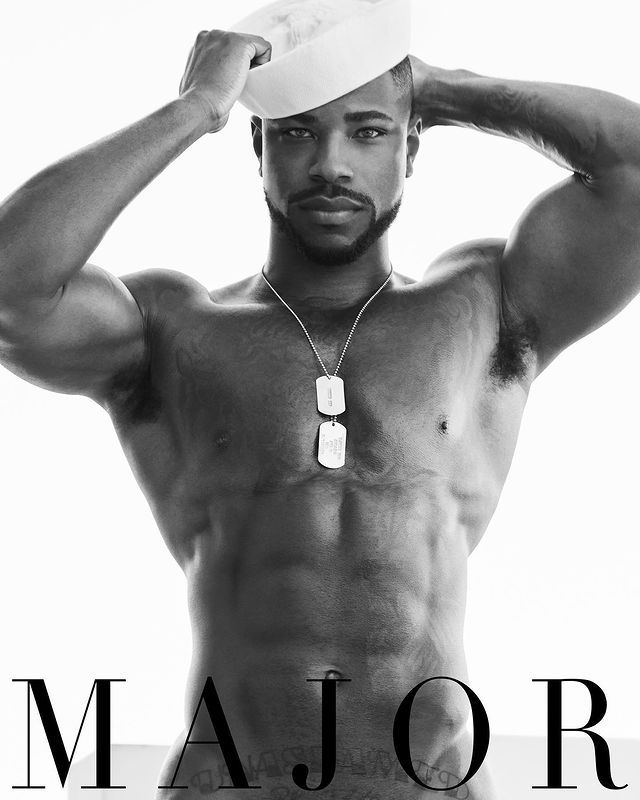
Reign served in the navy when then-President Obama officially ended the ban on SGL persons openly serving in the U.S. military.
Under contract with Raging Stallion Studios since 2020, Reign made no secret of his desire, preference and his willingness to perform in beta positions (bottom) roles on screen. He has trouble understanding why professional actors have issues with appearing in the “receiving” roles when filming scenes.
“I really enjoy being a bottom-man and I enjoy being versatile. To be truthful, I really enjoy sex and am happy have that as my job! Giving (alpha) or receiving (beta), it makes no difference to me!” ~ Reign ~ Raging Stallion Studios interview 2022

In the above image, Reign unveils his true confidence and pride! He is both appreciative and grateful for his penis and has no plans to adorn it with any ink (tattoo)! At least, not in the immediate future!
Tattoo #3: Bad Ass
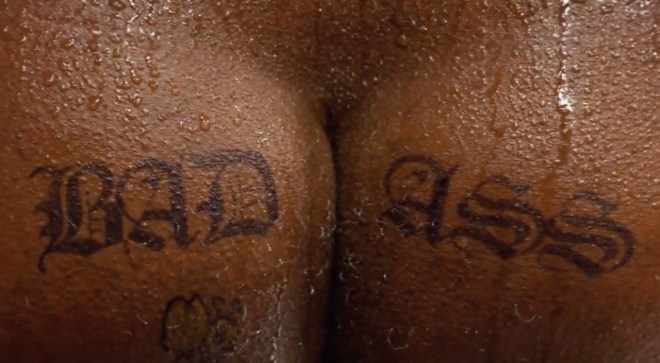
The above tattoo probably needs no further explanation as to exactly what the owner is meaning. Looking closely, the anatomical region of the tattoo is obvious. But that does pose a question: Is the owner seeking a “bad ass” or is the tattoo a means of the owner proclaiming himself a “bad ass?”
Tattoo #4: Lust/Love
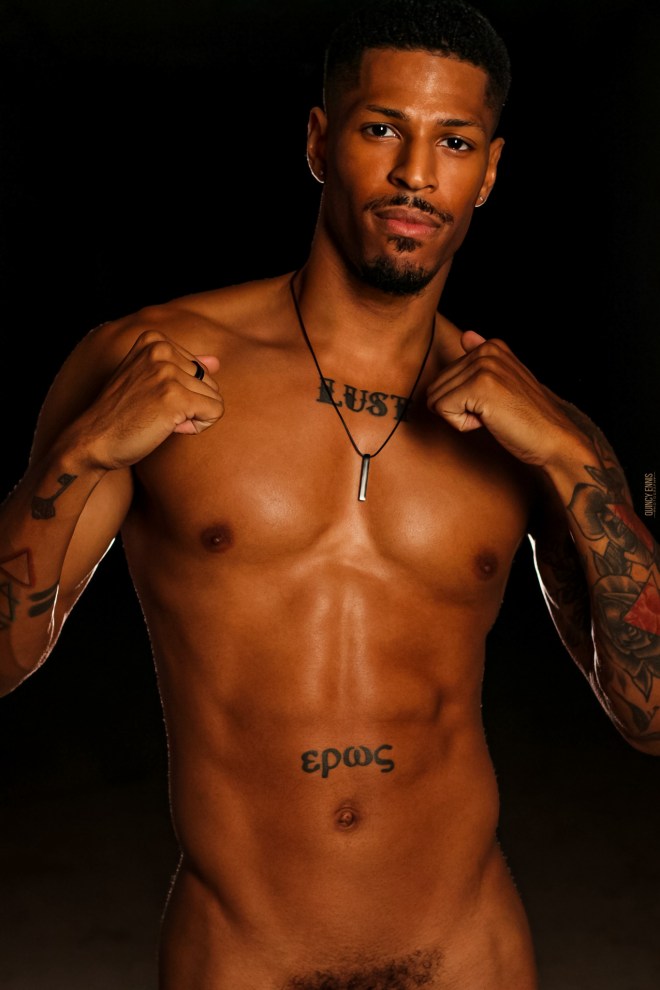
Announcing to all his dedication to his personal as well as professional quest for both his same gender loving (SGL) and his clothes freedom status, openly bisexual Ron Derrick Johnson of the SGL adult film industry boldly has two tattoos inked on the front of his body: lust and eros (Greek: love). For Ron, “lust” is his search for both affection and attention. “Eros” is the name of the ancient Greek god of love and sexual desire.
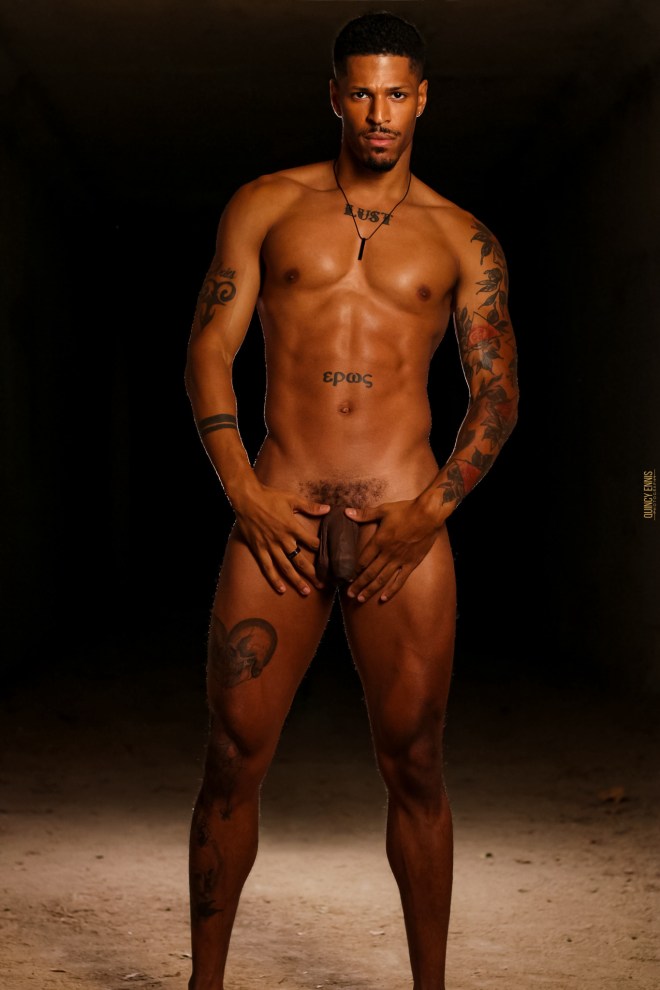
Ron Derrick Johnson is indeed fortunate that his appearance, physique, and his tattoos compliment his message! No confusion or miscommunication concerns here! A man of international pleasure and repute, he has “eros” (love) written in Greek on his abdomen!
Tattoo #5: Faith

SGL film industry star, Kory Mitchell, also known early in his career as Kory Kong, is widely recognized as an advocate within the industry for HIV/AIDS awareness and prevention and for his strong Christian faith. He has a cross inked on his front torso (just below his left nipple) to remind his fans of his faith.

As a reminder to his fans of his strong religious devotion, Kory has “blessed” mounted upon his shoulder. To emphasize his HIV+ status and his commitment to HIV/AIDS education and prevention, he has “hope” inked on his neck with a red awareness ribbon featured as the letter “o.” Excellent educational and inspirational tools!
Body Painting!
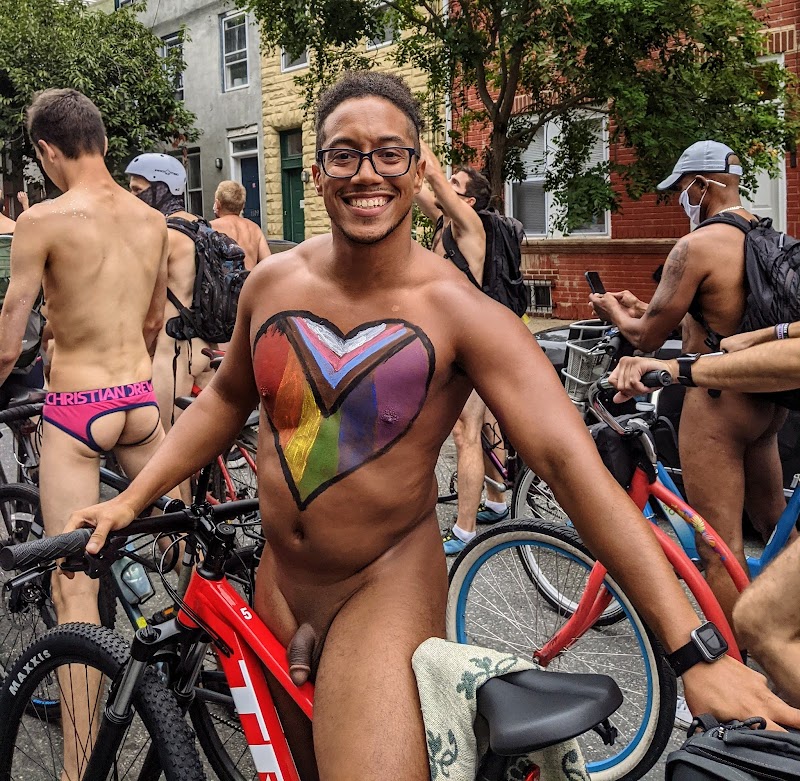
Body Painting
Body painting decorates our “natural” canvas – our bare skin! As bare practitioners, this option is one that many of us consider as a normal aspect of our existence within our community and culture! It is also used to visually deliver a message, usually one related to our nakedness!
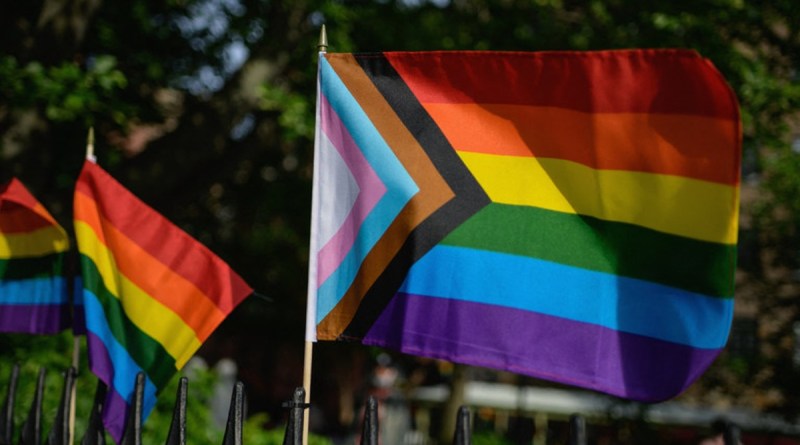
In the above image, a City of London World Naked Bike Ride (WNBR) participant proudly displays his adherence to the WNBR protocol as well as his identity as a bold and confident member of the GLBTQ+ community with his Progress Rainbow flag painted on his chest!
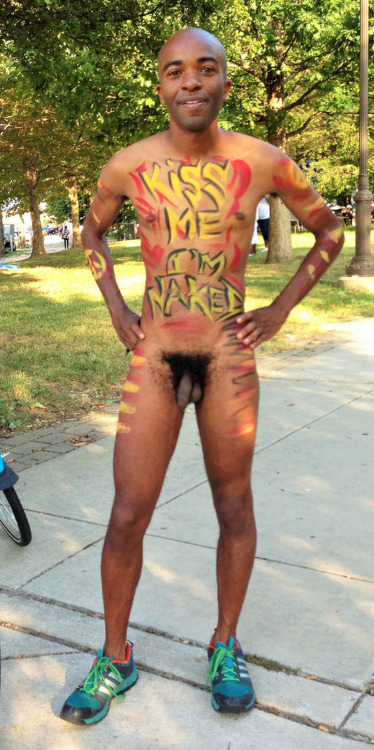
Above, his body painted message is plain and the meaning is obvious. All that needs to be done is comply and both will be content and happy! “Kiss Me! I’m Naked!” His service to bring joy into all the world!

Body painting their political messages across their chests and torsos are how these young men promote their causes they feel worth all their efforts. In their eyes and minds, their nakedness enhances the statements.
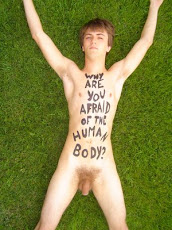
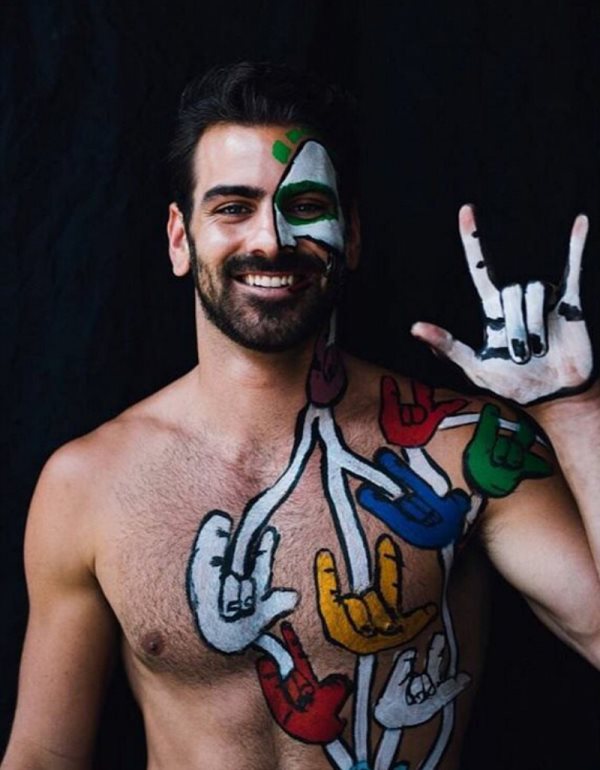
The image above not only has the subject’s body painted in the colourful hands featuring that sentiment, but it also has his left hand creating the statement. In American Sign Language (ASL), signs are made using whichever hand the person is most comfortable, left or right.
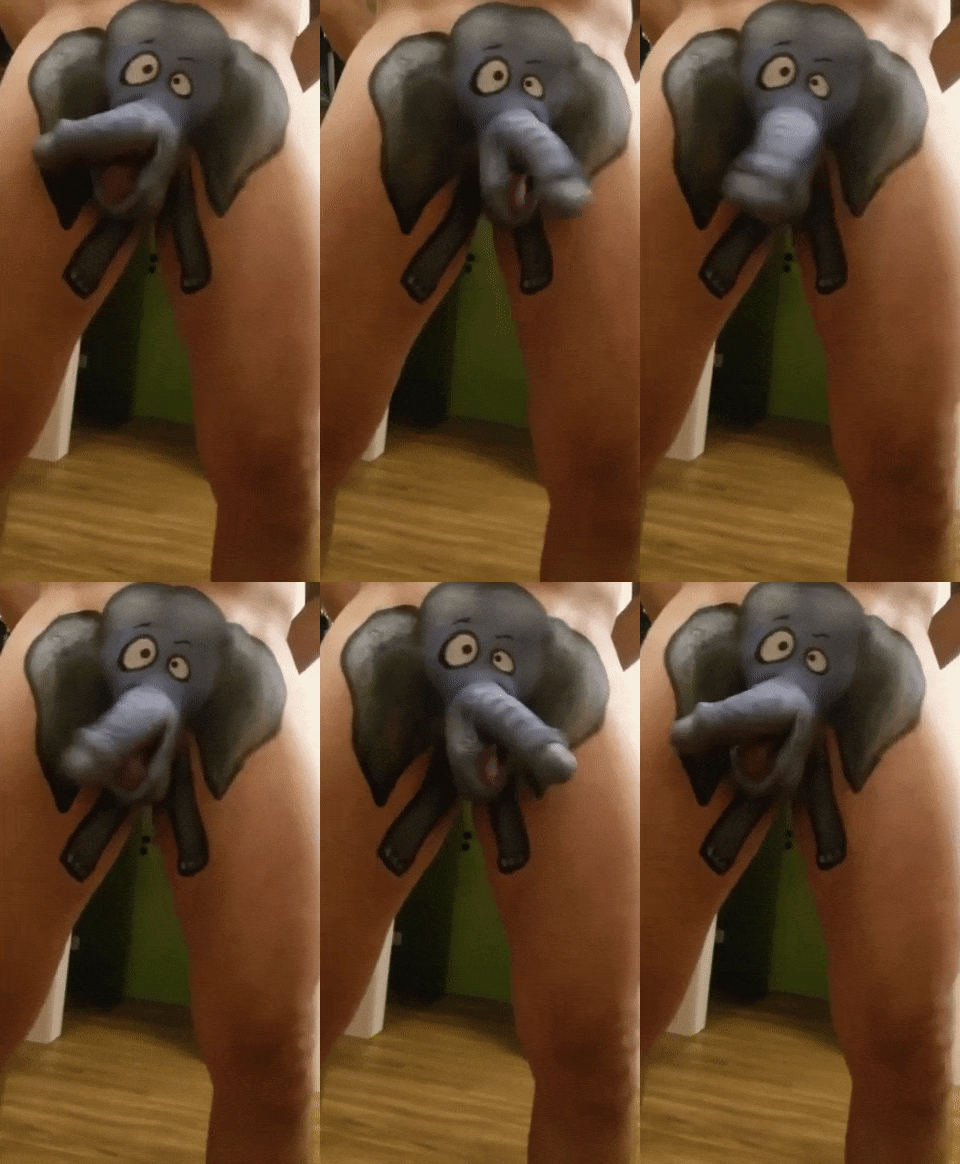
Some body painting is both creative, imaginative and original in adorning the anatomy capturing the attention and the eyes of the observer!
Conclusive Summary:
The outline for this post entry here today was to present the bare celebrity role models and their infamous tattoos only. Those alone are sufficient evidence of the self-image of the inked performer, and the vitality of the concepts of SGL and nakedness have in their lives and in their livelihoods (profession).
Aaron, my spouse, conceived and developed the idea of adding the body painting segment. His justification being that the creativity in the art and messaging warranted their inclusion. Also, the colourful body paint offered a contrast to the monotony of the tattoo ink!
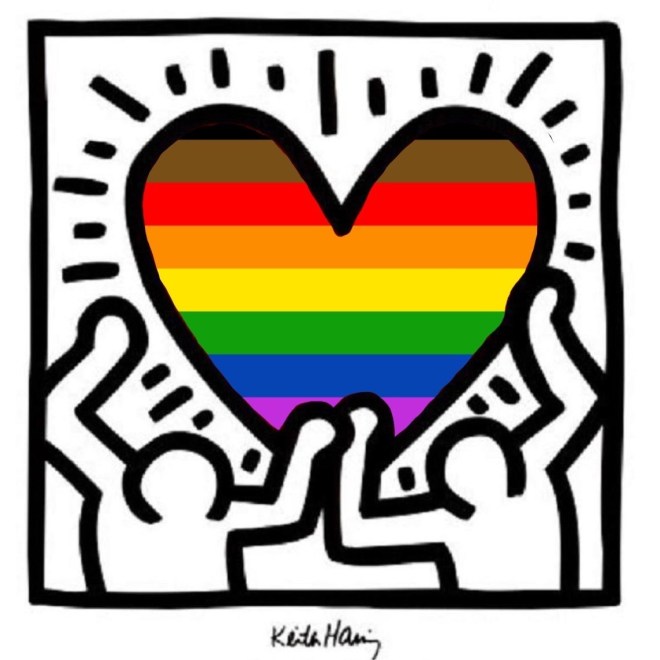
And finally, proof that we haven’t totally forgotten the occasion, all the best wishes for a happy and safe “heart day” to each of you! Enjoy the creation of the late gay artist, Keith Haring!
Happy St. Valentine’s Day, 2026!
Naked hugs!
Roger Poladopoulos/ReNude Pride: Guys Without Boxers!
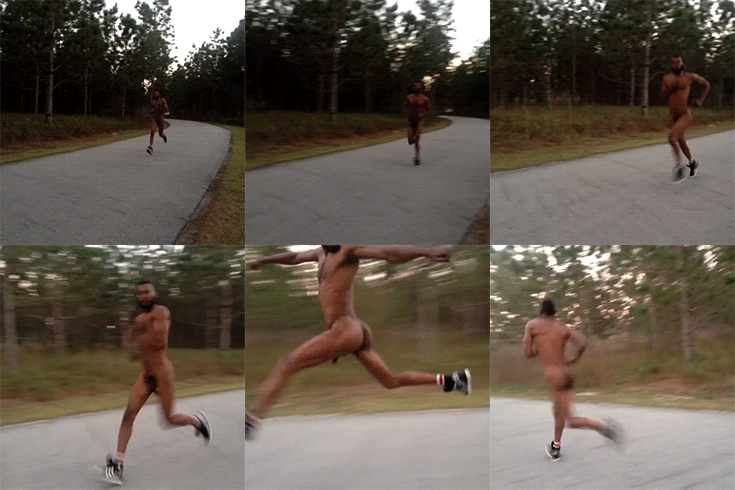
Author’s Note: The next post entry here is planned for Monday, February 16, 2026, and the proposed topic is: “SGL + SNL = Soul!”























 ReNude Pride: Guys Without Boxers!