
Notation:
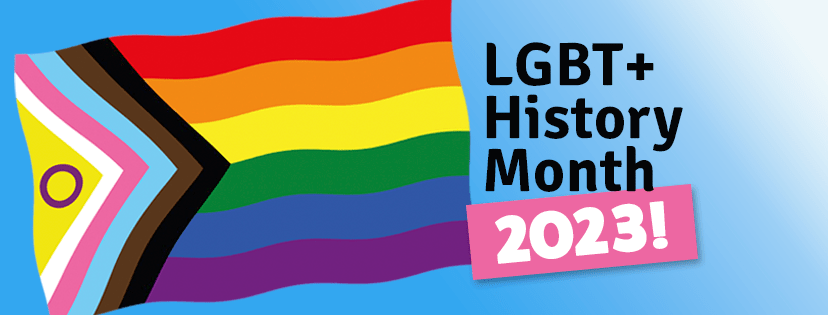
The title of this posting here on ReNude Pride and the accompanying “rainbow flag” images are at the insistence of my beloved spouse, Aaron Michael Peterson-Poladopoulos. His choice is based on his determination of the song “Over the Rainbow” by Judy Garland in the 1939 movie The Wizard of Oz” as being a unifying factor for the entire GLBTQ+ Bare History Month culture. To be honest, he all but ordered me to follow his selection! Out of my devotion to him, my need for a nutritious breakfast and my appreciation of all of his contributions to this site, I have complied with his instruction.
As a Deaf man, I do wonder about the song portion of his choice and in the interest of family harmony, I’ll surrender to his decision. After all, “mine is not to reason why, mine is but to do or he’ll make me die!” LOL! Naked hugs! 🙂
As for the pictures featuring the rainbow flag, I totally agree with my “better half.” As they all depict a bare practitioner man with the flag, they ensure compliance with the purpose of ReNude Pride: celebrating our same gender loving naturist/nudist heritage and community and our shared confidence and pride in being what and who we really are!
********************

Background:
It is generally recognized by all concerned that the modern civil rights struggle for the majority of the gay, lesbian, bisexual, transgender and queer+ people began with the Stonewall Inn riots following a police raid on the Stonewall Inn gay bar in New York City on June 28, 1969. This action, in the militancy of the political times, led to the growth and protests that encouraged our forebears to begin advocating for our freedoms and our long-denied human rights.
Given the number of groups and causes proliferating in the 1960s, our previously closeted (secretive) community emerged from anonymous and silent to militant and radical, even vocal. Various groups and individuals came together with the intent of organizing a body to become instrumental in determining the guidance and leadership of our growing struggle for equality.
********************
Our Story:
As a population with almost no formal structure aside from local municipal concerns, the initial building of a communal harmony and unity was disorganized and haphazard. Communication was infrequent and often by chance. The commitment and dedication of the early and emerging prominent individuals in the equality movement varied from city to city and fortunately enough of the “first few” proved resourceful in building a dynamic leadership that allowed our cause to develop and grow.
Despite the chaotic and confusing inception, it soon became apparent to many of the early GLBTQ+ advocates to the benefits of and the vital need for a visual emblem or a logo for identification and/or recognition purposes. It was agreed that a colourful graphic banner or flag would better serve this function as opposed to just writing the name on a placard.
A variety of concepts, designs and suggestions were made and presented to the ever-changing leadership individuals and/or organizing committees. The most popular and long-lasting ideas are featured below along with a description and/or justification for each submission.

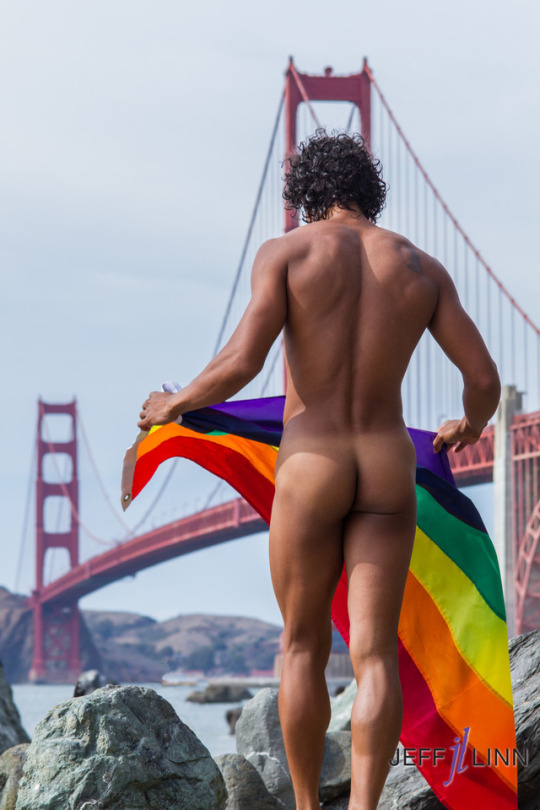
The year, 1969, was at the end of a decade that had witnessed massive social unrest. The African-American protests for civil rights, the birth of the feminist and women’s rights movements, the demonstrations for ending the Vietnam war, the equal pay for primarily Latino immigrant farm workers were underway during this time. The elimination of the military “draft” (enforced military service) and unequal financial compensation were also targets. The “homosexuals” (at the time, a derogatory and offensive identification of the now GLBTQ+ persons) was the most recent social group to clamour for equality and recognition.
The Pink Triangle:
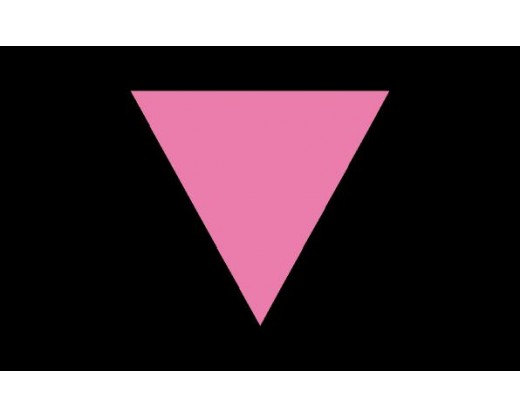
The downward-pointing pink triangle was prominently used by National Socialists (Nazis) in Hitler’s regime as a badge of shame and labeling of “homosexuals.” It was sewn onto the shirts of homosexual men in concentration camps to identify and dehumanize them in the eyes of the authorities and other prisoners. Other concentration camp inmates routinely lashed out against all prisoners wearing a pink triangle.
Homosexuality was made illegal in Germany under Paragraph 175 of the unification constitution in 1871, but the law was rarely enforced. It remained so until it was repealed in 1969. When the Nazi Party assumed control of Germany in 1933, they made it enforcement a priority in their goal of promoting the Aryan people as superior to all others in order to racially and culturally “purify” Germany. The Nazis arrested thousands of GLBTQ+ individuals and sent them to concentration camps. the overwhelming majority of them homosexual men. They were all seen as degenerate.
The rise of the gay, lesbian and bisexual pride movement led to the reclaiming of the pink triangle as a positive symbol of self-identity and of triumph over tragedy. In 1994, the German government formally apologized to all persons for the abuse committed against same gender loving persons throughout the country’s history, especially by the Nazis.
The pink triangle remains a strong symbol of GLBTQ+ progress towards equality and represents the journey forward worldwide. It is a tribute to all of those persecuted under bigotry and hatred. The flag is recognized globally.
The Lambda Flag:

As a symbol of same gender loving freedom from centuries of discrimination, oppression and torture, the Greek letter lambda was first designated in December, 1969, as a symbol of distinction by the graphic artist and Gay Activists Alliance founding member, Tom Doerr. He chose it because in chemistry it is a sign for “catalyst” as for the complete exchange of energy.
Others argue that the lambda denotes the synergy of the growing same gender loving movement. The idea that the whole is greater than the sum of all of its parts. Still others claim the lambda is representative of lesbian.
In December, 1974, the lambda was officially adopted by the International Gay Rights Congress at their meeting in Edinburgh, Scotland, UK, by a unanimous vote. As a representation of gay and lesbian civil rights, lambda became internationally accepted, popular and recognized.
By far, both the pink triangle and the lambda remain dominant and prominent within the GLBTQ+ community and culture today. Historically, they are the two “firsts” in our community and culture.
The criticism of the lambda emerged later as some felt it was symbolic for males only.
The Rainbow Flag:

What many of us herald as the first official flag of our community and culture was first publicly raised on June 25, 1978, in San Francisco, California, USA, at the city’s United Nations Plaza in honour of the 1978 San Francisco Gay Freedom Day parade. The original flag consisted of eight coloured stripes and was designed by Gilbert Baker and handstitched and dyed with the help of friends and volunteers Lynn Sugarblum, James McNamara, Glenne McElhinney, Joe Duran and Paul Langbutz. The eight stripes were later reduced to six with the pink (denoting “sex”) and turquoise (for “art and magic”) eliminated as the colours were not available in flag fabrics.

The graphic above shows the revised eight-stripe flag reduced to six stripes and what the coloured stripes each represented.
Baker conceived the flag would “empower his tribe” and at the same time reflect a “rainbow of humanity” motif to represent the movement’s diversity.
Current: The Progress Rainbow Flag!
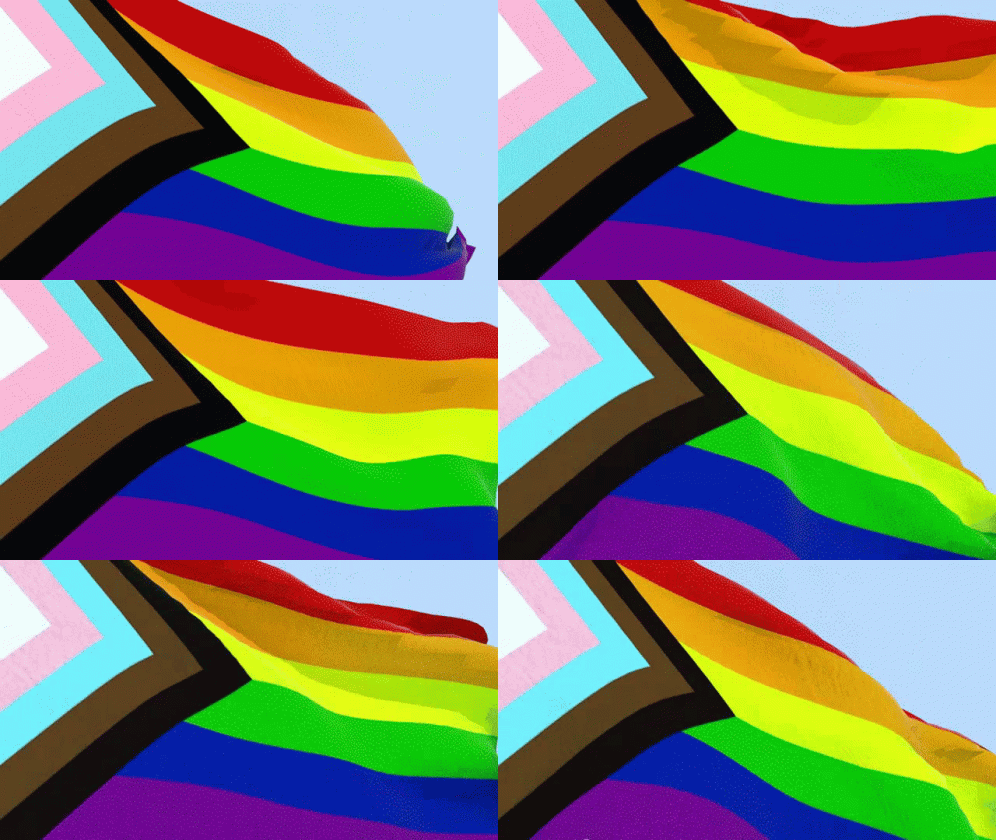
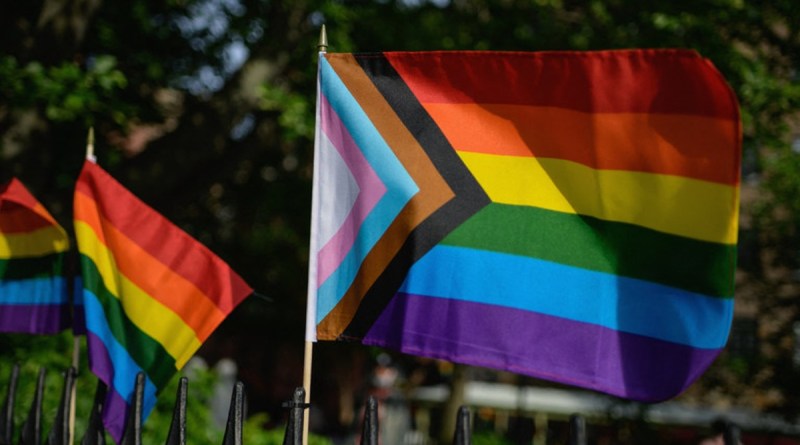
The Progress Pride Rainbow flag was developed by non-binary artist and designer Daniel Quasar in 2018. Based on and incorporating Gilbert Baker’s 1978 Rainbow flag, Quasar’s redesign celebrates the diversity of the global GLBTQ+ community and culture and encourages a more accepting and inclusive general society. The redesign has invested the representation of discriminated minority identities covered by the GLBTQ+ umbrella.
Quasar’s creation placing black and brown stripes (symbolizing peoples of colour) and light blue, pink and white stripes (representing transgender and non-binary persons) in the shape of an arrow-head all pointing to the left of the Progress Pride Rainbow flag’s in the image of “forward progress.” In Daniel Quasar’s own words: “…the pointed arrow to show forward movement and illustrates that the progress towards inclusivity still needs to be made.”
The black stripe has a double meaning attached to it as it is also intended for “those living with HIV/AIDS and the stigma and prejudice surrounding them as well as all those who have been lost to the disease.”
The Progress Pride Rainbow flag was an immediate success. On the evening of June 6, 2018, Quasar posted the design on social media. He woke up the next day to find that it had gone viral.


We continue our way into the future by remembering our past. We are all together as we move forward!
Naked hugs!
Roger Peterson-Poladopoulos and Aaron Michael Peterson-Poladopoulos/ReNude Pride

Author’s Note: The next post entry here is planned for Monday, October 16, 2023, and the proposed topic is: “Purple: Spirit Day!”





















 ReNude Pride: Guys Without Boxers!