USA: Black History Month, 2025!

USA: The month of February, annually!

Prologue:

The use of the Liberation Tricolour (above) is appropriate for this post entry here on ReNude Pride. Today, 1 February, marks the first day of Black History Month in the USA. I am legally married to a Black man, Aaron, who is African-Canadian. His heritage is with the Yoruba Tribe of west Africa. As my spouse, we are both co-administrators of this site.

We both reside here in the USA and have dual citizenships and passports: Aaron/Canada and myself/Greece. We both celebrate Black History Month not just during February but throughout the entire year. We cordially invite you to join with us!

Introduction: Black History Month, 2025

The USA’ s Black History Month represents the bold and brave official determination and recognition of a concept and ideal that historically evolved from the racial community and culture which it honours: African-American.

Carter G. Woodson, “Father of Black History Month, USA”

The founder of this occasion, Carter G. Woodson, was himself an inspired, insightful, and proud Black man. When first initiated, it was a new, provocative and radical concept. At that time, all of the entire continent of Africa, with the exception of Ethiopia and Liberia, was under colonial rule. The United Kingdom, France, Belgium, Portugal, Spain and Italy controlled the land, the people and their destinies.

In the USA, Black people lived and worked under segregation (separateness), second-class citizenship and worse. There were no Black pride, Black lives matter nor Black civil rights movements. Discrimination and marginalization were in effect without recourse, nationwide, of the then 48 states by law. It was also practiced nationally (by social custom) until the very late 1950s.

African heritage!

Despite the practically universal global policy of being marginalized (set aside as inferior) and oppressed (dominated), the history of the Black people’s accomplishments and achievements in the USA exceeded and surpassed imaginations. From enslavement to triumphant, African-Americans have not only survived, they have thrived to become a remarkable example of glory, integrity and success.

Black History Month is a time of reflection and rejoicing due to the dreams, efforts and ideals of Carter G. Woodson, affectionately and respectfully known as the “Father of Black History.” Through his dedication and tireless promotion, the foundations (seeds) of history and knowledge were planted and nourished within the minds of old and young, poor and rich throughout the USA. Because of him, Black history is now synonymous with American history and the two are now united.

Carter Godwin Woodson, later in life!

Dr. Carter Godwin Woodson was an African-American author, historian, journalist and the founder of the Association for the Study of African American Life and History (ASAALH). He was among the first scholars to to study the African diaspora, especially African-American experiences and history.

Carter Godwin Woodson

Born: December 19, 1875

Birthplace: New Canton, Virginia, USA

Died: April 3, 1950

Deathplace: Shaw neighbourhood, Washington, D.C., USA

Education: Harvard University, Berea College, University of Chicago

Organizations founded: Association for the Study of African American Life and History (ASAALH)

Aware of pre-existing commemorations of Black history, organized locally by primarily Black churches and schools, Woodson created Negro History Week around traditional days of honouring the Black American past, the birthdays of Abraham Lincoln (February 12) and Frederick Douglass (February 14). He encouraged people to extend their focused study of African-American history, not to create a new tradition. Woodson believed that history was made by the people, not simply or primarily by great men.

“Sankofa” Adinkra symbol!

The Sankofa Adinkra symbol is an appropriate conclusion for this posting, “Black History Month, 2025!” We are indeed wise to learn from our past, as often as necessary, in order to face our future!

Naked hugs!

Roger Poladopoulos/ReNude Pride

Author’s Note: The next post entry here is planned for Monday, February 3, 2025, and the proposed topic is: “Phoenix: Our Man!”

Sankofa!

Adinkra symbol: Sankofa!

Introduction:

As previously presented here on ReNude Pride, the sankofa Adinkra symbol, from that tribe residing in the modern countries of west Africa, Ghana and Ivory Coast. The symbol is featured in the above heading along with the wisdom it represents. A synonymous defining word is retrospective. A look back in order to acquire direction for the future.

Another version of the sankofa is offered below. The variance is in the symbolic emblems only. The definition and wisdom is identical for both.

Sankofa: varied emblem!

Purpose:

Today’s post entry is offered as a supplement to the posting: Bare! Black! SGL! That post was published here this past Friday. It is a satirical examination of the myth: Black people aren’t gay or naked.

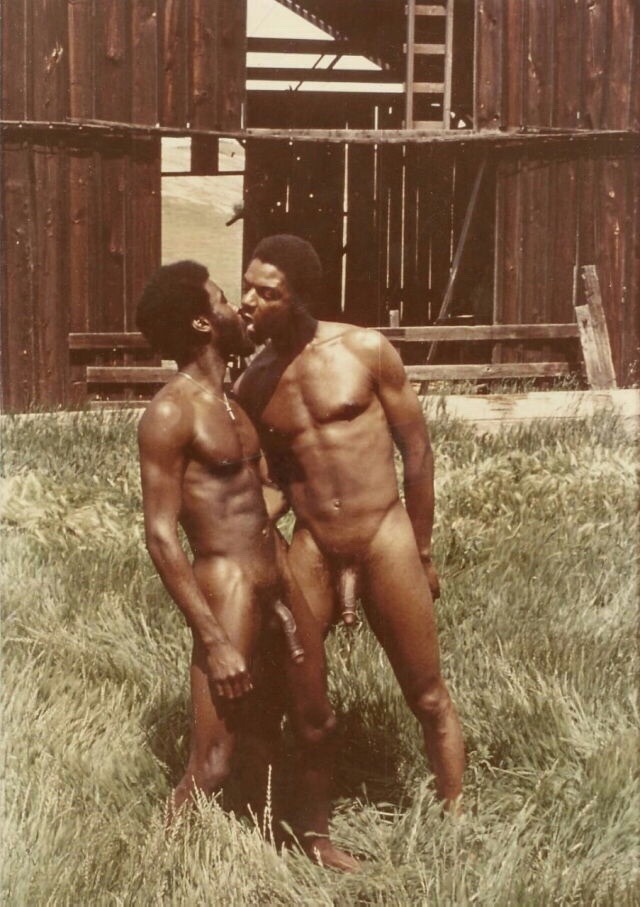
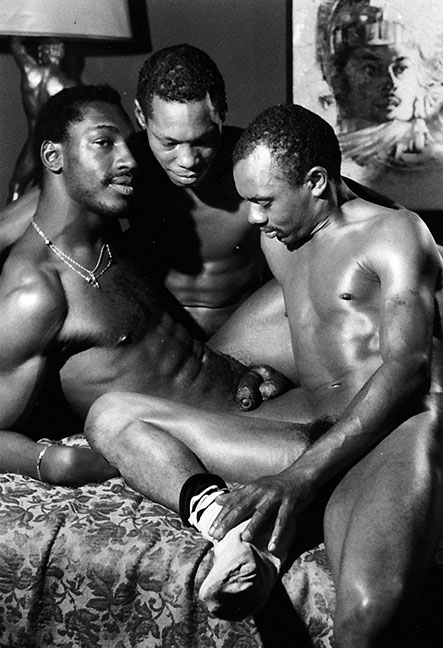
This post is a retrospective (sankofa) consideration of photographs prior to the Stonewall Inn riots (SIR) of June 28, 1969. An event that precipitated the modern international GLBTQ+ movement. Please note: the subjects shown here in these photos are bare. The dates of the pictures are approximate based on the hair-styles alone.

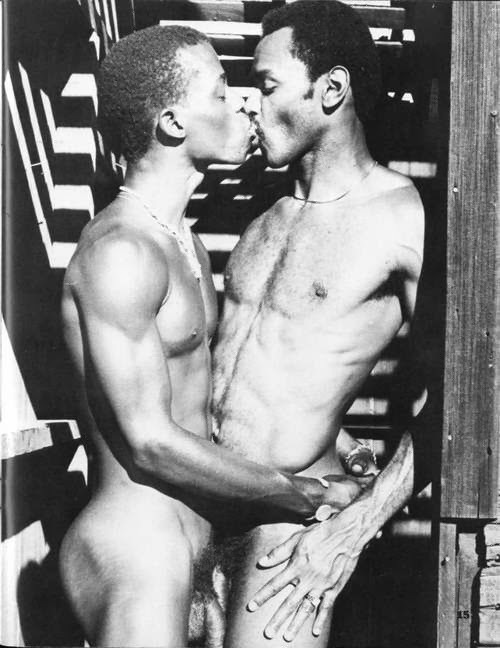
A kiss!

Sankofa #1: Affection

The estimated date for this picture is the middle 1960s.

Rural couple!

Adinkra #2: Companionship

The hairstyles on these two men are possibly from the late 1960s.

Embracing couple!

Adinkra #3: Trust

The approximate date of this image are the middle to late 1960s.

Mutual affection!

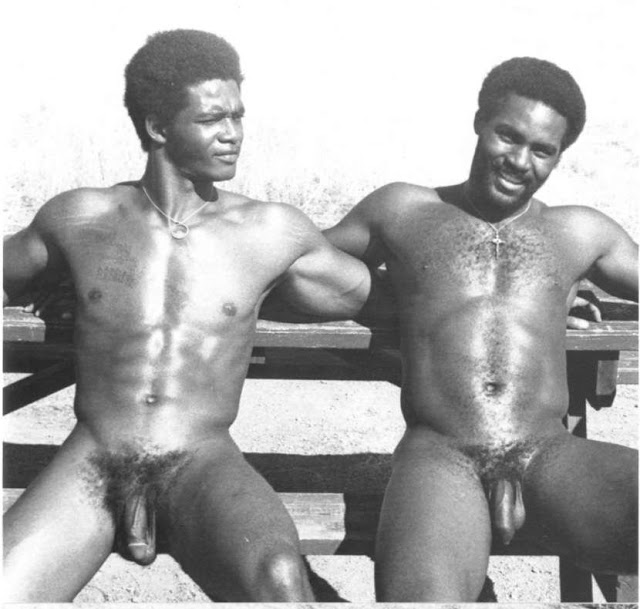
Adinkra #4: Attraction

The estimated time of this picture is early 1960s.

Strongly encouraged!
Proud of who we are!

Naked hugs!

Roger Poladopoulos/ReNude Pride

Author’s Note: The next post entry here is planned for Friday, February 23, 2024, and the proposed topic is: “Race: Race’s POV!”

USA: Black History Month!

Origin:

In the USA, the entire month of February, annually, is observed as Black History Month (now referred to as African-American History Month). It was started in 1926, when the noted Black historian, Carter G. Woodson (now remembered as the “Father of Black History Month) and the Association for the Study of Negro Life and History (ASNLH) jointly announced the second week of February to be Negro History Week. This particular week was chosen because it contained the birthday (February 12) of the late president, Abraham Lincoln, who issued the Emancipation Proclamation that freed the slaves held in the rebellious south during this country’s civil war. It also contained the birthday of Frederick Douglass, the noted Black abolitionist and influential leader (February 14).

Carter G. Woodson, “Father of Black History Month!”

The very first commemoration of Negro History Week was featured in segregated public schools in three states (Delaware, North Carolina and West Virginia) and the Black schools in Washington, D.C., and Philadelphia, Pennsylvania.

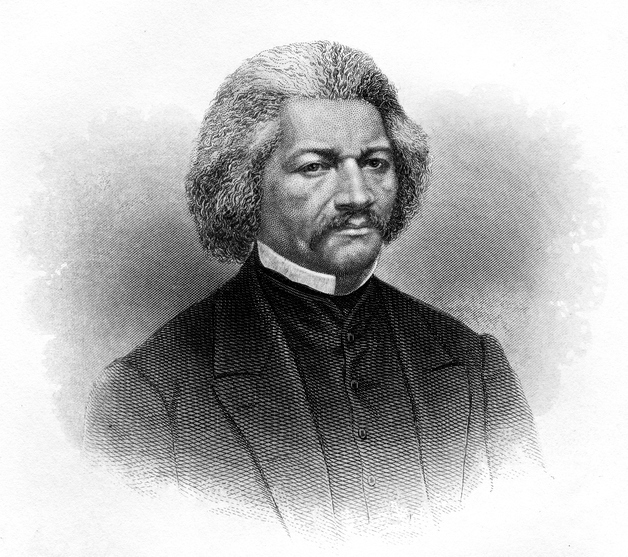
Frederick Douglass, Abolitionist and Black leader

Up until the commencement of Negro History Week, throughout this country, the most that anyone was aware of African-American history was when the topic of slavery was discussed. Otherwise, there was practically no mention of any achievement or contribution of any Black person in the history of the USA. Black people were largely viewed as nothing more than “second-class” citizens throughout this nation. Discrimination and segregation were practiced everywhere and severely hindered the recognition of any notable African-American leadership.

Black History Month encourages honouring persons of the African Diaspora!

Black educators and Black United Students at Kent State University in Ohio first proposed a month-long celebration for Black History Month in February, 1969. It was approved and first observed from January 2, 1970 through February 28, 1970.

President Gerald Ford first recognized Black History Month in 1976 during the USA bicentennial. He urged people to “seize the opportunity to honour the too-often neglected accomplishments of Black Americans in every area of endeavour throughout our history. He may have been the first president not elected for the job but he became the first one to publicly recognize the Black History Month celebration.

Looking for his past!

Personal Recollections:

As a child of Greek immigrants, I have very limited knowledge of what it was like to grow up in what was perceived by many to be a White man’s world. I do have some insight into the most definite deficiency of historical information concerning African-American history.

When my parents arrived in Richmond, Virginia, during the second presidential term of Eisenhower, the only home they could purchase was in a primarily Black neighborhood. The city was the capital city of the Confederacy during the Civil War and “old habits die hard (they were, after all, immigrants). Fine. The street that we lived on had a Greek Orthodox Church on one end, an Armenian Church in the middle and an African Methodist Episcopal Church on the other end. A celestial highway!

My oldest brother remembers the controversy surrounding the televised release of Alex Haley’s Roots. For many die-hard Confederate descendants, it was absurd and unforgiveable that White Confederate characters and their offspring were shown as evil, dishonest and violent. I imagine the truth does sometimes hurt.

Alex, my identical twin brother, and I are both Deaf but that didn’t prevent us from having Black friends in our neighborhood. Children don’t need an official interpreter to communicate between Deaf and hearing. We had several Black friends who shared with us in our nakedness (with enthusiasm).

Our motto!

Our neighborhood bordered the south side of the James River in Richmond. As we grew into our teenage years, Twin and I and our neighborhood friends frequented the James River during our summer school holidays. On one of those excursions, we discovered an area within the park very popular with the local same gender loving (SGL) people who were also active nudists. This resulted into an entirely different educational and enlightening world for all of us! The doors to bare practitioner manhood were opened – at last – and remain opened until this very day!

One of my neighborhood friends is named Paul Turner. We have become lifelong friends and have kept in contact with each other since our early teen years. He’s three years older than me and is also gay and a self-admitted bare practitioner co-founder and cohort! We jointly enjoyed and explored the SGL naked area of the James River Park almost daily. We continue to exchange laughter and memories of those summer “retreats” into our nakedness, our SGL identity and all the adventures and pleasures we had while maturing together! This past summer, we took a reminiscent hike to the riverfront park and our “classroom” of education into reality.

Paul and his partner have been a live-in couple for twenty-two years now. They’re both active in Richmond’s Black gay community and are very good friends to my spouse, Aaron, and myself. The four of us are exploring and negotiating the collective composition of a perspective of bare practitioner in today’s world. Our goal is a 2025 publishing.

Nudist friends are the best friends!
Black History

Happy Black History month to everyone! Enjoy the time that we all share together!

Naked hugs!

Roger Poladopoulos/ReNude Pride

Author’s Note: The next post entry here is planned for tomorrow, Friday, February 2, 2024, and the proposed topic is: “A Dream Comes True!”

Photo-Essay: Man-2-Man!

Man-2-Man!

Background:

Given the body language, physical contact and hair-styles of the naked/nude men presented in the vintage photos below, there remains little doubt over the authenticity of these pictures. The bigotry and disgust directed towards any hint of same gender love supports their validity. Remember, “back in the day” the idea of “gay-for-pay” had practically no audience whatsoever! Segregation was the law of the land in every state except Illinois and homosexuality (gay) was viewed as severe perversion!

Men nude together, circa early 1970’s!

Introduction and Justification:

As a part of ReNude Pride’s annual observance of USA Black History Month, this photo-essay offers proof that decades before the 1969 Stonewall Inn Riots (SIR) heralded the modern gay, lesbian, bisexual, transgender and queer+ (GLBTQ+) civil and equal rights movement, the USA African-American culture ventured into limited existence. General society accepted, condoned, endorsed and practiced homophobic policies and prejudices during this era. Government, law enforcement, and religious institutions extolled and sanctioned this discriminatory behaviour, but bravery and courageous African-American GLBTQ+ pioneers cautiously followed hearts and souls down the trail to happiness.

A couple together, circa middle 1960’s!

These photographs confirm not only their sexuality during repression; they also provide evidence of their comfort and practice of their nakedness! Indeed: the pilgrims of bare practitioners!

Sharing a bench, early 1960’s!

These historic and vintage photographs discredit and dispel the popular and widespread myth that the African-American GLBTQ+ community and culture didn’t exist before SIR in 1969. Bare practitioners (same gender loving naturist/nudist) are inherently and naturally African-American as they are with other ethnicities and races everywhere!

Embrace and kiss!

The above couple, from the early 1960’s exemplify the growing acceptance of their same gender loving status among themselves and their community of peers. It didn’t happen overnight but slowly, it began to gain momentum as the “age of love” started to emerge onto the popular culture.

Nude encouragement with the liberation colours!

ReNude Pride appreciates, salutes and supports the bold and proud initiative of the men featured here today! Their efforts and energy made it possible for advances in GLBTQ+ community and culture everywhere!

Naked hugs!

Roger Poladopoulos/ReNude Pride

Author’s Note: The next post entry here is planned for Tuesday, February 7, 2023, and the proposed topic is: “National Black HIV/AIDS Awareness Day!”

USA: Black History Month!

The African heritage!

The month of February, annually, is designated Black History Month throughout the USA. Here at ReNude Pride, in addition to the historical feature, we also honour the same gender loving (gay) and the bare practitioner (naturist/nudist) lifestyles of the African-American culture. In addition, we recognize that this culture is not restricted to focus only one month out of the entire year!

February of every year!

In 1607, the first permanent English settlement was established in the “New World” (North America as it is known today). The location was Jamestown, Virginia – which remains a tourist attraction. The first slaves captured from Africa were brought here and sold or traded in late August, 1619. Thus established, slavery was a binding and legal institution throughout the colonial era and up until the conclusion of the American Civil War (fought over the slavery issue) in 1865.

Despite the Declaration of Independence stating the basic “life, liberty and the pursuit of happiness” clause, the United States of America did not recognize slaves as people but instead as property. Slaves were denied (legally) property rights, education, freedom to travel and most importantly, their dignity. It was as though these captives from Africa did not exist. This situation implanted the idea of racism that remains a major issue in the USA legal, political and social structures even at this time. The killing of a slave – for whatever reason – was not considered murder nor a crime. The stealing of a slave wasn’t seen as kidnapping and/or enforced detention but rather viewed as property theft.

For almost a century and a half after the US civil war, the history of African-Americans was, for all intents and purposes, completely ignored here in almost every public school system. In the minds of educators, administrators and the general public, “they” (Black Americans) came here as slaves and were freed after the civil war and that was enough acknowledgement of African-American history.

Carter G. Woodson, the “Father of Black History Month”

In 1926, noted Black historian Carter G. Woodson and the Association for the Study of Negro Life and History announced the second week in February, annually, to be known as “Negro History Week.” This particular week was selected because it contained the birthday of Abraham Lincoln (February 12) and the birthday of Frederick Douglass, a noted Black American advocate for abolishing slavery (February 14).

Engraving From 1868 Featuring The American Writer And Former Slave, Frederick Douglass. Douglass Lived From 1818 Until 1895.

The initial Negro History Week in 1926 was received with limited recognition. The state departments of education in Delaware, North Carolina and West Virginia endorsed the observation as did the public school administrations of the cities of Baltimore, Maryland and Washington, D.C.

Carter G. Woodson wrote in The Negro Journal in support of the celebration: “If a race has no history, it has no worthwhile tradition, it becomes a negligible factor in the thought of the world and it stands in danger of being exterminated.”

Regardless of the lack of “official” support for Negro History Week, within the African-American community the reaction and response was dramatic and overwhelming. No matter the ignoring of this occasion by general society and the public school systems, Black churches, fraternal and social organizations and individual educators enthusiastically adopted the concept as an essential cause. It became a distinct and popular annual event involving competitions (both athletic and academic), enactments and festivities. Carter G. Woodson’s ideal instilled a sense of determination and pride within the Black community and race. This achievement earned him the title “Father of Black History Month.”

Adinkra symbolism, Africa!

Throughout the 1930’s, Negro History Week continued to grow in acceptance, slowly but surely. It contradicted the White American myth in the South’s “lost cause” that argued that slaves had been well-treated, fairly cared for and that the Civil War was nothing more than a war of “northern aggression.”

The ongoing development, growth and success of the original Negro History Week soon produced positive results not only within the Persons of Colour community but also in the society in general. The number of states recognizing the designation gradually increased as did the number of businesses, local and national, who identified the opportunity for expansion and increase of profits.

The first observance of the entire month of February as Black History Month occurred at Kent State University in 1970. Then-President Gerald Ford was the first president to acknowledge and publicly recognize Black History Month during the celebration of the USA bicentennial in 1976, fifty years following Carter G. Woodson’s and the Association for the Study of Negro Life and History first Negro History Week observance.

President Barack Hussein Obama!

The twenty-first century has brought remarkable achievements to the contents of Black History Month. In November, 2008, Barack Hussein Obama was elected the very first African-American president of the USA – ever! His two terms of office were from January, 2009, until January, 2016.

Vice-President Kamela Harris!

In November, 2019, Kamela Harris was elected the very first woman vice-president and the first African-American vice-president. Her first term of office is from January, 2020, until January, 2024.

Carter G. Woodson is indeed proud of his Black History Month and the fact that his community’s history is still being made, today!

Naked hugs!

Roger Poladopoulos/ReNude Pride

Author’s Note: The next post entry here is planned for Friday, February 3, 2023, and the proposed topic is: “Photo Essay: Man-2-Man!”

Photo-Essay: Bare Black History Month

The purpose of this posting is to share images of same gender loving (bisexual or gay) African-American men featuring their appreciation of the bare practitioner lifestyle. ReNude Pride is focused on both bisexual and gay men and nudity, so this is an appropriate occasion to honor those men and celebrate our similarities in our lifestyles!

Continue reading Photo-Essay: Bare Black History Month

February: USA Black History Month

What is today observed as Black History Month in the USA had a very limited and a very inauspicious beginning. It began in 1926 when Carter G. Woodson, an African-American historian and the Association for the Study of Negro Life and History designated the second week of the month of February as “Negro History Week.” This week was chosen because it generally coincided with Abraham Lincoln’s birthday on February 12 and of Frederick Douglass’ birthday on February 14. Both dates were celebrated in Black communities since the late 19th century.

Continue reading February: USA Black History Month

Vintage Images: Black, Gay and Bare

In commemoration of February being Black History Month here in the USA, a photo-oriented post showing some historical (vintage) images of Black gay bareness from days gone by. These are offered in the spirit of historical celebration and trying to document the tradition of gay, nude Black men in the recent history of African-Americans. Many of these photos date from the mid-20th century and often feature unnamed men whose life story, their personal history, is simply unknown and can only be speculation.

Continue reading Vintage Images: Black, Gay and Bare

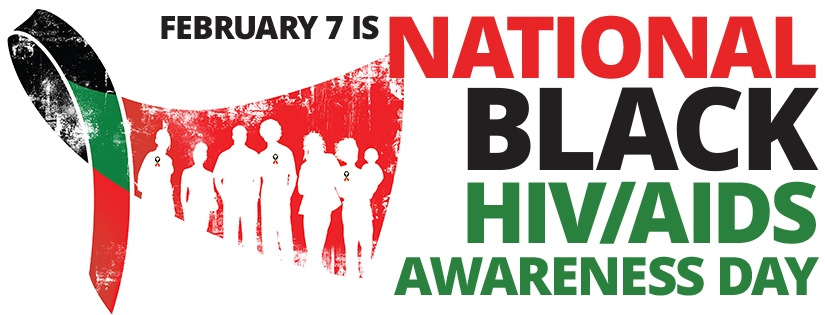
February 7: National Black HIV/AIDS Awareness Day

Author’s Note: This posting is offered in anticipation of February 7, and National Black HIV/AIDS Awareness Day. It is published beforehand to allow readers to explore developments and opportunities for involvement prior to the actual date. 

In the USA and several nations in the Caribbean, February 7, annually, is observed as National Black HIV/AIDS Awareness Day, a day for the communities of African descent to focus on the disproportionate (unequal) impact the current HIV/AIDS crisis is having on the various communities of African and Black heritage. This date is observed to bring the different communities and institutions together to explore ways to combat HIV infections and to replace ignorance with facts and knowledge.

Continue reading February 7: National Black HIV/AIDS Awareness Day

February: USA Black History Month

Every year during the month of February, the USA observes Black History Month. This time is set aside in order that we, as a nation, take the time to celebrate, commemorate and pay tribute to the contributions, dynamics, energy, and direction offered by all of our African-American citizens of both the past and the present. For too long the accomplishments of this segment of our national heritage were often neglected and overlooked due to ignorance, fear and prejudice. Fortunately, in many places, that is no longer the case.

Continue reading February: USA Black History Month