Today is the Feast of the Annunciation of the Theotokos (Virgin Mary, Mother of God)! This is the date selected for the uprising against the Ottoman Empire that culminated with freedom for the Kingdom of Greece!
Bishop Germanos raised the flag of revolt over the Monasery of Agia (Saint) Lavra on Pelopannesa on this date, March 25, 1821.
Come and join us! Bare, of course!
Royal Guard (Ivzoni) raising the national flag!
Greece!
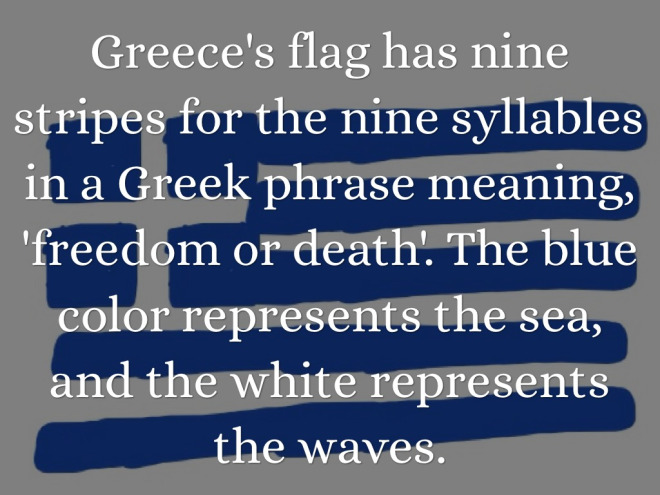
The flag’s symbolism!
`Opa= Greek expression for excitement, salutation, joy, surprise, greeting, and impressive!
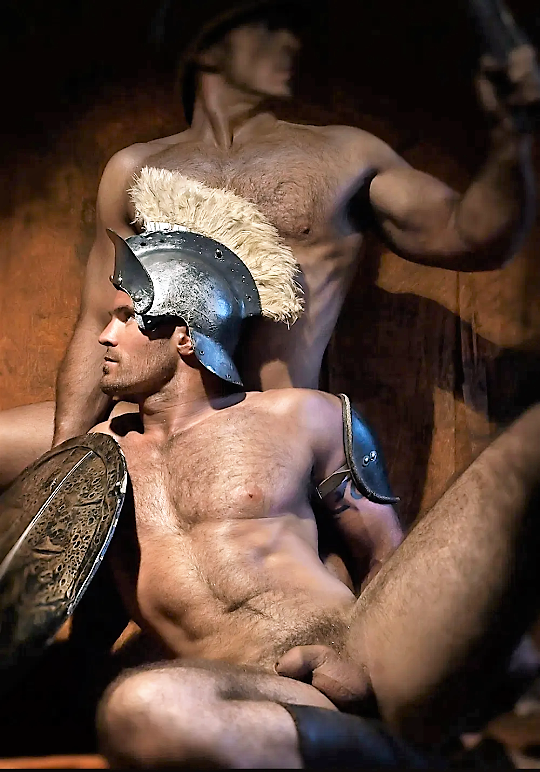
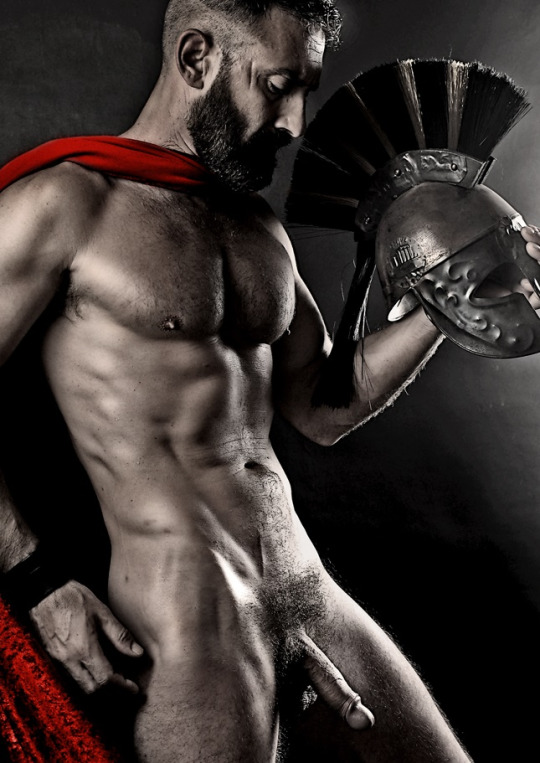
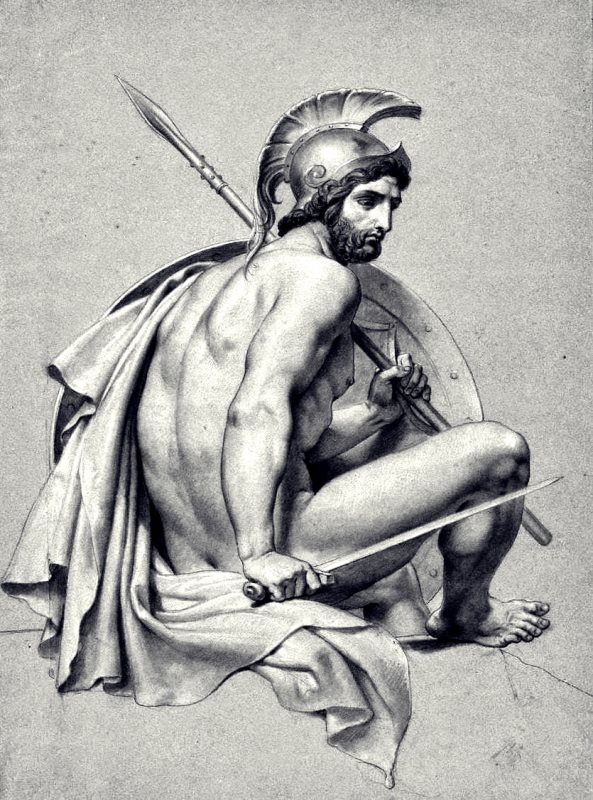
A contemporary man posing as an ancient Greek warrior!
One popular and eternal, longstanding myth is that the ancient Greek army fought battles while totally naked. Even though the culture was very accepting and embraced public nakedness and same gender affection, especially for men, the army always wore at the very least a loincloth.
Naked hugs!
Roger Poladopoulos/ReNude Pride
Author’s Note: The next post entry here is planned for Friday, March 28, 2025, and the proposed topic is: “Commando? None For Me!”
On the flight to Mama’s this past Friday, my spouse, Aaron, and I collaborated on composing this posting for today. The intent was to share for everyone a tiny aspect of our life together within the setting of my immediate family. Enjoy! Your comments and thoughts are always welcome!
The flight home to Skyros in Greece ended without Aaron and I getting arrested and/or escorted off our flight for what some refer to as “indecent exposure!” Upon the arrival, one of my brothers met us at the terminal and delivered us both, fully clothed, to my mother’s home. We both waited until after my siblings and their families left for their homes before we retired to our bedroom (while there) and restored the comfort of our nakedness!
While we were growing up, all of my brothers learned of my identical twin, Alex, and our preference for body and clothes freedom. Whenever we were in our shared bedroom, we were always nude or else in the process of becoming naked! Our mother was the only woman in our household; all brothers and my father so our being nude was never an issue as long as we wore clothing whenever we were outside our bedroom!
Comfort restored!
Concerning my immediate family (Mama and all my brothers and their families) Twin (Alex) and I and our preference for nakedness isn’t the “hot” topic of conversations and jokes anymore. Since first meeting Aaron (before our marriage), the subject of our naked life hasn’t been the centre of discussion that it once held. Life moves on and the focus is now more progressive and involved than it was “back-in-the-day.” They are all aware of our efforts here with ReNude Pride and what, if any, interest remains with our participation in body and clothes freedom concerns generally is nothing more than a casual thought.
Aaron and I have an assigned set of rooms at my parent’s home. The house was originally built for my paternal grandfather and consists of a bedroom and bathroom with a shared sitting room across the hallway from used by Alex and his partner, Dante. There is privacy in this part of the family home that Mama respects. If Alex and Dante are there when we are, our comfort for nudity isn’t an automatic “family” matter. This arrangement provides us twins with the comfortable and familiar environment of “home” even if we have two continents and the Atlantic Ocean between our actual dwellings and Mama’s house. Not a bad setting for the identical twin “middle children” (three older brothers, ourselves, and then three younger brothers!
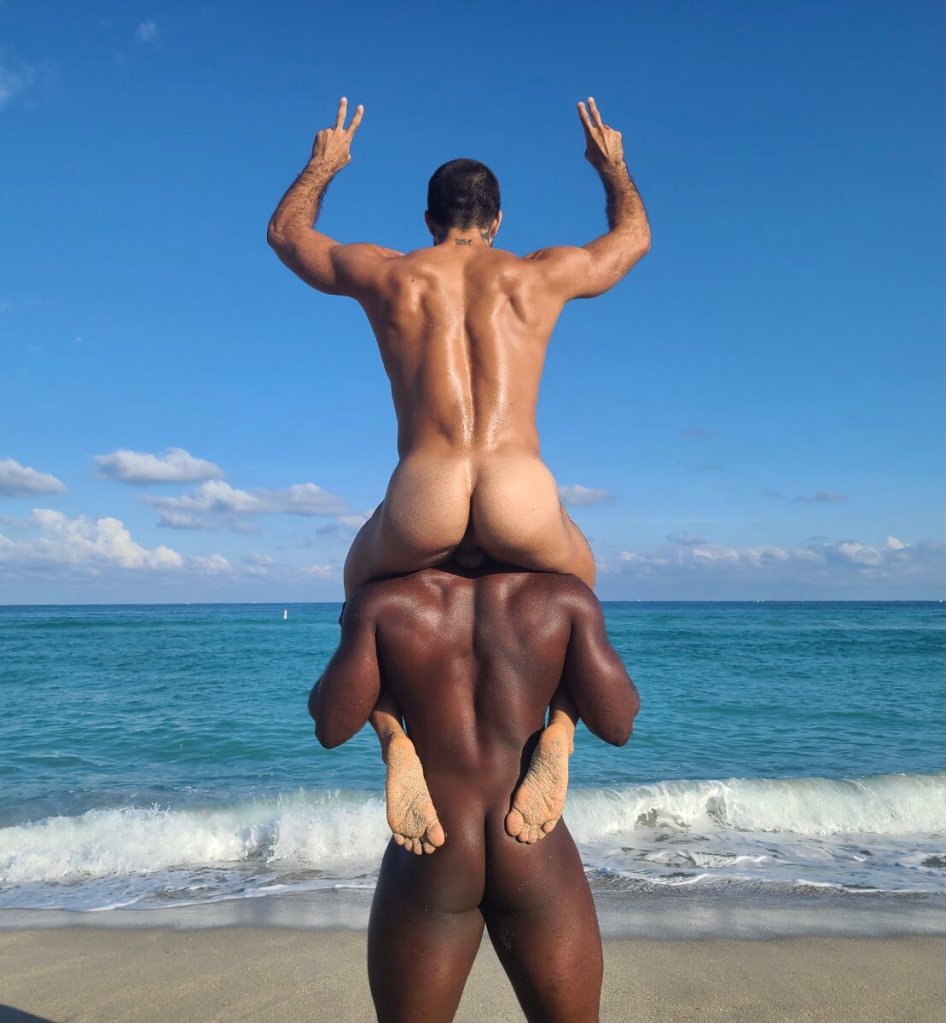
Towering together!
Addendum:
Like most of the Northern Hemisphere, Skyros, Greece, is usually ideal for skinny-dipping (swimming naked) during the month of August. This year, thus far, is not a disappointment! This is a short notation to remind everyone here that August, 2024, is more than half over! Strip and go skinny-dip now before the summer is gone!
A Mediterranean skinny-dip!
Aaron and I are both avid fans of skinny-dipping! No surprise there! The fact that Skyros is one of the Greek islands and the Mediterranean Sea borders along a part of Mama’s property adds a special bonus to visiting my ancestral home. We’re both grateful for the opportunity to bare practice (experience nakedness) in these historic waters where countless others have done the same for centuries before our time!
Aaron sunbathing after a skinny-dip!
Our eight days here with Mama are passing too fast for us to remember where we’ve put everything! Best wishes for a happy week!
Naked hugs!
Roger Poladopoulos/ReNude Pride
Author’s Note: The next post entry here is planned for Friday, August 23, 2024, and the proposed topic is: “Notoriously Naked!”
On the Feast of the Annunciation of the Theotokos (Mother of God) – March 25, 1821 – the Greeks began the revolt to end almost four centuries of Ottoman Turkish occupation!
The result was independence for the Kingdom of Greece!
Ancient Greek warrior!
Before we progress any further, a few notes to clarify the situation. First and foremost, the rebellion against the Ottomans didn’t have the Greeks fighting in the nude. Perhaps in ancient days, yes. However, in the 1800s, no, they may not have had official military uniforms but they definitely engaged in fighting while wearing clothing. Secondly, they may have personally had swords, etc., but they used guns. The Ottoman army was a second-rate military force, but it was armed with contemporary weaponry. For the Greeks to defeat them, a semblance of similar weaponry would be necessary.
At this time, the Ottoman Empire was widely known as “the sick man of Europe.” The heyday of it’s military dominance in eastern Europe had long ended. It was now known to be weaker, vulnerable and a declining force on the world stage. The organizers of the Greek uprising selected this feast day – a holy occasion in the Greek Orthodox Church – to begin the insurrection. It was the arrival of Spring, a time of rebirth and renewal. An ideal time to return independence to their beloved homeland!
Bishop Germanos, raised the flag of revolt over the Monastery of Aghia Laura (St. Laura) in the Pelopannese with the cry, “Freedom or Death” which was subsequently adopted as the summation of the revolution and later as the motto of Greece.
Flag raised by Bishop Germanos!
The early flag of Greece, the banner that represented the spirit of independence from the Ottomans, is presented above. The traditional colours of Greece, blue and white dominated the emblem. The double-headed eagle in the upper left corner of the banner is an adaptation from the flag representing the Byzantine empire.
The outbreak of the fight for Greek independence was a complete surprise for the Ottoman occupiers. They had not the slightest indication that such a massive insurrection was even being planned. As most of the troops were part of the occupation force with years of experience, they weren’t in any position of regularly preparing for a possible revolt.
The government of the newly liberated New World country known as Haiti was the very first nation to officially recognize Greek independence. This diplomatic exchange happened in 1821, barely 6 months after the struggle was initiated and long before the war was ended. Even France, Great Britain and Russia, the countries supporting the Greeks with military material, did not recognize the new country until after the Ottomans had ceded the occupation of Greece.
The shock the uprising brought to the Turkish occupiers was felt throughout the historic Greek peninsula and islands. Many of the smaller garrisons were unprepared, understaffed and without sufficient ammunitions to maintain a prolonged defence. They were abandoned in haste as the troops realized the need for assistance if they were to survive the assaults. The proverbial “sick man of Europe” was caught unprepared and was easily overwhelmed.
In haste, the Ottomans sought relief for their occupiers in Greece from their North African dependent states of Algeria, Egypt, Tripolitania and Tunis. These were distrustful of one another and frequently hostile to the various tribes comprising their numbers. The auxiliary troops were often defeated by the Greek locals who were often armed with inferior firearms but held strategic locations as the arriving armies unloaded off their boats.
The Greeks also had the advantage of familiarity with the local terrain and also of the culture and people. They were involved with persons of sympathetic feelings and shared desires for a return to Greek independence.
The war against the Ottomans proceeded with limited success on both sides. The Greeks could not harness the financial resources necessary to engage in prolonged military actions against the Ottomans and their North African allies.
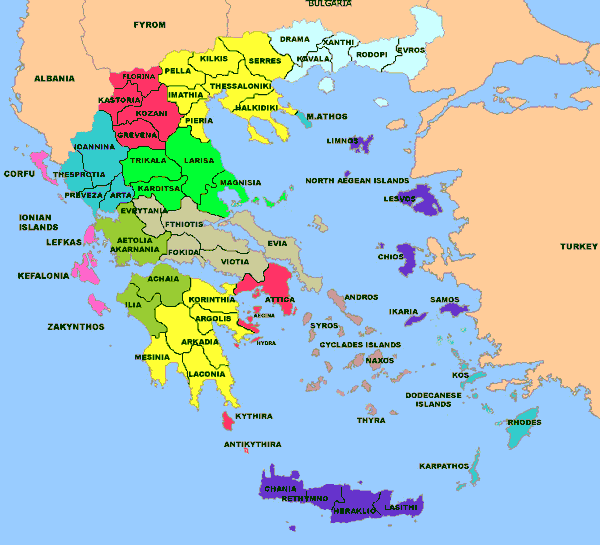
Map of Greece
In 1827, Great Britain, France and Russia decided to intervene on the behalf of Greece and sent naval squadrons to the Aegean Sea. The Ottoman-Egyptian fleet was encircling the island of Hydra. The fleets engaged in the Battle of Navarino and the Ottoman-Egyptian fleet was destroyed. This event turned the tide of the war in favour of the Greeks. The complete annihilation of the Ottoman fleet at Navarino convinced the majority of the Ottoman military command of the futility of even hoping to prevent the insurrectionists from succeeding in their struggle. An unofficial retreat from the extreme areas of Greek control was implemented.
In 1828, following the landing of a French expeditionary force, the Egyptians completely withdrew from defending Ottoman garrisons. The Ottoman fortresses remaining in the Peloponnese surrendered to Greece and the Ottoman camps throughout the rest of the area soon followed. The result of this collapse of Ottoman occupation forced the Turks to accept Greek autonomy in the Treaty of Adrianople which ended the fighting.
After 9 years of fighting, Greece was finally recognized as completely independent under the London Protocol of February, 1830, by Great Britain, France and Russia, who subsequently guaranteed it’s independence. The London Protocol also established the Greek Orthodox Church as the state religion of Greece and the Patriarch of Constantinople was recognized as the supreme religious authority. Further negotiations led to the London Conference of 1832 which included the Ottoman Empire and introduced the Treaty of Constantinople, defined the borders of Greece and Turkey and recognized Prince Otto of Bavaria as King of Greece.
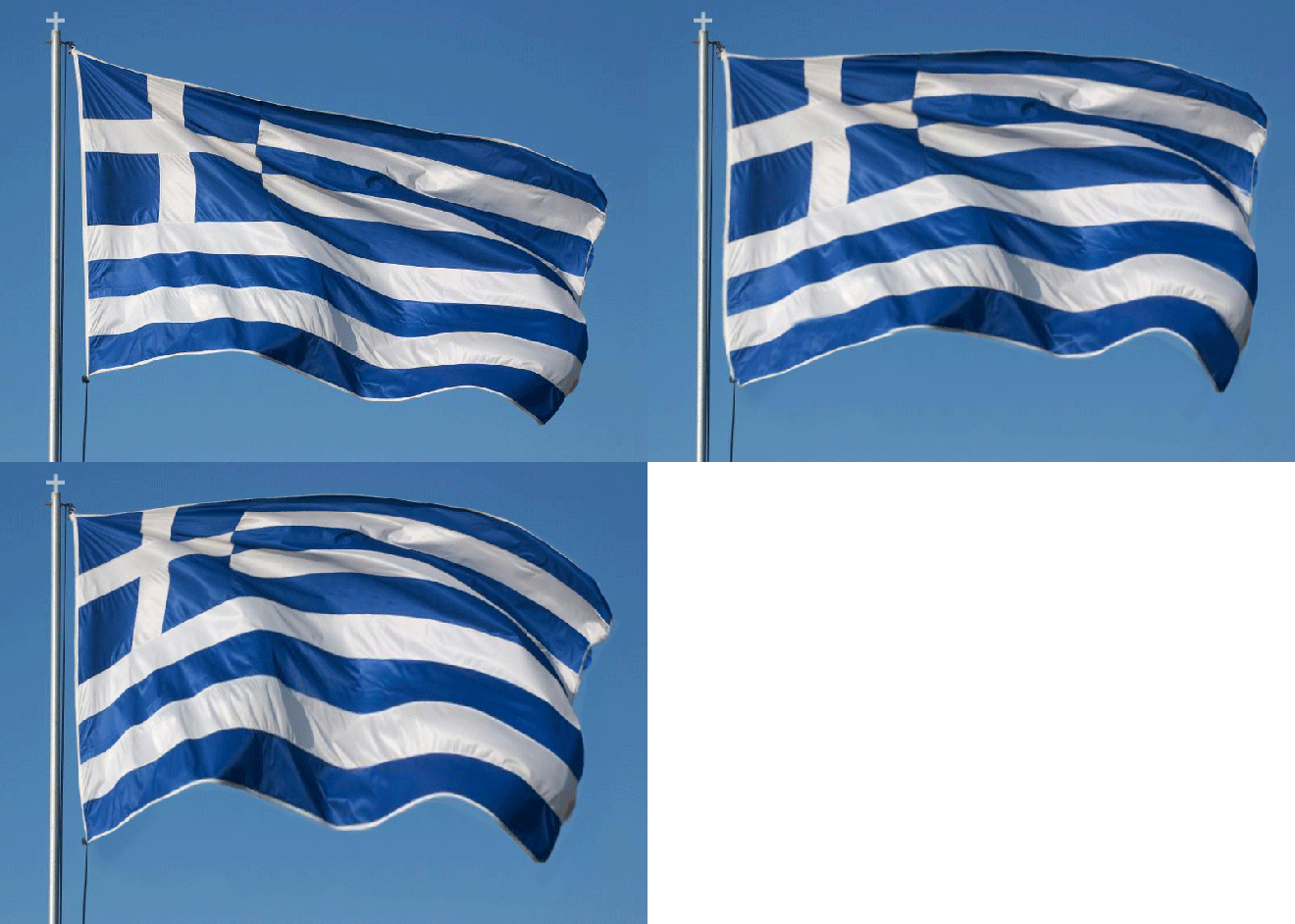
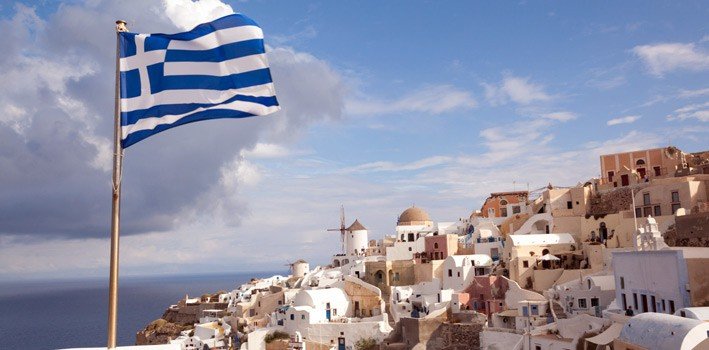
The modern flag of Greece!
In addition to the nine stripes, the modern Greek flag bears the emblem of the Cross of St. George, who is the patron saint of the Country of Greece. The Cross of St. George also, by law, adorns the top of every pole that supports the nation’s banner. The flag has been a part of the Greek culture since the revolution began with Bishop Germanos raising it over his monastery.
As for the revolt against Ottoman occupation, there are two of my great-great-great grandfathers and one of my great-great-great-great grandfathers who participated in the upraising. None of them were fatalities and they prospered under the survival of the reign of Otto, King of Greece, who was childless. His successors, the Glucksburg Dynasty, were from the Danish Royal Family. Otto was the only sovereign known as the King of Greece. The remainder were proclaimed by their officially recognized title, King of the Hellenes.
Naked hugs!
Roger Poladopoulos/ReNude Pride
Author’s Note: The next post entry here is planned for Friday, March 29, 2024, and the proposed topic is: “Underneath!”
MARCH 25, 1821: GREECE ERUPTS INTO REBELLION AGAINST OTTOMAN TURKS!
Donning his helmet of rebellion!
A Brief Summary of the Establishment of the Kingdom of Greece:
March 25, 1821, was the date of the start of the uprising of the peoples of Greece against more than 400 years of the occupation and oppression by the Ottoman Turkey invaders. This marked the beginning of the end of the Ottoman Turkey Empire and the revival of the independence of the Kingdom of Greece!
March 25, also is the Feast of the Annunciation of the Theotokos (Virgin Mary, Mother of God) not only in the Greek Orthodox Church but in all churches of the Eastern Orthodox religion. The organizers of the rebellion selected this feast date to initiate the insurrection under the protection of the Theotokos as patron of the movement.
Early version of the Greek flag!
Early in the morning, Bishop Germanos raised the banner of the revolt over the Monastery of Agia (saint) Lavra in the Pelopannese with the cry: Freedom or Death! The flying of the banner was the planned symbol for the commencement of hostilities and the words of Bishop Germanos were popularly adopted as the official motto of the revolution.
The decision to begin the struggle against the Ottoman domination on the date was based on the belief that the action would be brief, over by the autumn season. It was thought that the elderly, women and children could best manage the planting of the agricultural crop and the men would return in time for the harvesting of the yield.
The conflict wasn’t as easy to determine as originally planned. The battles were frequent and draining on the Turkish forces. They often involved the importing of the military reserves of the Ottoman Turk dependencies in North Africa, especially Algeria, Egypt, Tripolitania (Libya) and Tunis (Tunisia). These auxiliary troops were frequently defeated by the untrained Greek locals who were often armed with dated and inferior firearms.
The fighting ended with the signing of the Treaty of Adrianople in 1829. France, Imperial Russia and the United Kingdom of Great Britain and Ireland were the guarantors of the independence of the Kingdom of Greece. The Ottoman Turks agreed to withdraw completely from Greece. In 1830, the sovereign independence of the Kingdom was recognized by the London Protocol agreement and Ottoman Turkey acknowledged the protocol. In 1832, the Treaty of Constantinople defined the official borders between Greece and Turkey and established Prince Otto of Bavaria as the first King of Greece.
The London Protocol established the Greek Orthodox Church as supreme throughout the kingdom. This remains in effect still today.
The government of the newly liberated Haiti was the very first country in the world to diplomatically and officially recognize the the revolution – and therefore Greek independence. This happened in 1821, barely six months after the initiation of the struggle and long before the war was actually over. Haiti acknowledged Greece just before becoming the first nation in the world to outlaw the slavery of Africans.
The contemporary Flag of Greece!
After several revisions adopted over time, the above is the current official flag of Greece to be flown outside the actual country. The version used internally features identical with “lighter” (baby) blue colours. The upper corner is the Cross of St. George, the official patron saint of all of Greece.
Official flag designation!
Considerations:
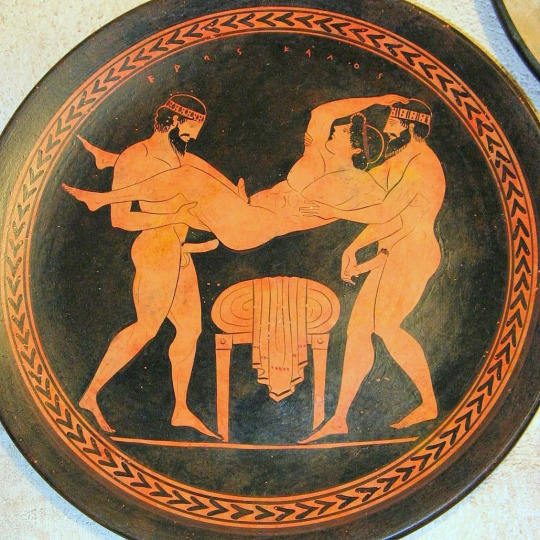
There is proof that the ancient Greeks engaged in man-to-man penetrative sexual practices and of the widespread practice/traditions of public nudity/social nudity. These were viewed as “everyday” and “normal” by Greek society at that time. In all honesty, this Greek – yours truly – feels the same, today. In fact, I know for certain that I am not alone in these thoughts!
Pottery depicting Greek men physical intimacy!
The ancient Greeks culturally embraced and practiced social nudity, publicly and privately. There existed nude competitions and competitors in the original Olympic events for centuries. The military practiced/trained while naked and the entire population accepted and expected nakedness, both publicly and socially, from both genders. Admittedly, males were more prone to nudity than females but remember, in that era, they were the dominant gender.
Historically, Greek culture didn’t look upon the state of clothes freedom as synonymous with being evil, sinful, despicable nor judged as a disgraceful or as a perversion.
Same-sex physical intimacy, especially between men, was both acceptable and expected. It was not an official endorsement of same gender love. Rather, it was often seen as an educational action to instruct males on how to actually be “real men.” The instructional benefit was the belief that there was no better method to teach a man how to properly treat a woman than to show them him physically hot it feels to have a male penile erection physically inside him.
As a contemporary same gender loving Greek man, after limited research, my humble opinion is that ancient Greece had no preponderance of same gender love. The numbers look and probably reflect the same percentage of the general population as they do today.
A bare assault!
To my knowledge, there is no irrefutable evidence of any actual battle that occurred with opposing forces engaged while completely naked. Humanity – very early – recognized the futility of belligerence without any armour or protection for as much of the body as possible! No “rocket science” involved in that solution!
Naked hugs!
Happy Annunciation Day!
Roger Poladopoulos/ReNude Pride
Author’s Note: The next post entry here is planned for Monday, March 27, 2023, and the proposed topic is: “Naturally!”
Thursday, March 25, 2021, is the anniversary of the beginning of the fight for the freedom of Greece from the oppression of the Ottoman Empire (modern-day Turkey). The clergy of the Greek Orthodox Church encouraged the faithful to engage in the struggle to attain their freedom and restore self-determination of their homeland from the subservience of the Ottoman Turks.
The Ottoman Empire, for over two centuries, had periodically focused on the eventual absorption and subjugation of the Byzantine (Greek) Empire. The fall of Constantinople (the imperial Greek capital) through a siege that lasted from April 6, 1453 until May 29, 1453, rewarded the Ottomans as the Middle and Near Eastern superior power, economically, militarily and naval.
The political dominance of the Turkish government provided a grave and serious threat to the Greek Orthodox Church. The religious and spiritual head of all Orthodox believers , the patriarch (pope) of Orthodoxy resided in Constantinople and his official title is: Patriarch of the Eastern Orthodox Church and Archbishop of Constantinople. This situation fostered the unsubstantiated belief and rumors in the Western churches (Roman Catholic, Anglican and protestant) that the Eastern churches (Bulgarian, Greek, Roumanian, Russian, Serbian and Syrian) were under the manipulation of the Turkish occupiers.
Multiple Greek warriors!
On this date, March 25, in 1821, the Greeks rose up against the oppression of Ottoman Turkey in a protracted civil war that ultimately involved France, the Russian Empire and the United Kingdom joining with the Greeks in their quest for independence. March 25 is also the date of the feast of the Annunciation of the Theotokos (Virgin Many, Mother of God) in the Eastern Orthodox Church. The organizers of the uprising selected this feast day to initiate the insurrection. Bishop Germanus hoisted the flag of revolt over the Monastery of Agia Lavra in the Pelopannese with the cry, “Freedom or Death” which was adopted as the motto of the for Greek liberation.
The government of the newly liberated Haiti was the very first country in the world to recognize the revolution – and therefore, Greek independence. This diplomatic recognition happened is 1821, barely 6 months after the struggle began and long before the war was actually over.
The Ottoman Turks were supported during the Greek rebellion by the North African Turkish dependent states of Algeria, Egypt, Tripolitania and Tunis. These auxiliary troops were frequently defeated by the Greek locals who were often armed with only their inferior personal weapons, primarily rifles.
Greek warrior artistic image.
After seven years of fighting, the Ottoman Turks grew weary of the Greek uprising. At an international conference held in London, a document called the London Protocol was signed by representatives from Greece, France, Russia, the United Kingdom, and the Ottoman Empire that recognized the independent sovereign Kingdom of Greece in 1830. The rebellion was over. In 1832, the Treaty of Constantinople was enforced between the Greeks and the Turks which defined the borders of Greece and established Prince Otto of Bavaria as the first King of Greece.
Above is the image of the original Greek flag that was recognized when independence was achieved. The double-headed eagle in the upper left corner was the emblem of the Byzantine Empire.
The .gif below is the current flag of Greece shown billowing in the breeze. The cross of St. George is in the upper left corner. The Greek Orthodox Church is the state religion of Greece.
The above explains the symbolism of the modern Greek flag.
The modern Greek flag was adopted during the 20th Century as the current state matured. Based on the current design, it is now universally accepted and recognized everywhere. During the last decade of the 20th Century, there were some grumblings that the two colors of the flag represented the “haves” and the “have nots” although there was never any agreement over what those two categories entailed.
Outline map of Greece (flag design).
Above is the image of a map of modern Greece, in the same design of the current Greek flag. Greece is located in south-eastern Europe at the bottom of the Balkan peninsula. The capital city is Athens.
Both of my parents and my oldest brother were born in Greece. They emigrated to this country just before the birth of my second oldest brother. Neither of my parents nor my oldest brother were ever naturalized here (became citizens). After our births, my father had all of our births enrolled at the Greek consulate, which made the remainder of my brothers and myself Greek subjects (we have dual citizenship).
Avoiding any implications of inaccuracy, before closing todays post, I want to remind everyone that the ancient Greeks most definitely did not engage in war while bare. Men were aware that any type of action involving swords and other forms of weapons could inflict major, if not debilitating, damage to themselves. Even the simplest girding of protection was valued above nudity in this case.
Wishing everyone the happiest of Patriot Day!
Bare hugs!
Roger Poladopoulos/Renude Pride
Author’s Note: The next posting entry planned for here is for Wednesday, March 31, 2021, and the proposed topic is : “Bottoms-Up! March, 2021”
The unusually long delay is due to an educational conference.
Many people of Greek birth or descent return to visit the homeland during the month of August. This tradition has been in existence since before my parents immigrated here in the late 1940’s. I’m not certain of the origins of this custom, I’m simply aware of it from the practice as well as my own personal experience. Also, what right do I have to question anyone’s desire for a good time and a decent party?
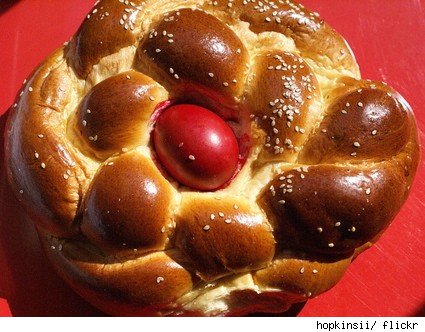
The above image is the picture of a loaf of Easter Bread, one of the traditional foods of the Easter celebration within the Greek Orthodox Church. This weekend marks the end of the Great Lenten Fast that is observed prior to the Feast Day. All of the faiths of the Orthodox churches have Easter this weekend; the Russian, the Greek, the Ethiopian, the Bulgarian, the Serbian, the Albanian, the Egyptian Coptic and as well as some of the Eastern Rites of the Church of Rome.
March 25, annually, is Greek Independence Day. This celebration marks the date, in 1821, when the people who live in what is now Greece, rose up in revolt against Ottoman Turkey who occupied their homeland for hundreds of years. A protracted war ensued that culminated in the eventual establishment of the modern state of Greece. This post signifies both the religious feast day and the national holiday.





















 ReNude Pride: Guys Without Boxers!