Today is the Feast of the Annunciation of the Theotokos (Virgin Mary, Mother of God)! This is the date selected for the uprising against the Ottoman Empire that culminated with freedom for the Kingdom of Greece!
Bishop Germanos raised the flag of revolt over the Monasery of Agia (Saint) Lavra on Pelopannesa on this date, March 25, 1821.
Come and join us! Bare, of course!
Royal Guard (Ivzoni) raising the national flag!
Greece!
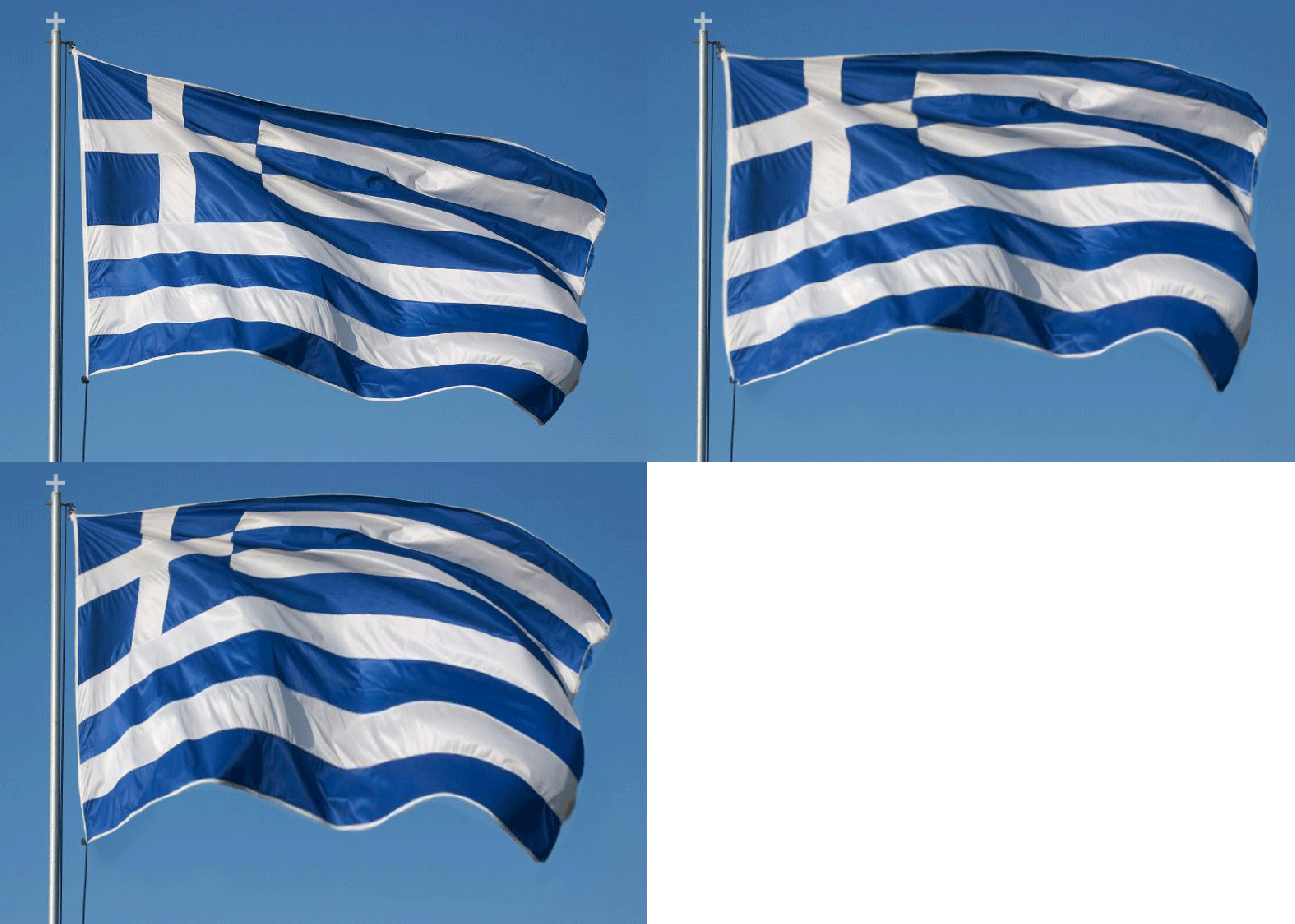
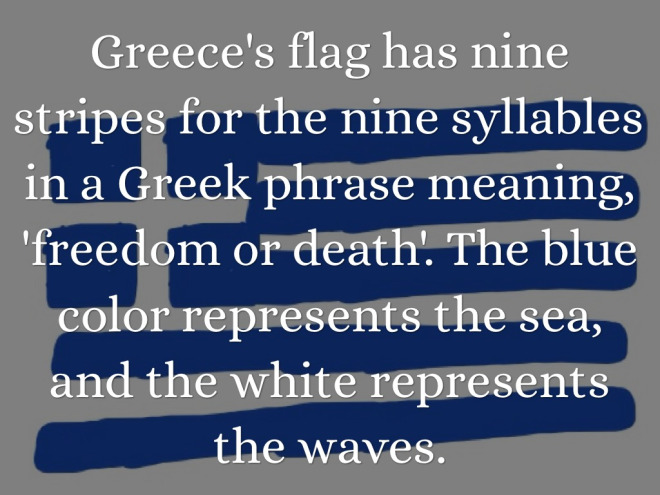
The flag’s symbolism!
`Opa= Greek expression for excitement, salutation, joy, surprise, greeting, and impressive!
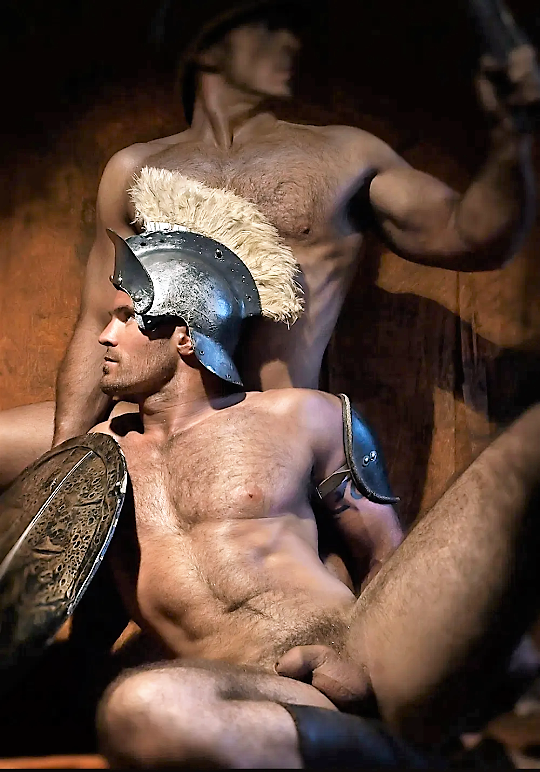
A contemporary man posing as an ancient Greek warrior!
One popular and eternal, longstanding myth is that the ancient Greek army fought battles while totally naked. Even though the culture was very accepting and embraced public nakedness and same gender affection, especially for men, the army always wore at the very least a loincloth.
Naked hugs!
Roger Poladopoulos/ReNude Pride
Author’s Note: The next post entry here is planned for Friday, March 28, 2025, and the proposed topic is: “Commando? None For Me!”
On the Feast of the Annunciation of the Theotokos (Mother of God) – March 25, 1821 – the Greeks began the revolt to end almost four centuries of Ottoman Turkish occupation!
The result was independence for the Kingdom of Greece!
Ancient Greek warrior!
Before we progress any further, a few notes to clarify the situation. First and foremost, the rebellion against the Ottomans didn’t have the Greeks fighting in the nude. Perhaps in ancient days, yes. However, in the 1800s, no, they may not have had official military uniforms but they definitely engaged in fighting while wearing clothing. Secondly, they may have personally had swords, etc., but they used guns. The Ottoman army was a second-rate military force, but it was armed with contemporary weaponry. For the Greeks to defeat them, a semblance of similar weaponry would be necessary.
At this time, the Ottoman Empire was widely known as “the sick man of Europe.” The heyday of it’s military dominance in eastern Europe had long ended. It was now known to be weaker, vulnerable and a declining force on the world stage. The organizers of the Greek uprising selected this feast day – a holy occasion in the Greek Orthodox Church – to begin the insurrection. It was the arrival of Spring, a time of rebirth and renewal. An ideal time to return independence to their beloved homeland!
Bishop Germanos, raised the flag of revolt over the Monastery of Aghia Laura (St. Laura) in the Pelopannese with the cry, “Freedom or Death” which was subsequently adopted as the summation of the revolution and later as the motto of Greece.
Flag raised by Bishop Germanos!
The early flag of Greece, the banner that represented the spirit of independence from the Ottomans, is presented above. The traditional colours of Greece, blue and white dominated the emblem. The double-headed eagle in the upper left corner of the banner is an adaptation from the flag representing the Byzantine empire.
The outbreak of the fight for Greek independence was a complete surprise for the Ottoman occupiers. They had not the slightest indication that such a massive insurrection was even being planned. As most of the troops were part of the occupation force with years of experience, they weren’t in any position of regularly preparing for a possible revolt.
The government of the newly liberated New World country known as Haiti was the very first nation to officially recognize Greek independence. This diplomatic exchange happened in 1821, barely 6 months after the struggle was initiated and long before the war was ended. Even France, Great Britain and Russia, the countries supporting the Greeks with military material, did not recognize the new country until after the Ottomans had ceded the occupation of Greece.
The shock the uprising brought to the Turkish occupiers was felt throughout the historic Greek peninsula and islands. Many of the smaller garrisons were unprepared, understaffed and without sufficient ammunitions to maintain a prolonged defence. They were abandoned in haste as the troops realized the need for assistance if they were to survive the assaults. The proverbial “sick man of Europe” was caught unprepared and was easily overwhelmed.
In haste, the Ottomans sought relief for their occupiers in Greece from their North African dependent states of Algeria, Egypt, Tripolitania and Tunis. These were distrustful of one another and frequently hostile to the various tribes comprising their numbers. The auxiliary troops were often defeated by the Greek locals who were often armed with inferior firearms but held strategic locations as the arriving armies unloaded off their boats.
The Greeks also had the advantage of familiarity with the local terrain and also of the culture and people. They were involved with persons of sympathetic feelings and shared desires for a return to Greek independence.
The war against the Ottomans proceeded with limited success on both sides. The Greeks could not harness the financial resources necessary to engage in prolonged military actions against the Ottomans and their North African allies.
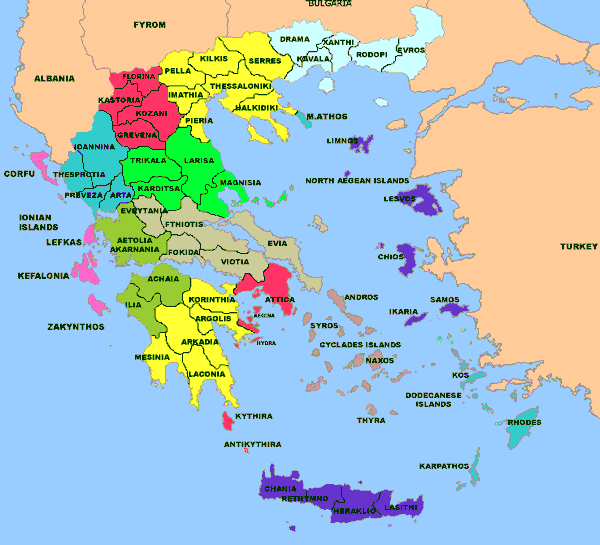
Map of Greece
In 1827, Great Britain, France and Russia decided to intervene on the behalf of Greece and sent naval squadrons to the Aegean Sea. The Ottoman-Egyptian fleet was encircling the island of Hydra. The fleets engaged in the Battle of Navarino and the Ottoman-Egyptian fleet was destroyed. This event turned the tide of the war in favour of the Greeks. The complete annihilation of the Ottoman fleet at Navarino convinced the majority of the Ottoman military command of the futility of even hoping to prevent the insurrectionists from succeeding in their struggle. An unofficial retreat from the extreme areas of Greek control was implemented.
In 1828, following the landing of a French expeditionary force, the Egyptians completely withdrew from defending Ottoman garrisons. The Ottoman fortresses remaining in the Peloponnese surrendered to Greece and the Ottoman camps throughout the rest of the area soon followed. The result of this collapse of Ottoman occupation forced the Turks to accept Greek autonomy in the Treaty of Adrianople which ended the fighting.
After 9 years of fighting, Greece was finally recognized as completely independent under the London Protocol of February, 1830, by Great Britain, France and Russia, who subsequently guaranteed it’s independence. The London Protocol also established the Greek Orthodox Church as the state religion of Greece and the Patriarch of Constantinople was recognized as the supreme religious authority. Further negotiations led to the London Conference of 1832 which included the Ottoman Empire and introduced the Treaty of Constantinople, defined the borders of Greece and Turkey and recognized Prince Otto of Bavaria as King of Greece.
The modern flag of Greece!
In addition to the nine stripes, the modern Greek flag bears the emblem of the Cross of St. George, who is the patron saint of the Country of Greece. The Cross of St. George also, by law, adorns the top of every pole that supports the nation’s banner. The flag has been a part of the Greek culture since the revolution began with Bishop Germanos raising it over his monastery.
As for the revolt against Ottoman occupation, there are two of my great-great-great grandfathers and one of my great-great-great-great grandfathers who participated in the upraising. None of them were fatalities and they prospered under the survival of the reign of Otto, King of Greece, who was childless. His successors, the Glucksburg Dynasty, were from the Danish Royal Family. Otto was the only sovereign known as the King of Greece. The remainder were proclaimed by their officially recognized title, King of the Hellenes.
Naked hugs!
Roger Poladopoulos/ReNude Pride
Author’s Note: The next post entry here is planned for Friday, March 29, 2024, and the proposed topic is: “Underneath!”
The month of February, annually, is designated Black History Month throughout the USA. Here at ReNude Pride, in addition to the historical feature, we also honour the same gender loving (gay) and the bare practitioner (naturist/nudist) lifestyles of the African-American culture. In addition, we recognize that this culture is not restricted to focus only one month out of the entire year!
February of every year!
In 1607, the first permanent English settlement was established in the “New World” (North America as it is known today). The location was Jamestown, Virginia – which remains a tourist attraction. The first slaves captured from Africa were brought here and sold or traded in late August, 1619. Thus established, slavery was a binding and legal institution throughout the colonial era and up until the conclusion of the American Civil War (fought over the slavery issue) in 1865.
Despite the Declaration of Independence stating the basic “life, liberty and the pursuit of happiness” clause, the United States of America did not recognize slaves as people but instead as property. Slaves were denied (legally) property rights, education, freedom to travel and most importantly, their dignity. It was as though these captives from Africa did not exist. This situation implanted the idea of racism that remains a major issue in the USA legal, political and social structures even at this time. The killing of a slave – for whatever reason – was not considered murder nor a crime. The stealing of a slave wasn’t seen as kidnapping and/or enforced detention but rather viewed as property theft.
For almost a century and a half after the US civil war, the history of African-Americans was, for all intents and purposes, completely ignored here in almost every public school system. In the minds of educators, administrators and the general public, “they” (Black Americans) came here as slaves and were freed after the civil war and that was enough acknowledgement of African-American history.
Carter G. Woodson, the “Father of Black History Month”
In 1926, noted Black historian Carter G. Woodson and the Association for the Study of Negro Life and History announced the second week in February, annually, to be known as “Negro History Week.” This particular week was selected because it contained the birthday of Abraham Lincoln (February 12) and the birthday of Frederick Douglass, a noted Black American advocate for abolishing slavery (February 14).
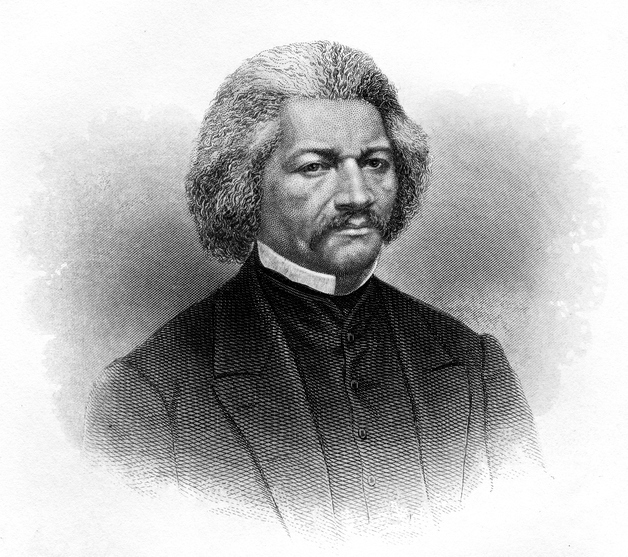
Engraving From 1868 Featuring The American Writer And Former Slave, Frederick Douglass. Douglass Lived From 1818 Until 1895.
The initial Negro History Week in 1926 was received with limited recognition. The state departments of education in Delaware, North Carolina and West Virginia endorsed the observation as did the public school administrations of the cities of Baltimore, Maryland and Washington, D.C.
Carter G. Woodson wrote in The Negro Journal in support of the celebration: “If a race has no history, it has no worthwhile tradition, it becomes a negligible factor in the thought of the world and it stands in danger of being exterminated.”
Regardless of the lack of “official” support for Negro History Week, within the African-American community the reaction and response was dramatic and overwhelming. No matter the ignoring of this occasion by general society and the public school systems, Black churches, fraternal and social organizations and individual educators enthusiastically adopted the concept as an essential cause. It became a distinct and popular annual event involving competitions (both athletic and academic), enactments and festivities. Carter G. Woodson’s ideal instilled a sense of determination and pride within the Black community and race. This achievement earned him the title “Father of Black History Month.”
Adinkra symbolism, Africa!
Throughout the 1930’s, Negro History Week continued to grow in acceptance, slowly but surely. It contradicted the White American myth in the South’s “lost cause” that argued that slaves had been well-treated, fairly cared for and that the Civil War was nothing more than a war of “northern aggression.”
The ongoing development, growth and success of the original Negro History Week soon produced positive results not only within the Persons of Colour community but also in the society in general. The number of states recognizing the designation gradually increased as did the number of businesses, local and national, who identified the opportunity for expansion and increase of profits.
The first observance of the entire month of February as Black History Month occurred at Kent State University in 1970. Then-President Gerald Ford was the first president to acknowledge and publicly recognize Black History Month during the celebration of the USA bicentennial in 1976, fifty years following Carter G. Woodson’s and the Association for the Study of Negro Life and History first Negro History Week observance.
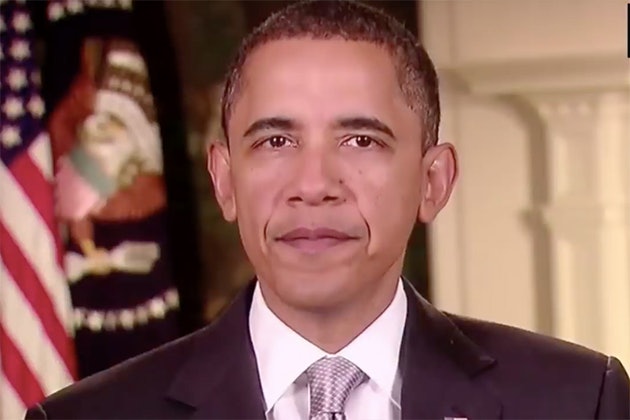
President Barack Hussein Obama!
The twenty-first century has brought remarkable achievements to the contents of Black History Month. In November, 2008, Barack Hussein Obama was elected the very first African-American president of the USA – ever! His two terms of office were from January, 2009, until January, 2016.
Vice-President Kamela Harris!
In November, 2019, Kamela Harris was elected the very first woman vice-president and the first African-American vice-president. Her first term of office is from January, 2020, until January, 2024.
Carter G. Woodson is indeed proud of his Black History Month and the fact that his community’s history is still being made, today!
Naked hugs!
Roger Poladopoulos/ReNude Pride
Author’s Note: The next post entry here is planned for Friday, February 3, 2023, and the proposed topic is: “Photo Essay: Man-2-Man!”
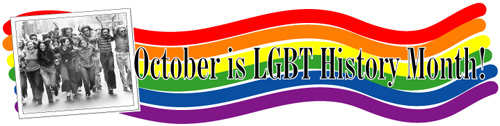
Today marks the final Wednesday installment of a post commemorating October as GLBTQ Bare History Month here at ReNude Pride. Every Wednesday during October, which is GLBTQ History Month in the USA, we’ve celebrated this time as GLBTQ Bare History Month because there isn’t an entire month for us to experience exploring our common nude or clothes-free heritage. This combination allows us all to honor both our gay, lesbian, bisexual, transgender and queer community along with our bare (naturist/nudist) community simultaneously.
Today’s post marks the second installment of posts commemorating October as GLBTQ (gay, lesbian, bisexual, transgender, queer) Bare History Month. I’d like to remind readers that the “B” in GLBTQ stands for bisexual and not bare. Every Wednesday during October a post featuring vintage (old) photographs of bare men will publish here on ReNude Pride as atonement for the fact that there is not a Bare History Month celebrated nationally.
This marks the first Wednesday installment of a post commemorating October as GLBTQ Bare History Month. It is probably best to remind everyone that the “B” in GLBTQ stands for bisexual and not bare. With that out of the way and clear to all, every Wednesday during October a post featuring vintage (old) photographs of bare men will publish here as a means of making amends for the tragic fact that there is not a Bare History Month celebrated nationally.
Tomorrow, July 4, is celebrated in the USA as Independence Day. It was on this date that the Continental Congress declared itself absolved of allegiance to the British Crown and that the thirteen British colonies along the east coast of the north Atlantic Ocean were now self-determining and no longer dependent on the Mother Country (Great Britain).
“The door of the Stonewall had wrought-iron bars across this little peephole, a little wooden thing that slid open. And the man inside would look at you and, if you looked like you belonged there, would let you in.” ~ Chris Babick, describing the entrance to The Stonewall Inn
The Stonewall Inn, a small bar located in New York City’s Greenwich Village neighborhood, was the unlikely site for the birthplace of the modern gay right’s movement. On the night of June 28, 1969, it became a battlefield between homosexual (gay, same gender loving) patrons and local police. This battle was the first of many that were fought throughout the world in the struggle for the dignity and equality of homosexuals everywhere. “Gay Liberation” was born here on this night.
Although Gay, Lesbian, Bisexual, Transgender, Queer (GLBTQ) Month varies from city-to-city, country-to-country, the official designation for Pride Month, in the USA, is June, annually. Ever since the Stonewall Inn riots, which happened on the evening of June 27 – 28, 1969, this month has held a special place in this community’s collective history. That riot at that small, obscure gay bar, located in the Greenwich Village neighborhood in Manhattan, New York City, USA, is recognized across the world as the spark that ignited the long struggle for equal rights for all GLBTQ people, no matter where they live.
Today, Monday, May 29, 2017, is the Memorial Day holiday in the USA. This is the date, officially observed on the last Monday in May, annually, where all the men and women who sacrificed their lives in the defense of this country are honored and remembered. It is tradition to decorate the graves of the fallen with an American flag that symbolizes a grateful nation saluting all heroes.

















 ReNude Pride: Guys Without Boxers!